Results by title
14 books match the query 'Conductors (Music)'
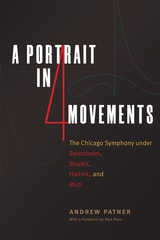
A Portrait in Four Movements
The Chicago Symphony under Barenboim, Boulez, Haitink, and MutiAndrew Patner
University of Chicago Press, 2019
The Chicago Symphony Orchestra has been led by a storied group of conductors. And from 1994 to 2015, through the best work of Daniel Barenboim, Pierre Boulez, Bernard Haitink, and Riccardo Muti, Andrew Patner was right there. As a classical music critic for the Chicago Sun-Times and WFMT radio, Patner was able to trace the arc of the CSO’s changing repertories, all while cultivating a deep rapport with its four principal conductors.
This book assembles Patner’s reviews of the concerts given by the CSO during this time, as well as transcripts of his remarkable radio interviews with these colossal figures. These pages hold tidbits for the curious, such as Patner’s “driving survey” that playfully ranks the Maestri he knew on a scale of “total comfort” to “fright level five,” and the observation that Muti appears to be a southpaw on the baseball field. Moving easily between registers, they also open revealing windows onto the sometimes difficult pasts that brought these conductors to music in the first place, including Boulez’s and Haitink’s heartbreaking experiences of Nazi occupation in their native countries as children. Throughout, these reviews and interviews are threaded together with insights about the power of music and the techniques behind it—from the conductors’ varied approaches to research, preparing scores, and interacting with other musicians, to how the sound and personality of the orchestra evolved over time, to the ways that we can all learn to listen better and hear more in the music we love. Featuring a foreword by fellow critic Alex Ross on the ethos and humor that informed Patner’s writing, as well as an introduction and extensive historical commentary by musicologist Douglas W. Shadle, this book offers a rich portrait of the musical life of Chicago through the eyes and ears of one of its most beloved critics.
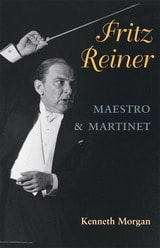
Fritz Reiner, Maestro and Martinet
Kenneth Morgan
University of Illinois Press, 2010
This award-winning book, now available in paperback, is the first solid appraisal of the legendary career of the eminent Hungarian-born conductor Fritz Reiner (1888-1963). Personally enigmatic and often described as difficult to work with, he was nevertheless renowned for the dynamic galvanization of the orchestras he led, a nearly unrivaled technical ability, and high professional standards. Reiner's influence in the United States began in the early 1920s and lasted until his death. Reiner was also deeply committed to serious music in American life, especially through the promotion of new scores. In Fritz Reiner, Maestro and Martinet, Kenneth Morgan paints a very real portrait of a man who was both his own worst enemy and one of the true titans of his profession.
Fritz Reiner
A BiographyPhilip Hart
Northwestern University Press, 1996
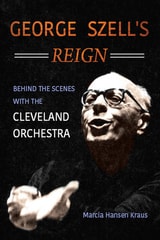
George Szell's Reign
Behind the Scenes with the Cleveland OrchestraMarcia Hansen Kraus
University of Illinois Press, 2019
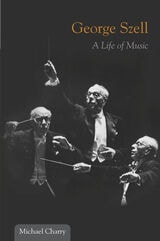
George Szell
A Life of MusicMichael Charry
University of Illinois Press, 2014
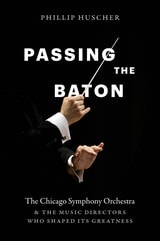
Passing the Baton
The Chicago Symphony Orchestra and the Music Directors Who Shaped Its GreatnessPhillip Huscher
University of Chicago Press, 2026
The untold story of how the Chicago Symphony Orchestra forged its place among the world’s foremost performing arts institutions through 135 years of change.
The Chicago Symphony Orchestra boasts a tradition and staying power that few cultural institutions can rival—a legacy that is tested each time one music director passes the conductor’s baton to another. In this first narrative account of the orchestra’s 135-year history, music critic and historian Phillip Huscher delivers a passionate description of how an upstart ensemble rose to international prominence and established itself as the premier symphony orchestra in the United States.
With a scholar’s care for detail and a novelist’s attention to drama, Huscher invites us into the tangled machinations behind the success or failure of each chapter in the orchestra’s storied past. We see how legendary directors such as Fritz Reiner, Sir Georg Solti, and Riccardo Muti carried the orchestra to new heights of technical perfection and sonic brilliance, but also how others provoked public outcry, caved to insider hostility, or fell to cruel press. The result is a vivid portrait of an orchestra fighting to sustain its identity amid the constant contest between past and present, supporters and critics, and artistic and financial vision.
Woven into this saga are personal stories drawn from newly uncovered documents and interviews with players, conductors, and policymakers about the burden of inheritance, the price of ambition, and the yearning to forge a legacy. Taken together, this is a tale about the power of music—how it can help us navigate our lives and leave a lasting impact on the world around us.
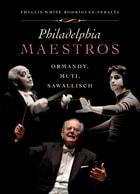
Philadelphia Maestros
Ormandy, Muti, SawallischPhyllis Rodriquez-Peralta
Temple University Press, 2006
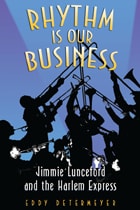
Rhythm Is Our Business
Jimmie Lunceford and the Harlem ExpressEddy Determeyer
University of Michigan Press, 2010
"The first detailed study of one of the swing era's most important bands and the first biography of its leader, Jimmie Lunceford. This is a most welcome and significant contribution to the literature of jazz, to our understanding of a vital period in jazz history, and to the music of an outstanding and unique ensemble that was emblematic of the swing era."
---Dan Morgenstern, Director, Institute of Jazz Studies, Rutgers University, and author of Living with Jazz
"We were more popular than Benny Goodman! We were the first black band that played the Paramount Theater, downtown New York. Not Duke Ellington, not Count Basie. Six weeks in a row, four or five shows daily, and it was packed every day, people lining up around the corner constantly! We could outdraw any band in the country."
---Gerald Wilson
"Jimmie Lunceford was a key swing-era figure, and no book covers his biography and music like this one does. Grounded in years of research and inspired by the writer's love of his subject, the book fills a critical gap in the jazz literature and will be essential reading for all swing aficionados."
---Jeffrey Magee, Associate Professor of Musicology, University of Illinois, Urbana-Champaign, and author of The Uncrowned King of Swing: Fletcher Henderson and Big Band Jazz
"It was Jimmie Lunceford and his orchestra that inspired me to become a musician. I was eleven years old at the time. When I heard that band play I said to myself, 'That's for me. I want to become a musician.' I still get inspired when I listen to some of their recordings. The Jimmie Lunceford Orchestra is one of the great jazz orchestras of all time."
---Horace Silver
"Jimmie Lunceford has the best of all bands. Duke is great, Basie is remarkable, but Lunceford tops them both."
---Glenn Miller
In the 1930s, swing music reigned, and the Jimmie Lunceford Orchestra was the hottest and hippest attraction on the black dance circuits. Known for its impeccable appearance and infectious rhythms, Lunceford's group was able to out-swing and outdraw any band. For ten consecutive years, they were the best-loved attraction at Harlem's famed Apollo Theater. The group's hit recordings sold in the hundreds of thousands, and Jimmie Lunceford's band rivaled Ellington's for popularity in the African American community.
Jimmie Lunceford was also an innovator, elevating big-band showmanship to an art and introducing such novel instruments as the electric guitar and bass. The band's arrangements, written by Sy Oliver, Edwin Wilcox, Gerald Wilson, Billy Moore, Jr., and Tadd Dameron, were daring and forward looking, influencing generations of big-band writers.
Rhythm Is Our Business traces the development of the Jimmie Lunceford Orchestra from its infant days as a high school band in Memphis to its record-breaking tours across the United States, Canada, and Europe. The book also unveils Lunceford's romantic yet ill-fated involvement with Yolande Du Bois, daughter of famous writer and opinion leader W.E.B. Du Bois. And by reconstructing Lunceford's last day, the book offers a glimpse into the mysteries surrounding the leader's untimely death. This is essential reading for anyone interested in the history and legacy of swing.
Eddy Determeyer has been a freelance music journalist for more than three decades. In 1984 Determeyer wrote a seven-part series on Jimmie Lunceford for the Dutch magazine Jazz Nu. Determeyer has written thousands of articles on music for a variety of Dutch publications and is the author of several books. He currently produces the Holiday for Hipsters radio show for Dutch station Concertzender.
Cover image: Lunceford brass section, ca. late 1936. Left to right: Paul Webster, Eddie Durham, Sy Oliver, Elmer Crumbley, Eddie Tompkins, Russell Bowles. (Bertil Lyttkens Collection)

Right Back Where I Started
A Memoir in MusicDavid Itkin
University of North Texas Press, 2025
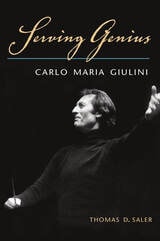
Serving Genius
Carlo Maria GiuliniThomas D. Saler
University of Illinois Press, 2020
Serving Genius tells the life story of Carlo Maria Giulini, one of the most renowned and beloved conductors of the twentieth century. Detailing Giulini's extraordinary professional career, Thomas D. Saler also chronicles Giulini's personal life, including his musical awakening while growing up amid the spectacular beauty of the Dolomite mountains, his years as a student in Rome's Academy of St. Cecilia, his conscription into the Italian army during World War II, his nine months in hiding for his anti-fascist and pacifist beliefs, and his selfless devotion to his wife, Marcella.
A humble master who shunned the limelight, Giulini took a deeply emotional and subjective approach to making music. Saler provides uniquely detailed analysis of Giulini's nuanced musicianship and the way he conveyed that musicianship to the orchestra through physical gestures. Meditating on the very art of conducting at which Giulini excelled, Saler discusses each of the conductor's major musical appointments, including stints with the Chicago Symphony Orchestra, Philharmonia Orchestra, Vienna Symphony, and Los Angeles Philharmonic. The book also addresses his repertoire of choice, leadership style, and moral framework.
Drawing on extensive interviews with Giulini's family, music critics, arts administrators, orchestra members, and collaborating soloists, Serving Genius draws out the personal amid the professional life of this giant among twentieth-century conductors.
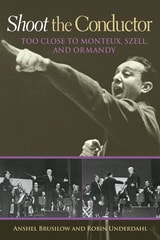
Shoot the Conductor
Too Close to Monteux, Szell, and OrmandyAnshel Brusilow
University of North Texas Press, 2015
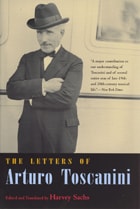
The Letters of Arturo Toscanini
Arturo Toscanini
University of Chicago Press, 2006
“This is a major contribution to our understanding of Toscanini and of several entire eras of late nineteenth- and twentieth-century musical life, especially the almost improvisatory looseness of opera in Italy, the glamour of European festivals, and the concert life of the United States. It’s also a wonderful, sometimes downright salacious read.”—New York Times
“Toscanini’s large, cranky humanity comes alive throughout his letters, as it does in his best recordings.”—New York Review of Books
“Edited with scrupulous care and wide-ranging erudition.”—Wall Street Journal
“Sachs has served the conductor well . . . by editing this generously annotated and unprecedentedly revealing collection of letters that were written, usually in haste and often in fury, over the course of seventy years.”—Washington Post
The Other Toscanini
The Life and Works of Hector PanizzaDe Fillippi Sebastiano
University of North Texas Press, 2019
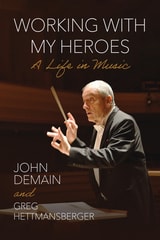
Working with My Heroes
A Life in MusicJohn L. DeMain and Greg Hettmansberger
University of Wisconsin Press, 2026
A Grammy and Tony Award–winning conductor, John DeMain has been a fixture of Madison, Wisconsin, for more than three decades, serving as music director of the Madison Symphony Orchestra and artistic director of the Madison Opera. Before and since then, he has been an internationally recognized conductor, equally at home in the worlds of classical music, opera, and Broadway.
In Working with My Heroes, written with the late Greg Hettmansberger, DeMain recounts incredible experiences—from his days studying piano in Youngstown, Ohio, to his years as an undergraduate and graduate student at Julliard, to his early jobs in summer stock productions, to numerous acclaimed productions—without ever losing sight of the wonder and awe he felt as a young musician first learning his way in the world. With warmth and humor, he provides valuable insight into the business of music making, while also sharing behind-the-scenes stories of entertaining situations he found himself in throughout the years—from playing piano at a gangster’s wedding to an unexpected dressing room encounter with a Broadway star to conducting an opera with circus elephants.
DeMain has had many career-defining moments behind the podium, conducting world premieres of Leonard Bernstein’s A Quiet Place, John Adams’s Nixon in China, and Jeanine Tesoro’s Blue, as well as the U.S. premiere of Philip Glass’s Akhnaten, among others. He guest-conducted symphonies and operas in New York, Chicago, Los Angeles, and elsewhere. DeMain cemented his reputation with the 1976 Houston Grand Opera performances of George and Ira Gershwin’s Porgy and Bess, establishing its stature as a quintessentially American opera. The singers, musicians, and composers DeMain has worked with over the past six decades are a veritable Who’s Who of American classical music. This memoir places readers by his side, allowing them to experience all the wonders and joy of a life spent making music.