Results by title
29 books match the query 'Confessions'
All the Lost Girls
Confessions of a Southern DaughterPatricia Foster
University of Alabama Press, 2002
Patricia Foster’s lyrical yet often painful memoir explores the life of a white middle-class girl who grew up in rural south Alabama in the 1950s and 1960s, a time and place that did not tolerate deviation from traditional gender roles. Her mother raised Foster and her sister as “honorary boys,” girls with the ambition of men but the temperament of women.
An unhappy, intelligent woman who kept a heartbreaking secret from everyone close to her, Foster's mother was driven by a repressed rage that fed her obsession for middle-class respectability. By the time Foster reached age fifteen, her efforts to reconcile the contradictory expectations that she be at once ambitious and restrained had left her nervous and needy inside even while she tried to cultivate the appearance of the model student, sister, and daughter. It was only a psychological and physical breakdown that helped her to realize that she couldn't save her driven, complicated mother and must struggle instead for both understanding and autonomy.
Confessions
Saint Augustine
Catholic University of America Press, 1953
Confessions of Joan the Tall
Joan Cusack Handler
CavanKerry Press, 2012

Confessions of St. Augustine in Latin
Andrew Beer
Catholic University of America Press, 2026
Confessions of a Book Reviewer
The Best of Carte BlancheMichael Cart
American Library Association, 2018
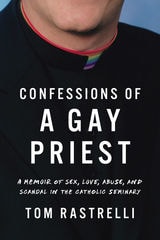
Confessions of a Gay Priest
A Memoir of Sex, Love, Abuse, and Scandal in the Catholic SeminaryTom Rastrelli
University of Iowa Press, 2020
Tom Rastrelli is a survivor of clergy-perpetrated sexual abuse who then became a priest in the early days of the Catholic Church’s ongoing scandals. Confessions of a Gay Priest divulges the clandestine inner workings of the seminary, providing an intimate and unapologetic look into the psychosexual and spiritual dynamics of celibacy and lays bare the “formation” system that perpetuates the cycle of abuse and cover-up that continues today.
Under the guidance of a charismatic college campus minister, Rastrelli sought to reconcile his homosexuality and childhood sexual abuse. When he felt called to the priesthood, Rastrelli began the process of “priestly discernment.” Priests welcomed him into a confusing clerical culture where public displays of piety, celibacy, and homophobia masked a closeted underworld in which elder priests preyed upon young recruits.
From there he ventured deeper into the seminary system seeking healing, hoping to help others, and striving not to live a double life. Trained to treat sexuality like an addiction, he and his brother seminarians lived in a world of cliques, competition, self-loathing, alcohol, hidden crushes, and closeted sex. Ultimately, the “formation” intended to make Rastrelli a compliant priest helped to liberate him.
Confessions of a Horseshoer
Ron Tatum
University of North Texas Press, 2012
Confessions of a Left-Handed Man
An Artist's MemoirPeter Selgin
University of Iowa Press, 2011
Peter Selgin was cursed/blessed with an unusual childhood. The son of Italian immigrants—his father an electronics inventor and a mother so good looking UPS drivers swerved off their routes to see her—Selgin spent his formative years scrambling among the hat factory ruins of a small Connecticut town, visiting doting—and dotty—relatives in the “old world,” watching mental giants clash at Mensa gatherings, enduring Pavlovian training sessions with a grandmother bent on “curing” his left-handedness, and competing savagely with his right-handed twin.
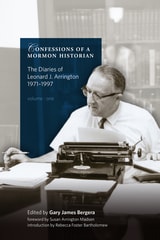
Confessions of a Mormon Historian
The Diaries of Leonard J. Arrington, 1971-1997: Volume 1, Church Historian, 1971-75Gary James Bergera
Signature Books, 2018
Leonard Arrington (1917–99) was born an Idaho chicken rancher whose early interests seemed not to extend much beyond the American west. Throughout his life, he tended to project a folksy persona, although nothing was farther from the truth.
He was, in fact, an intellectually oriented, academically driven young man, determined to explore the historical, economic, cultural, and religious issues of his time. After distinguishing himself at the University of North Carolina (Chapel Hill) and serving in the army during World War II in North Africa and Italy, Arrington accepted a professorship at Utah State University. In 1972 he was called as the LDS Church Historian—an office he held for ten years until, following a stormy tenure full of controversy over whether the “New Mormon History” he championed was appropriate for the church, he was quietly released and transferred, along with the entire Church History Division, to Brigham Young University. It was hoped that this would remove the impression in people’s minds that his writings were church-approved.
His personal diaries reveal a man who was firmly committed to his church, as well as to rigorous historical scholarship. His eye for detail made him an important observer of “church headquarters culture.”
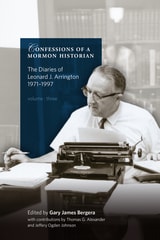
Confessions of a Mormon Historian
The Diaries of Leonard J. Arrington, 1971-1997: Volume 3, Exile, 1980-97Gary James Bergera
Signature Books, 2018
Leonard Arrington (1917–99) was born an Idaho chicken rancher whose early interests seemed not to extend much beyond the American west. Throughout his life, he tended to project a folksy persona, although nothing was farther from the truth.
He was, in fact, an intellectually oriented, academically driven young man, determined to explore the historical, economic, cultural, and religious issues of his time. After distinguishing himself at the University of North Carolina (Chapel Hill) and serving in the army during World War II in North Africa and Italy, Arrington accepted a professorship at Utah State University. In 1972 he was called as the LDS Church Historian—an office he held for ten years until, following a stormy tenure full of controversy over whether the “New Mormon History” he championed was appropriate for the church, he was quietly released and transferred, along with the entire Church History Division, to Brigham Young University. It was hoped that this would remove the impression in people’s minds that his writings were church-approved.
His personal diaries reveal a man who was firmly committed to his church, as well as to rigorous historical scholarship. His eye for detail made him an important observer of “church headquarters culture.”
Confessions of a Presidential Speechwriter
Craig R. Smith
Michigan State University Press, 2014
Confessions of a Prosaic Dreamer
Charles Lamb's Art of AutobiographyGerald Monsman
Duke University Press, 1984
Gerald Monsman in this study abandons the customary chronological approach to Lamb's life in favor of a more incisive, open-ended discussion of the Elia essays. By a close textual examination of Lamb's language, he relates the essayist's use of symbol and autobiographical concerns. Monsman contends and demonstrates that "as sharply and as pertinently as any artistic voice, Elia, the most celebrated persona in the nineteenth century, focuses the problems inherent in the modern literary imagination." Elia's "textual identity is a function of the author's actual life, of losses and imperfections artistically utilized and harmonized, employed against themselves to produce the rehabilitating symbol."

Confessions of an American Scholar
Simon O’Toole
University of Minnesota Press, 1970
Confessions of an American Scholar was first published in 1970. Minnesota Archive Editions uses digital technology to make long-unavailable books once again accessible, and are published unaltered from the original University of Minnesota Press editions.
Professor O'Toole, a well-known American literary scholar (Simon O'Toole is a pseudonym), gives us a candid, amusing, and, on the whole, frightening look at what really goes on in academic life. He has taught at black and white colleges, private and public colleges, Ivy Leagues and brick colleges; and over the years he has found himself transformed from a good teacher and no scholar into a prolific scholar and a tired teacher. Along the way he fought Joe McCarthy and told his students to burn their draft cards. At the conclusion of his tale he makes some serious proposals for a solution to what he calls the mess of American education. At the core of his suggestions is the opinion that America needs less education instead of more, an idea that seems certain to evoke cries of treason from many of his academic brethren.
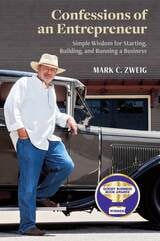
Confessions of an Entrepreneur
Simple Wisdom for Starting, Building, and Running a BusinessMark C. Zweig
Epic Books, 2022
Finalist, 2022 Goody Business Book Awards, Entrepreneur, Start Ups / New Business Category
With more than fifty years of professional experience, Mark C. Zweig has seen it all—from the fear and excitement of starting a new business to the joys and challenges of life as an entrepreneur. In Confessions of an Entrepreneur: Simple Wisdom for Starting, Building, and Running a Business, Zweig draws upon this wealth of experience to offer practical, easy-to-understand guidance for bringing a business to life and cultivating success at every stage of its development. The candid stories he shares from his career provide insight into the realities of business ownership and illustrate proven principles for both personal and professional success. Written by an entrepreneur for entrepreneurs, this book is an indispensable guide filled with wisdom for new and seasoned business leaders alike.

Confessions of an Iyeska
Viola Burnette
University of Utah Press, 2018
The Fort Laramie treaties of 1851 and 1868 changed everything for the Sioux. When Burnette was born on the Rosebud Indian Reservation in the late 1930s, her people were still striving to make sense of how to live under the impoverished conditions created by the imposed land restrictions. Like most Native children at that time, she was forced by federal law to attend boarding school and assimilate into white culture. Her story reveals the resulting internal conflict that she and her people faced in embracing their own identity in a world where those in authority taught that speaking Lakota and being Indian were wrong. After a difficult jump into adulthood, Burnette emerged from an abusive marriage and, while raising four children, enrolled in junior college in her thirties and law school in her forties. She went on to become an advocate for women subjected to domestic violence and the first attorney general for the Rosebud Sioux Tribe.
Borne out under the far-reaching effects of the government-enforced restructuring of her people, Burnette’s inspiring narrative of strength and determination makes clear the importance of understanding history from a Native standpoint.
“I am an Iyeska and I am assimilated, but on my own terms. I choose when, where, and how I use the knowledge and skills I have learned. As long as we continue to teach our children and grandchildren the language, values, and traditions of the Lakota people, we will survive.”—from the book
Confessions of the Letter Closet
Epistolary Fiction and Queer Desire in Modern SpainPatrick Paul Garlinger
University of Minnesota Press, 2005
Deaf Peddler
Confessions of an Inside ManDennis S. Buck
Gallaudet University Press, 2000
In airports and train stations it is not unusual for waiting passengers to be approached by a person who will hand out a brochure or trinket, then indicate that he or she is deaf and ask for payment, anything they can afford. In many instances, the travelers feel pity for the poor unfortunate and dole out a dollar or two, yet most are utterly unaware that these pitiful beggars earn hundred of dollars this way in a matter of a few hours. Dennis Buck knows this unique form of panhandling intimately because, despite holding a degree in computer science and receiving Supplemental Security Income (SSI) and Social Security Disability Insurance (SSDI), he was a deaf peddler for 11 years.
In Deaf Peddler: Confessions of an Inside Man, Buck unveils all of the ins and outs of exploiting his “disabilities” to earn easy money. Buck details the day-to-day life of a deaf peddler, including where to go to make the most money in the least time (airports with their constant transient clientele, malls on weekends, and fast food restaurants), how to live on the cheap (wait for people checking out to leave their motel rooms, then sneak in to use the shower), and how to live well when business is good. He also explains how he organized his rounds using a spreadsheet program.
Deaf Peddler also provides a historical perspective on deaf peddling as a way for under-educated deaf people to make a living when jobs were hard to find, wages were low, and Social Security did not exist. The “no good” life served as the rationale to many deaf people for peddling, but many more in the Deaf community deplored their actions, and the National Association of the Deaf campaigned to discourage this behavior that reinforced deaf stereotypes. Buck abandoned peddling himself for this reason, but he points out that deaf peddling survives today, frequently in the highly exploitative form of rings of deaf workers completely controlled by oppressive deaf and hearing overseers. Deaf Peddler presents in engaging fashion a little-known cultural phenomenon that offers a revealing turn on the general issue of panhandling in our society today.
Dirty Waters
Confessions of Chicago's Last Harbor BossR. J. Nelson
University of Chicago Press, 2016
In 1987, the city of Chicago hired a former radical college chaplain to clean up rampant corruption on the waterfront. R. J. Nelson thought he was used to the darker side of the law—he had been followed by federal agents and wiretapped due to his antiwar stances in the sixties—but nothing could prepare him for the wretched bog that constituted the world of a Harbor Boss. Dirty Waters is the wry, no-holds-barred memoir of Nelson’s time controlling some of the city’s most beautiful spots while facing some of its ugliest traditions. Nelson takes us through Chicago's beloved “blue spaces” and deep into the city’s political morass, revealing the different moralities underlining three mayoral administrations and navigating the gritty mechanisms of the city’s political machine. Ultimately, Dirty Waters is a tale of morality, of what it takes to be a force for good in the world and what struggles come from trying to stay ethically afloat in a sea of corruption.
Dolphin Confidential
Confessions of a Field BiologistMaddalena Bearzi
University of Chicago Press, 2012
In this intimate narrative, Bearzi recounts her experiences at sea, tracing her own evolution as a woman and a scientist from her earliest travails to her transformation into an advocate for conservation and dolphin protection. These compelling, in-depth descriptions of her fieldwork also present a captivating look into dolphin social behavior and intelligence. The central part of the book is devoted to the metropolitan bottlenose dolphins of California, as Bearzi draws on her extensive experience to offer insights into the daily lives of these creatures—as well as the difficulties involved in collecting the data that transforms hunches into hypotheses and eventually scientific facts. The book closes by addressing the critical environmental and conservation problems facing these magnificent, socially complex, highly intelligent, and emotional beings.
An honest, down-to-earth analysis of what it means to be a marine biologist in the field today, Dolphin Confidential offers an entertaining, refreshingly candid, and always informative description of life among the dolphins.
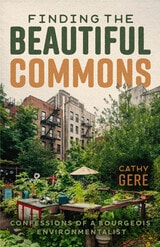
Finding the Beautiful Commons
Confessions of a Bourgeois EnvironmentalistCathy Gere
University of Chicago Press, 2027
A call to pleasurable and sustainable action that centers our shared stewardship of shared spaces.
Environmentally-conscious decision-making can seem like an exercise in self-denial: don’t fly, don’t drive, don’t eat meat. But bringing our tote bags to the grocery store will never be enough to solve the climate crisis, nor will dropping out of society. Many of us crave a collective movement that acknowledges the value of comfort, a framework for making choices that are inherently imperfect, but ones we can live with.
In Finding the Beautiful Commons, historian Cathy Gere offers a relatable and inspiring guide to environmental action in a consumerist culture. Recounting her experiences as a young activist at the Greenham Common Women’s Peace Camp in Berkshire, as an anarchist and guerrilla gardener in a New York City squat, and as an academic working to decarbonize the University of California system, Gere argues for initiatives grounded in common property—streets, libraries, parks, and other shared spaces—where our communal interests can drive sustainability. These are also sites where we can put bourgeois values like beauty and personal enjoyment to good use protecting local landscapes and resources.
Funny, wise, and honest about the contradictions of life during climate crisis, Gere shows us that the commons we already know—the everyday infrastructure of mass transit, natural reserves, and public beaches—is the very foundation for a livable future.
Home Ice
Confessions of a Blackhawks FanKevin Cunningham
University of Iowa Press, 2017
Home Ice combines memoir and history to explore how the mysteries of Blackhawks fandom explain big questions like tribal belonging, masculinity, and why you would ever trade Chris Chelios. In recounting the team’s—and his own—wins and losses (and ties), Cunningham covers everything from Keith Magnuson’s bachelor pad to the grim early aughts to Patrick Kane’s Cup-winner. Throughout, he explores how we come to love the things we love. Funny and touching, Home Ice is one Blackhawk fan’s attempt to understand why sports fandom is utterly ridiculous and entirely necessary.
Police Interrogation and Confessions
Essays in Law and PolicyYale Kamisar
University of Michigan Press, 2025
Prodigal Son/Elder Brother
Interpretation and Alterity in Augustine, Petrarch, Kafka, LevinasJill Robbins
University of Chicago Press, 1991
"Through a creative reading of the prodigal son parable, Jill Robbins demonstrates the hermeneutical impasse of the Christian exegete who must and yet cannot incorporate the Old Testament. Having disclosed the aporia at the heart of Christian hermeneutics, she proposes an alternative approach to the Hebrew Bible and new interpretations of Augustine, Petrarch, Kafka, and Levinas. Robbins brilliantly integrates the discourses of biblical texts, literary works, and critical analysis."—Mark C. Taylor, Williams College

Stinging Trees and Wait-a-Whiles
Confessions of a Rainforest BiologistWilliam Laurance
University of Chicago Press, 2000
The book is his record of the time he spent in this remote area and his run-ins with plant, animal, and human species alike. Laurance lived in a tiny town of loggers and farmers, and he witnessed firsthand the impact of conservation issues on individual lives. He found himself at the center of a bitter battle over conservation strategies and became not only the subject of small-town gossip but also the object of many residents' hatred. Keeping ahead of his high-spirited young volunteers, hounded by the drug-sniffing local policeman, and all the while trying to further his own research amid natural and unnatural obstacles, Laurance offers us a personal and hilarious account of fieldwork and life in the Australian outpost of Millaa Millaa. Stinging Trees and Wait-a-Whiles is a biology lesson, a conservation primer, and an utterly energetic story about an impressionable young man who wound up at the epicenter of an issue that tore a small town apart.
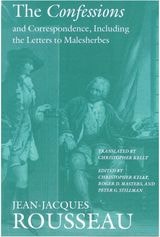
The Confessions and Correspondence, Including the Letters to Malesherbes
Jean-Jacques Rousseau
Dartmouth College Press, 1998
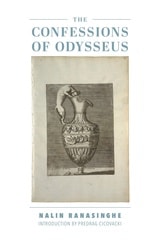
The Confessions of Odysseus
Nalin Ranasinghe
St. Augustine's Press, 2021
Predrag Cicovacki in his indispensable preface to the book, elucidates: “In Ranasinghe’s view, Odysseus is both the first recognizable human being and a model of curious and concupiscent human rationality that constantly strives toward the virtues of self-knowledge and moderation. Homer leads us to believe that the cosmos leans toward virtue, although its fundamental truths may be inherently unspeakable. This is the line of thought that Ranasinghe believes was further developed by Socrates, Plato, and Jesus, while being obscured by Aristotle, Augustine, and their followers. Homer’s later epic and his central insights are, according to Ranasinghe, the most fertile soil on which a humane civilization can grow and flourish.”
Yet Ranasinghe ultimately says it best. “Homer must be read as the wisest Greeks did, not for fantastic tales of the Olympians but because his myths reveal eternal constants of the human state: the soul’s ruling passions and the possibility of knowing and educating these false gods. Wrestled with thus the Iliad becomes a cautionary tale, not one urging literal reading or mindless mimesis. It may always be that for the few who grasp Homer, many more will obey his gods or imitate his antiheroes; but the Odyssey hints that while its poet sees this potential for misuse, he is willing to take a noble risk and hope that eros can listen to and educate thumos. This faith is implicit in his tale of Achilles and the Trojan War. It is vital today that we see how the West’s end resembles its angry origins, as depicted in the Iliad. This is why Homer is said to be as fresh as the morning newspaper. His wisdom may outlive our literacy.”
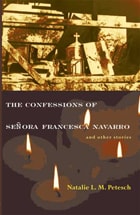
The Confessions of Señora Francesca Navarro and Other Stories
Natalie L. M. Petesch
Ohio University Press, 2005
“Memory, of course, is sometimes like a bucking horse, sometimes a runaway one, and one must control the reins until finally it stops, snorting with exhausted relief,” writes Natalie L. M. Petesch in her haunting new collection, The Confessions of Señora Francesca Navarro and Other Stories.
Petesch immerses readers in the lives of people caught up in the 1936–39 Spanish Civil War, which left more than five hundred thousand dead. She captures the hand-to-mouth existence on the streets of Madrid of two war orphans; an old soldier’s memories of a fallen militiawoman; the dilemma of Franco’s laundress as she seeks to duplicate a stolen religious icon she finds in his home; and a man’s struggle to find his bride among thousands of Republican refugees waiting for ships to evacuate them before Franco’s Fascists arrive to kill them.
In the title novella, an elderly woman describes to her granddaughter how the families of Franco’s officers fighting against Republican militiamen endured hunger, filth, and danger in an underground fortress. Petesch conveys the humiliating details of war through the sensibility of a cultured woman who recalls only too vividly latrines made of laundry tubs, the smell of unwashed humans, and the stench of death.
Brilliant in its imaginative power and heartbreaking in its access to the bottomless well of human tears, The Confessions of Señora Francesca Navarro and Other Stories is the work of a mature artist able to convey a particular world so vividly that we know these people as our own.
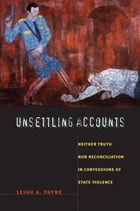
Unsettling Accounts
Neither Truth nor Reconciliation in Confessions of State ViolenceLeigh A. Payne
Duke University Press, 2008
Payne draws on interviews, unedited television film, newspaper archives, and books written by perpetrators to analyze confessions of state violence in Argentina, Chile, Brazil, and South Africa. Each of these four countries addressed its past through a different institutional form—from blanket amnesty, to conditional amnesty based on confessions, to judicial trials. Payne considers perpetrators’ confessions as performance, examining what they say and what they communicate nonverbally; the timing, setting, and reception of their confessions; and the different ways that they portray their pasts, whether in terms of remorse, heroism, denial, or sadism, or through lies or betrayal.
Wainewright the Poisoner
The Confessions of Thomas Griffiths WainewrightAndrew Motion
University of Chicago Press, 2001
"Thomas Griffiths Wainewright is a dream subject for either novelist or biographer. . . . Andrew Motion, Britain's poet laureate, clearly felt that neither straight biography nor pure fiction would do Wainewright's complexities justice, and so he combined the two genres. The result is stunning. The central voice is that of Wainewright himself, reflecting back on his life. After each chapter Mr. Motion has added detailed notes that inform and flesh out the narrative, giving not only his own informed opinion of Wainewright's actions but also those of Wainewright's contemporaries and the scholars and writers who have studied him over the past two centuries."—Lucy Moore, Washington Times
"Brilliantly innovative, gripping, intricately researched, Motion's biography does justice to its subject at last."—John Carey, The Sunday Times
"Engaging and convincing. . . . The trajectory of this character-from neglected and resentful child to arrogant and envious London dandy to sociopathic murderer on to an enfeebled, frightened prisoner-is indelibly imagined and drawn."—Edmund White, Financial Times
"[A] fascinating look at an evil artist, a charmer still having his way with us. We can hear him being economical with the truth, telling us and himself just what he wants to hear."—Michael Olmert, New Jersey Star Ledger
"Motion crafts a fascinating tale as complex and compelling as if Wainewright himself had written it."—Michael Spinella, Booklist
"Did he kill his servant, and possibly others as well? . . . The footnotes seem to say yes, but Wainewright adamantly argues his own case. Motion's prose is flawless, and Wainewright's voice is convincing. But in the long run, it's this ambiguity that makes Wainewright the Poisoner a fascinating and memorable read."—R.V. Schelde, Sacramento News and Review
"Who could as for a better Romantic villain than Thomas Griffiths Wainewright? . . . [The book] succeeds on many levels: as an act of ventriloquism, a work of scholarship, a psychological study, as a set of sharp portraits of famous men and an engrossing read. . . ."—Polly Shulman, Newsday
"Instead of a straightforward biography, Andrew Motion gives us Wainewright's first person, fictionalized "confession."—a document as circumspect, slyly reticent, and oeaginously smooth as the man himself. Splendid."—John Banville, Literary Review
"A genuine tour de force, and on a non-fictional level, a telling portrait of a strange, intriguing and repellant man."—Brian Fallon, Irish Times
"A marvelous literary hybrid that totters with one foot in the world of nonfiction, the other in the land of make-believe. One is alternatively swept up in Motion's dizzy imaginative pastiche, or sent crashing into a dusty stack of scholarly cogitations. . . ."—Philadelphia Inquirer
"As true a portrait of a liar as its subject could wish. Rich and strange. . . ."—Glasgow Herald