Results by title

2 books match the query 'Consumer Society'
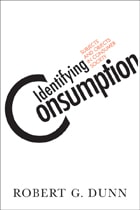
cover of Identifying Consumption: Subjects and Objects in Consumer Society

Identifying Consumption

Subjects and Objects in Consumer Society

Robert G. Dunn

Temple University Press, 2008

Identifying Consumption illustrates how an individual’s buying habits are shaped by the dynamics of the consumer marketplace—and thus how consumption and identity inform each other. Robert Dunn brings together the various theories of spending and develops a mode of analysis concentrating on the individual subjectivity of consumption. By doing so, he addresses how we spend and its relationship with status and lifestyle.

Dunn provides a comprehensive guide to the study of modern consumer behavior before summarizing and critiquing the major theories of consumption. At this juncture, he proposes a method of analysis that focuses on the significance of status and lifestyle in social relations that can help explain how the consumer marketplace is shaped. He concludes by raising issues about different ways of consuming and the relationship between consumption and identity.

[more]
cover of Why I Buy: Self, Taste, and Consumer Society in America

Why I Buy

Self, Taste, and Consumer Society in America

Rami Gabriel

Intellect Books, 2013

Why do we buy? How do our acts of—and ideas about—consumption impact our selves, our institutions, and our societies? An incisive response to these questions, Why I Buy explains how consumption came to give meaning and value to social and personal life.
 
Balancing psychological, conceptual, and historical analyses with examples drawn from popular culture and mass media, Rami Gabriel traces the ways in which beliefs about the self—including dualism, individualism, and expressivism—influence consumer behavior. These understandings of the self, Gabriel argues, structure the values that Americans seek and find in consumer society; they therefore have structural consequences for our cultural, political, and economic lives. For example, Gabriel describes how imbalances in the institutions of participatory politics have directly resulted from a consumer society centered on powerful nongovernmental institutions and a scattered body of disengaged citizens whose social and individual needs are not primarily satisfied through civic involvement. By exploring the relationship between our individual needs and our institutions, Gabriel ultimately points the way toward transformations that could lead to a more sustaining and sustainable society.
[more]