Results by title
15 books match the query 'Contagious (incl. Pandemics)'
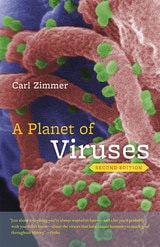
A Planet of Viruses
Second EditionCarl Zimmer
University of Chicago Press, 2015
Fortunately, science writer Carl Zimmer is here to guide us. In this compact volume, he tells the story of how the smallest living things known to science can bring an entire planet of people to a halt--and what we can learn from how we've defeated them in the past.
Planet of Viruses covers such threats as Ebola, MERS, and chikungunya virus; tells about recent scientific discoveries, such as a hundred-million-year-old virus that infected the common ancestor of armadillos, elephants, and humans; and shares new findings that show why climate change may lead to even deadlier outbreaks. Zimmer’s lucid explanations and fascinating stories demonstrate how deeply humans and viruses are intertwined. Viruses helped give rise to the first life-forms, are responsible for many of our most devastating diseases, and will continue to control our fate for centuries. Thoroughly readable, and, for all its honesty about the threats, as reassuring as it is frightening, A Planet of Viruses is a fascinating tour of a world we all need to better understand.
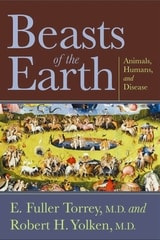
Beasts of the Earth
Animals, Humans, and DiseaseTorrey, E. Fuller
Rutgers University Press, 2014
Humans have lived in close proximity to other animals for thousands of years. Recent scientific studies have even shown that the presence of animals has a positive effect on our physical and mental health. People with pets typically have lower blood pressure, show fewer symptoms of depression, and tend to get more exercise.
But there is a darker side to the relationship between animals and humans. Animals are carriers of harmful infectious agents and the source of a myriad of human diseases. In recent years, the emergence of high-profile illnesses such as AIDS, SARS, West Nile virus, and bird flu has drawn much public attention, but as E. Fuller Torrey and Robert H. Yolken reveal, the transfer of deadly microbes from animals to humans is neither a new nor an easily avoided problem.
Beginning with the domestication of farm animals nearly 10,000 years ago, Beasts of the Earth traces the ways that human-animal contact has evolved over time. Today, shared living quarters, overlapping ecosystems, and experimental surgical practices where organs or tissues are transplanted from non-humans into humans continue to open new avenues for the transmission of infectious agents. Other changes in human behavior like increased air travel, automated food processing, and threats of bioterrorism are increasing the contagion factor by transporting microbes further distances and to larger populations in virtually no time at all.
While the authors urge that a better understanding of past diseases may help us lessen the severity of some illnesses, they also warn that, given our increasingly crowded planet, it is not a question of if but when and how often animal-transmitted diseases will pose serious challenges to human health in the future.
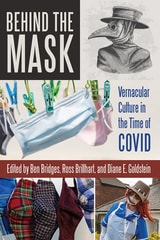
Behind the Mask
Vernacular Culture in the Time of COVIDBen Bridges
Utah State University Press, 2023
Despite vernacular’s potential nod to dominant or external culture, it is the strong connection to the local that grounds the vernacular within the experiential context that it occupies. Exploring the nature and shape of vernacular responses to the ongoing public health crisis, Behind the Mask documents processes that are otherwise likely to be forgotten. Including different ethnographic presents, contributors capture moments during the pandemic rather than upon reflection, making the work important to students and scholars of folklore and ethnology, as well as general readers interested in the COVID pandemic.
Black Women and da ’Rona
Community, Consciousness, and Ethics of CareEdited by Julia S. Jordan-Zachery and Shamara Wyllie Alhassan
University of Arizona Press, 2023
Recognizing that Black women have been living in pandemics as far back as colonialism and enslavement, this volume acknowledges that records of the past—from the 1918 flu pandemic to the onset of the HIV/AIDS epidemic—often erase the existence and experiences of Black women as a whole. Writing against this archival erasure, this collection consciously recenters the real-time experiences and perspectives of care, policy concerns, grief, and joy of Black women throughout the COVID-19 pandemic.
Nineteen contributors from interdisciplinary fields and diverse backgrounds explore Black feminine community, consciousness, ethics of care, spirituality, and social critique. They situate Black women’s multidimensional experiences with COVID-19 and other violences that affect their lives. The stories they tell are connected and interwoven, bound together by anti-Black gendered COVID necropolitics and commitments to creating new spaces for breathing, healing, and wellness.
Ultimately, this time-warping analysis shows how Black women imagine a more just society, rapidly adapt to changing experiences, and innovate ethics of care even in the midst of physical distancing, which can be instructive for thinking of new ways of living both during and beyond the era of COVID-19.
Contributors
Shamara Wyllie Alhassan
Sharnnia Artis
Keisha L. Bentley-Edwards
Candace S. Brown
Jenny Douglas
Kaja Dunn
Onisha Etkins
Rhonda M. Gonzales
Endia Hayes
Ashley E. Hollingshead
Kendra Jason
Julia S. Jordan-Zachery
Stacie LeSure
Janaka B. Lewis
Michelle Meggs
Nitya Mehrotra
Sherine Andreine Powerful
Marjorie Shavers
Breauna Marie Spencer
Tehia Starker Glass
Amber Walker
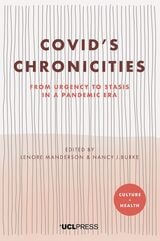
Covid’s Chronicities
From Urgency to Stasis in a Pandemic EraEdited by Lenore Manderson and Nancy J. Burke
University College London, 2025
While the initial urgency of the COVID-19 pandemic fades, its long-term disruptions continue to reshape societies and individual lives. Covid’s Chronicities captures the global experience of a crisis that has evolved into a persistent state of uncertainty. Based on research from Europe, the Americas, Asia, and Africa, this volume examines how governments and communities have navigated everything from shifting policies to the social and economic aftershocks of the pandemic.
This volume reveals how COVID-19 has exacerbated existing inequalities and exposed deep structural neglect while also highlighting the resilience of communities, such as Indigenous knowledge systems and grassroots mutual aid networks. Tracing the pandemic’s transition from emergency to enduring crisis, the authors offer a sobering yet hopeful analysis of how people continue to remake their worlds in the face of ongoing instability.
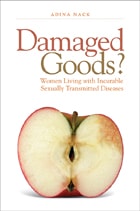
Damaged Goods?
Women Living With Incurable Sexually Transmitted DiseasesAdina Nack
Temple University Press, 2008
How do women living with genital herpes and/or HPV (human papilloma virus) infections see themselves as sexual beings, and what choices do they make about sexual health issues? Adina Nack, a medical sociologist who specializes in sexual health and social psychology, conducted in-depth interviews with 43 women about their identities and sexuality in regards to chronic illness. The result is a fascinating book about an issue that affects over 15 million Americans, but is all too little discussed.
Damaged Goods adds to our knowledge of how women are affected by living with chronic STDs and reveals the stages of their sexual- self transformation. From the anxiety of being diagnosed with an STD to issues of blame and shame, Nack-herself diagnosed with a cervical HPV infection-shows why these women feeling that they are "damaged goods," question future relationships, marriage, and their ability to have healthy children.

Guarding the Golden Gate
A History of the U.S. Quarantine Station in San Francisco BayJ. Gordon Frierson, MD
University of Nevada Press, 2022
Guarding the Golden Gate covers not only the creation and operation of the station, which is integral to San Francisco’s history, but also discusses the challenges of life on Angel Island—a small, exposed, and nearly waterless landmass on the north side of the Bay. The book reveals the steps taken to prevent the spread of diseases not only into the United States but also into other ports visited by ships leaving San Francisco; the political struggles over the establishment of a national quarantine station; and the day-to-day life of the immigrants and staff inhabiting the island. With the advancement of the understanding of infectious diseases and the development of treatments, the quarantine station’s activities declined in the 1930s, and the facility ultimately shuttered its doors in 1949.
While Angel Island is now a California state park, it remains as a testament to an influential period in the nation’s history that offers rich insights into efforts to maintain the public’s safety during health crises.
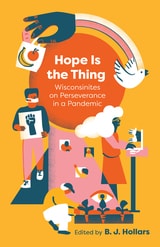
Hope is the Thing
Wisconsinites on Perseverance in a PandemicB. J. Hollars
Wisconsin Historical Society Press, 2021
As the one hundred essays and poems gathered here demonstrate, hope comes in many forms: a dad dance, a birth plan, an unblemished banana, a visit from a neighborhood dog, the revival of an old tradition, empathy. The contributors are racially, geographically, and culturally diverse, representing a rough cross section of Wisconsin voices, from truck driver to poet laureate, from middle school student to octogenarian, from small business owner to seasoned writer. The result is a book-length exploration of the depth and range of hope experienced in times of crisis, as well as an important record of what Wisconsinites were facing and feeling through these historic times.
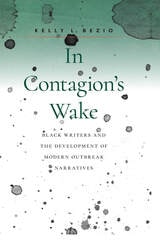
In Contagion's Wake
Black Writers and the Development of Modern Outbreak NarrativesKelly L. Bezio
University of Massachusetts Press, 2026
An examination of early American literature that highlights how racial divides exacerbated—and were exacerbated by—the spread of infection
In April of 1721, the HMS Seahorse arrived in Boston from the West Indies, causing a smallpox epidemic that would plague the city for the next year. Of its 12,000 inhabitants, nearly fifty percent were infected, and 900 people died. Like the coronavirus pandemic that began in 2020, the outbreak also brought to the surface deep divides in the social fabric of colonial New England and laid the groundwork for racialized political inequities that we continue to grapple with today.
In Contagion’s Wake examines a range of American outbreak narratives, both historical and fictional, written between the early 1700s and the early 1900s—from the rise of inoculation through the advent of germ theory. Author Kelly L. Bezio argues that during this period, literature about communicable disease was dominated by white authors, such as Cotton Mather and Edgar Allen Poe, who tended to privilege white suffering and survival while obscuring Black suffering and vulnerability. Black authors, however, such as Olaudah Equiano and Frances E.W. Harper, developed variations on plot structures, metaphors, and imagery that drew upon contagion to represent racial injustice and further the cause of Black liberation.
The diverse texts Bezio analyzes vary extensively in genre and geographical location, and in the illnesses that feature in their pages. Significant disorders from the era, including yellow fever, smallpox, consumption, and cholera, make frequent appearances, as do less culturally dominant diseases such as St. Anthony’s Fire. In Contagion’s Wake contends that representations of communicable disease should not be understood only as within their own historical moment; rather, they function more like a DNA code for our present time.
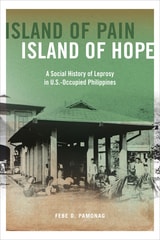
Island of Pain, Island of Hope
A Social History of Leprosy in U.S.-Occupied PhilippinesFebe D. Pamonag
University of Illinois Press, 2026
As Pamonag shows, Filipinos responded in many ways to the Segregation Law. Some resisted arrest and confinement. Others negotiated or complied because of family needs, fear, gender, class, and economic pressure. Rare archival documents reconstruct life inside Culion’s communities, where people fought for better food and living conditions, and used the courts to challenge their confinement and assert their rights. Pamonag also highlights previously untapped accounts that reveal how women navigated the stigma of the disease and the gendered restrictions imposed on them.
A new chapter in the history of public health, Island of Pain, Island of Hope shows the courageous and creative ways Filipinos coped with life under colonial rule.
Management of Smallpox Eradication in India
Lawrence B. Brilliant
University of Michigan Press, 2025
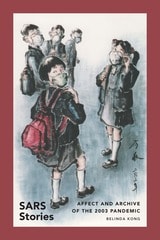
SARS Stories
Affect and Archive of the 2003 PandemicBelinda Kong
Duke University Press, 2024
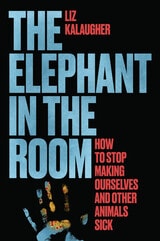
The Elephant in the Room
How to Stop Making Ourselves and Other Animals SickLiz Kalaugher
University of Chicago Press, 2025
When new diseases spread, news reports often focus on wildlife culprits—rodents, monkeys and mpox; bats and COVID-19; waterfowl and avian flu; or mosquitoes and Zika. But, in this urgent and engaging book, we see it often works the other way around—humans have caused diseases in other animals countless times, through travel and transport, the changes we impose on our environment, and global warming. With science journalist Liz Kalaugher as our guide, we meet the wildlife we have harmed and the experts now studying the crosscurrents between humans, other animals, and health.
Herds of buffalo in Kenya, cloned ferrets in Colorado, and frogs shipped worldwide as living pregnancy tests for humans, all help Kalaugher dive into the murky backstories behind wildlife epidemics past and present. We learn that military conflict likely contributed to the spread of rinderpest, or cattle plague, throughout Africa, devastating pastoral communities. That crowded poultry farms may create virulent new forms of bird flu that spill back into the wild. And that West Nile virus—which affects not only birds and humans, but other animals, including horses, skunks, and squirrels—is spreading as global temperatures rise.
Expanding today’s discussions of environmental protection to include illness and its impact, Kalaugher both sounds the alarm and explores ways to stop the emergence and spread of wildlife diseases. These solutions start with a simple lesson: when we protect other animals, we protect ourselves.
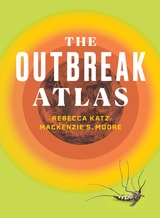
The Outbreak Atlas
Rebecca Katz and Mackenzi S. Moore
Vanderbilt University Press, 2024
For years the Georgetown University Center for Global Health Science and Security has curated an interactive online tool for professionals that identifies the activities involved across all phases of an outbreak. The Georgetown Outbreak Activity Library (GOAL) captures what needs to get done, when, and by whom. Now, in The Outbreak Atlas, Rebecca Katz and Mackenzie S. Moore have translated this complex material into a book designed for a public audience.
This book provides an overview of outbreak activities alongside compelling case studies and visuals to guide readers through the complexity involved in outbreak preparedness, response, and recovery. It lifts the curtain on the rationale and interconnectedness of outbreak responses across different fields and at various levels, presenting accessible information that ensures a shared understanding of the essential activities to control an outbreak.