Results by title
30 books match the query 'Contemporary'
A Preponderance of Starry Beings
StoriesSamantha Edmonds
Northwestern University Press, 2025
Genre-bending stories of the cosmos and the worlds within our own skin
Blending fairy tale and science fiction with the otherworldliness of adolescence, A Preponderance of Starry Beings is a collection for anyone preoccupied with looking skyward. These stories probe the experience of coming of age on the outskirts of the universe, whether that be a small Midwestern town or a distant galaxy, and of weighing earthly obligations against the vast promises of space.
In a sleepy Ohio neighborhood, two girls seek refuge from their homophobic schoolmates in an antiques shop filled with Star Trek memorabilia. On a generation spaceship, children revolt against their parents’ plans to colonize a distant world. Deep in the Florida Everglades, seven sisters must protect their otherworldly mythology when two men arrive to fix the family automobile.
A Preponderance of Starry Beings invites us into a mundane and whimsical world of night islands, small towns, and faith lost and found, where a safe landing matters less than taking the leap.

Across the Art/Life Divide
Performance, Subjectivity, and Social Practice in Contemporary ArtMartin Patrick
Intellect Books, 2018
Art to Come
Histories of Contemporary ArtTerry Smith
Duke University Press, 2019
Borderless Fashion Practice
Contemporary Fashion in the Metamodern AgeVanessa Gerrie
Rutgers University Press, 2023
Bug
A PlayTracy Letts
Northwestern University Press, 2007
Tracy Letts's tale of love, paranoia, and government conspiracy is a thought-provoking psycho-thriller that mixes terror and laughter at a fever pitch.
This dark comedy takes place in a seedy motel room outside Oklahoma City, where Agnes, a drug-addled cocktail waitress, is hiding from her ex-con ex-husband. Her lesbian biker friend R.C. introduces her to Peter, a handsome drifter who might be an AWOL Gulf War veteran. They soon begin a relationship that takes place almost entirely within the increasingly claustrophobic confines of her motel room. Peter begins to rant about the war in Iraq, UFOs, the Oklahoma City bombings, cult suicides, and then secret government experiment on soldiers, of which he believes he is a victim. His delusions infect Agnes and the tension mounts as mysterious strangers appear at their door, past events haunt them at every turn and they are attacked by real bugs.
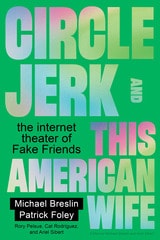
Circle Jerk and This American Wife
the internet theater of Fake FriendsMichael Breslin, Patrick Foley, Rory Pelsue, Cat Rodríguez, and Ariel Sibert, edited by Michael Breslin and Ariel Sibert
Northwestern University Press, 2026
Two plays along with process essays on the cacophonous world of pop culture, politics, and personal testimony that we call the internet
In March 2020, the New York theater company Fake Friends was pushed off the stage and into the land of the internet. This book marks the first publication of two of their deliciously absurd and toxically serious internet plays, Circle Jerk (the first-ever work in digital theater to be shortlisted for the Pulitzer Prize in Drama) and This American Wife. Circle Jerk tells the social media–infused tale of gay white supremacists creating an AI-influencer to dominate the global discourse, and This American Wife spins a surrealist web of queer devotion to the stars and performance strategies of reality television; both plays are unapologetically theatrical and digitally native, born out of the exigencies of the pandemic. This collection features an electrifying visual archive as well as individual essays from each company member reflecting on the practical and interpersonal processes of bringing these award-winning plays to life in our ever-more online, political, and personal world.
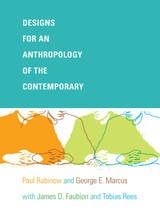
Designs for an Anthropology of the Contemporary
Paul Rabinow, George E. Marcus with James D. Faubion and Tobias Rees
Duke University Press, 2008
Both Rabinow and Marcus participated in the milestone collection Writing Culture: The Poetics and Politics of Ethnography. Published in 1986, Writing Culture catalyzed a reassessment of how ethnographers encountered, studied, and wrote about their subjects. In the opening conversations of Designs for an Anthropology of the Contemporary, Rabinow and Marcus take stock of anthropology’s recent past by discussing the intellectual scene in which Writing Culture intervened, the book’s contributions, and its conceptual limitations. Considering how the field has developed since the publication of that volume, they address topics including ethnography’s self-reflexive turn, scholars’ increased focus on questions of identity, the Public Culture project, science and technology studies, and the changing interests and goals of students. Designs for an Anthropology of the Contemporary allows readers to eavesdrop on lively conversations between anthropologists who have helped to shape their field’s recent past and are deeply invested in its future.
Designs on the Contemporary
Anthropological TestsPaul Rabinow and Anthony Stavrianakis
University of Chicago Press, 2014
The authors continue their prior explorations of the contemporary in past works: How to conceptualize, test, and give form to breakdowns of truth and conduct, as well as how to open up possibilities for the remediation of such breakdowns. They offer a surprising and contrasting pair of case studies of two figures who engaged with contemporary breakdowns: Salman Rushdie and Gerhard Richter. Approaching Richter’s artistic struggles with form and technique in the long wake of modernism and Rushdie’s struggles to find a narrative form—as well as a form for living—to respond to the Iranian fatwa issued against him, they show how both men formulated different new approaches to anthropology for the twenty-first century.
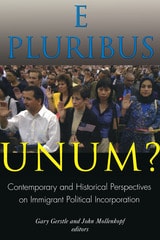
E Pluribus Unum?
Contemporary and Historical Perspectives on Immigrant Political IncorporationGary Gerstle
Russell Sage Foundation, 2001
Full Metal Jhacket
Matthew Derby
University of Michigan Press, 2014
Going to Court to Change Japan
Social Movements and the Law in Contemporary JapanPatricia G. Steinhoff, Editor
University of Michigan Press, 2014
Less Than Charming
A NovelRebecca A. Demarest
Parkhurst Brothers, Inc., 2016
One character sands in the Prince’s way—Princess Sophia from Grimm’s lesser known “12 Dancing Princesses.” She’s stable—mostly—but Prince Charming is most definitely not. The good Storyteller and the First Character have tasked Sophia with stopping the Prince from destroying their world, and, by extension, ours.
Madge's Mobile Home Park
Volume One of the Peavine ChroniclesJane F. Hankins
Parkhurst Brothers, Inc., 2012
This hilarious send-up of outlandish Southern characters includes a beautician, a luncheonette waitress, a radio evangelist, the widow of a gas and oil distributror and the residents of a fictional mobile home park in Arkansas as they find uproarious ways to enjoy life, needle each other, and remember the dear-departed.
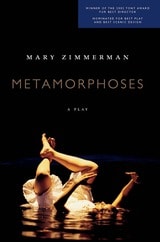
Metamorphoses
A PlayMary Zimmerman
Northwestern University Press, 2002
A beautiful and deeply humane reanimation of Ovid's myths
Called by Time the "theater event of the year," Mary Zimmerman's Metamorphoses brings Ovid's tales to stunning visual life. Set in and around a large pool of water onstage, Metamorphoses juxtaposes the ancient and the contemporary in both language and image to reflect the variety and persistence of narrative in the face of inevitable change. Nominated for three 2002 Tony Awards, including "Best Play," Metamorphoses earned Zimmerman a Tony for "Best Direction of a Play."
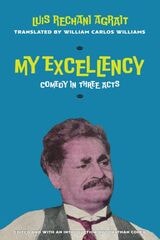
My Excellency
Comedy in Three ActsLuis Rechani Agrait
Swan Isle Press, 2025
William Carlos Williams’s passion for his matrilineal Puerto Rican roots led him to visit Puerto Rico for the first time in 1941. There at a writers’ conference, he befriended the playwright Luis Rechani Agrait, who gave him his play Mi señoría, staged to acclaim the previous year.
My Excellency, as Williams calls the play in his translation, is a political farce set in an “imaginary country” that resembles Puerto Rico during the Great Depression, with its high unemployment and labor unrest. The play focuses on the plight of an idealistic but naive man, Buenaventura Padilla, in a completely corrupt political system. Through an unscrupulous election, he becomes the nation’s leader.
The play is successful as a satire largely because of Buenaventura’s hilarious language—recreated by Williams—with its pompous style combined with stunning malapropisms and clownish errors in history and grammar. The play’s very title is a laughable malapropism. My Excellency shows the corrupting power of success and the tragic flaw of materialism. Driving the comedy in Williams’s translation is his firm command of the play’s dialogue interwoven with popular idioms in which the charm of pure nonsense abounds. This edition is Luis Rechani Agrait’s debut as a playwright in English.
My Life as an Animal
StoriesLaurie Stone
Northwestern University Press, 2017
A woman meets a man and falls in love. She is sixty, a writer and lifelong New Yorker raised by garmentos. She thought this kind of thing wouldn’t happen again. He is English, so who knows what he thinks. He is fifty-six, a professor now living in Arizona, the son of a bespoke tailor. As the first of Laurie Stone’s linked stories begins, the writer contemplates what life would be like in the desert with the professor. As we learn how she became the person she is, we also come to know the artists and politics of the downtown scene of the ’70s, ’80s, and ’90s, a cultural milieu that remains alive in her. In sharply etched prose, Stone presents a woman constantly seduced by strangers, language, the streets— even a wildlife trail. Her characters realize that they feel at home in dislocation—in always living in two places at the same time: east and west, past and present, the bed and the grave (or copper urn). Love may not last, the writer knows. Then again, when has anything you thought about the future turned out right?
Navigators of the Contemporary
Why Ethnography MattersDavid A. Westbrook
University of Chicago Press, 2008
Navigators of the Contemporary describes the changing nature of ethnography as anthropologists use it to analyze places closer to home. Westbrook maintains that a conversational style of ethnography can help us look beyond our assumptions and gain new insight into arenas of contemporary life such as corporations, financial institutions, science, the military, and religion. Westbrook’s witty, absorbing book is a friendly challenge to anthropologists to shed light on the present and join broader streams of intellectual life. And for those outside the discipline, his inspiring vision of ethnography opens up the prospect of understanding our own world in much greater depth.
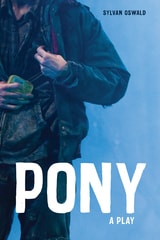
Pony
A PlaySylvan Oswald
Northwestern University Press, 2025
When Pony, a formerly incarcerated trans guy, moves to a small rural town to start a new life, he quickly becomes entangled with its isolated community. He starts to fall for a waitress who is obsessed with a local murder; he must comply with a butch social worker who doesn’t understand him; and he is pursued by a young trans man who thinks Pony could be the father he always wanted. Amid this whirlwind of fear and desire, Pony must find the strength to confront the stories he's been told about masculinity, violence, and self-worth. With a new preface by the author on searching for queer and trans community in the theater, and an afterword by critic Miriam Felton-Dansky contextualizing its place in contemporary theater, Pony is a seminal work of trans theater exploring questions of generational difference, class, and gender on an epic scale.
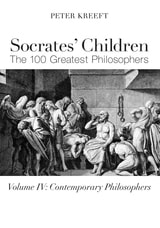
Socrates' Children
Contemporary: The 100 Greatest PhilosophersPeter Kreeft
St. Augustine's Press, 2014
This is the fourth and final part of Kreeft’s four-volume history of philosophy . . . on ancient, medieval, modern, and contemporary philosophy.
Kreeft focuses on the “big ideas” that have influenced present people and present times, and includes relevant biographical data, proportionate to its importance for each thinker. Moreover, the aim of the work is to stimulate philosophizing, controversy, and argument. It uses ordinary language and logic, not jargon and symbolic logic, and it is commonsensical (like Aristotle) and existential in the sense that it sees philosophy as something to be lived and experienced in life. Philosophy, after all, is not about philosophy but reality . . . about wisdom, life and death, good and evil, and God.
Kreeft seeks to be simple and direct and clear. But it is not dumbed down and patronizing. It will stretch the reader, but it is meant for beginnings, not just scholars. It can be used for college classes or do-it-yourselfers. It emphasizes surprises; remember, “philosophy begins in wonder.” And it includes visual aids: charts, cartoons, line drawings, and drawings of philosophers.
Peter Kreeft teaches philosophy at Boston College and is a very prolific author of philosophy and theology texts, including, from St. Augustine’s Press, Socratic Logic, An Ocean Full of Angels, The Philosophy of Jesus, Jesus-Shock, The Sea Within, I Surf Therefore I Am, If Einstein Had Been a Surfer, the first nine titles in his Socrates Meets series, including Philosophy 101 by Socrates and the titles on Machiavelli, Descartes, Hume, Kant, Marx, and Sartre, and the first three volumes of this series, Socrates’ Children: Ancient, Socrates’ Children: Medieval, and Socrates’ Children: Modern.
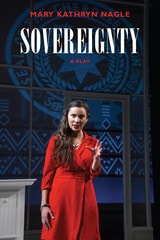
Sovereignty
A PlayMary Kathryn Nagle
Northwestern University Press, 2020
A powerful meditation of the echoes of history and the never-ending struggle for sovereignty
Sovereignty unfolds over two parallel timelines. In present-day Oklahoma, a young Cherokee lawyer, Sarah Ridge Polson, and her colleague Jim Ross defend the inherent jurisdiction of Cherokee Nation in the U.S. Supreme Court when a non-Indian defendant challenges the Nation’s authority to prosecute non-Indian perpetrators of domestic violence. Their collaboration is juxtaposed with scenes from 1835, when Cherokee Nation was eight hundred miles to the east in the southern Appalachians. That year, Sarah’s and Jim’s ancestors, historic Cherokee rivals, were bitterly divided over a proposed treaty with the administration of Andrew Jackson, the Treaty of New Echota, which led to the nation’s removal to Oklahoma on the infamous Trail of Tears.
A direct descendant of nineteenth-century Cherokee leaders John Ridge and Major Ridge, Mary Kathryn Nagle has penned a play that twists and turns from violent outbursts to healing monologues, illuminating a provocative double meaning for the sovereignty of both tribal territory and women’s bodies. Taking as its point of departure the story of one lawyer’s passionate defense of the rights of her people to prosecute non-natives who commit crimes on reservations, Sovereignty opens up into an expansive exploration of the circular continuity of history, human memory, and the power of human relationships.
The Accompaniment
Assembling the ContemporaryPaul Rabinow
University of Chicago Press, 2011
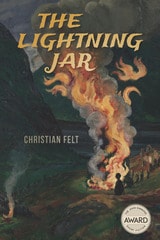
The Lightning Jar
Christian Felt
University of Iowa Press, 2018
The Lightning Jar is about lonely children. It may be more about lonely children than any other book. These children are good at making imaginary friends but have trouble keeping them. For instance, there’s the Morra, who plunges the world into eternal winter. But she also teaches Mons the meaning of love and helps him burn down his house after some Gypsies turn it into a middle school.
Then there’s the Gorbel. Amanda invented it to scare the Guest, but it ended up liking him best. A bit like a cat but more like a spider, it turned out a lot cuter than she’d intended.
And the Wisps—they’re pretty unhappy about being dead. Karl accidentally turned his smallest cousin into a Wisp. They were trying to catch some lightning in a jar, but they caught the smallest cousin’s ghost instead. Karl had to drown it for its own good. Something similar happened with his grandma Astrid and a rock named Melisande.
But the loneliest character is probably Christian. He insists on being from Jämtland, where Karl and Amanda live. When his cousin Eskild got married, Christian rewrote their past so it’s like The Little Mermaid, except Eskild drowns and Christian doesn’t earn a soul.
In the spirit of Tove Jansson, William Blake, and Calvin & Hobbes, The Lightning Jar contains a volatile mix of innocence and experience, faith and doubt, nostalgia and a sense of all there is to gain by accepting reality on fresh terms.

The London Stage, 1660-1800 Part 5, 1776-1800
A Calendar of Plays, Entertainment & Afterpieces Together with Casts, Box-Reciepts and ContemporaryEdited by Charles Beecher Hogan, William Van Lennep, Emmett L. Avery, Arthur H.Scouten, George Winchester Stone
Southern Illinois University Press, 1970
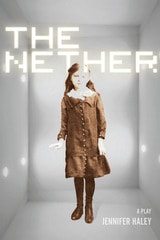
The Nether
A PlayJennifer Haley
Northwestern University Press, 2015
When the lines between reality and fantasy blur, what counts as ethical? Who decides?
The Nether, a daring examination of moral responsibility in virtual worlds, opens with a familiar interrogation scene given a technological twist. As Detective Morris, an online investigator, questions Mr. Sims about his activities in a role-playing realm so realistic it could be life, she finds herself on slippery ethical ground. Sims argues for the freedom to explore even the most deviant corners of our imagination. Morris holds that we cannot flesh out our malign fantasies without consequence. Their clash of wills leads to a consequence neither could have imagined. Suspenseful, ingeniously constructed, and fiercely intelligent, Haley’s play forces us to confront deeply disturbing questions about the boundaries of reality.
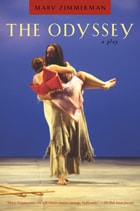
The Odyssey
A PlayMary Zimmerman
Northwestern University Press, 2006
With her trademark irreverent and witty twist on classic works, Zimmerman brings to life the story of Odysseus's ten-year journey
This dramatic adaptation of Homer's myth begins with a modern young woman who is struggling to understand Robert Fitzgerald's translation of The Odyssey. A classical muse appears, and the young woman becomes the goddess Athena--a tireless advocate for Odysseus in his struggle to get home. Zimmerman's adaptation depicts his encounters with characters such as Circe, the Cyclops, Poseidon, Calypso, the Sirens, and others in new and exciting ways.
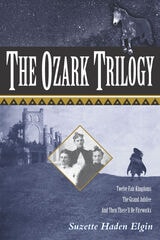
The Ozark Trilogy
Twelve Fair Kingdoms, The Grand Jubilee, And Then There’ll Be FireworksSuzette Haden Elgin
University of Arkansas Press, 2000
The Ozark Trilogy (previously published in 1981, Doubleday) is a widely acclaimed fantasy/science fiction story with, as the title suggests, very strong ties to the Ozark region. Twelve Fair Kingdoms, The Grand Jubilee, And Then There’ll Be Fireworks—the books that comprise the trilogy—chronicle life on the planet Ozark and its Confederation of Continents, which are appropriately named Arkansaw, Oklahomah, Mizzurah, Tinaseeh, Kintucky, and Marktwain. However, the story told here involves much more than a mere transplant of Ozark culture and heritage onto a new planet. While this new Ozark culture maintains and even intensifies many of the “real” Ozark traditions and customs (for instance, “Grannys” hold significant, stabilizing social roles and are important sources of wisdom), the planet Ozark combines many new, fantastical elements with traditional ways. Mules on Ozark fly, and the wise “Grannys” also work magic.
The protagonist of The Ozark Trilogy, Responsible of Brightwater, appears at the center of Ozark society, a society she must save from evil magic, civil war, and, ultimately, alien invasion. As Responsible travels from continent to continent in an attempt to discover and squelch the evil magic and calm the civil unrest, we are witness to many dangerous and sometimes comical adventures along the way, including a spectacular flying Mule crash and a magic duel with a Granny gone bad.
Elgin has created a fantastic world infused with the folk traditions, social and familial hierarchies, and traditional dialect of the Ozarks. While parallels might be drawn between, for example, the break-up of the Confederacy of Continents on planet Ozark and the American Civil War, Elgin comments on aspects of Ozark history and tradition in a non didactic way. The trilogy, with its strong heroine and witty engagement of tradition, is a classic of Ozark literature.
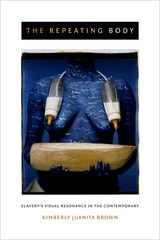
The Repeating Body
Slavery's Visual Resonance in the ContemporaryKimberly Juanita Brown
Duke University Press, 2015
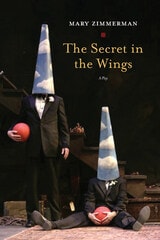
The Secret in the Wings
A PlayMary Zimmerman
Northwestern University Press, 2014
A dark and mysterious homage to lesser-known fairy tales
Mary Zimmerman’s The Secret in the Wings adapts a group of lesser-known fairy tales to create a theatrical work that sets their dark mystery against her signature wit and humor. The framing story concerns a child and the frightening babysitter with whom her parents leave her. As the babysitter reads from a book, the characters in each of the tales materialize, with each tale breaking off just at its bleakest moment before giving way to the next one.
The central tale is told without interruption, after which each previous tale is successively resumed, with each looming disaster averted. As in Zimmerman’s other productions, here she uses costumes, props, sets, and lighting to brilliant effect, creating images and feelings that render the fairy tales in all their elemental and enduring power.
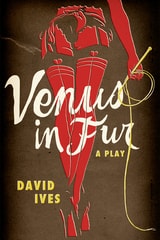
Venus in Fur
A PlayDavid Ives
Northwestern University Press, 2012
An unsettling drama, a playful comedy, and an exploration of gender roles and sexuality, Venus in Fur is a witty, dark look at the art of acting—onstage and off.
A young playwright, Thomas, has written an adaptation of the 1870 novel Venus in Fur by Leopold von Sacher-Masoch (after whom the term “masochism” was coined); the novel is the story of an obsessive adulterous relationship between a man and the mistress to whom he becomes enslaved. At the end of a long day in which the actresses Thomas auditions fail to impress him, in walks Vanda, very late and seemingly clueless, but she convinces him to give her a chance. As they perform scenes from Thomas’s play, and Vanda the actor and Vanda the character gradually take control of the audition, the lines between writer, actor, director, and character begin to blur.
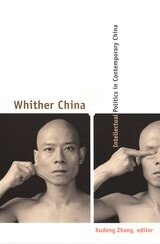
Whither China?
Intellectual Politics in Contemporary ChinaXudong Zhang, ed.
Duke University Press, 2001
The contributors to Whither China? describe how, instead of spearheading the popular-mandated and state-sanctioned project of modernization, intellectuals now find themselves caught amid rapidly changing structures of economic, social, political, and cultural relations that are both global in nature and local in an irreducibly political sense. Individual essays interrogate the space of Chinese intellectual production today, lay out the issues at stake, and cover major debates and discursive interventions from the 1990s. Those who write within the Chinese context are joined by Western observers of contemporary Chinese cultural and intellectual life. Together, these two groups undertake a truly international intellectual struggle not only to interpret but to change the world.
Contributors. Rey Chow, Zhiyuan Cui, Michael Dutton, Gan Yang, Harry Harootunian, Peter Hitchcock, Rebecca Karl, Louisa Schein, Wang Hui, Wang Shaoguang, Xudong Zhang