Results by title
5 books match the query 'Contemporary American Poetry'
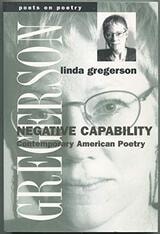
Negative Capability
Contemporary American PoetryLinda Gregerson
University of Michigan Press, 2001
In a wide-ranging and fiercely intelligent series of readings, Linda Gregerson presents an eloquent overview of the contemporary American lyric. This lyric is distinguished, she argues, not only by its unprecedented variety and abundance, but by its persistent and supple engagement with form. In detailed examinations of work by John Ashbery, Mark Strand, Louis Gluck, James Schuyler, Muriel Rukeyser, C. K. Williams, Rita Dove, Philip Levine, Heather McHugh, William Meredith, John Hollander, and a host of other recent and contemporary poets, Gregerson documents the depth and richness of American lyric production at the turn of the twenty-first century. In its scruples and reservations as in its discriminating explanations, Negative Capability unearths the contours of a distinctive American poetic tradition. This book is a rich symbiosis of critical and poetic intelligence. It is also a work of passionate advocacy. The book will appeal to those interested in the current state of American poetry: practicing poets, readers and students of literature and literary criticism, and professional critics.
On Mount Vision
Forms of the Sacred in Contemporary American PoetryNorman Finkelstein
University of Iowa Press, 2010
Plumbing what the poet Michael Palmer calls “the dimension of the Spirit, with that troublesome, rebarbative capital letter,” Norman Finkelstein’s On Mount Vision asks how and why the sacred has remained a basic concern of contemporary experimental poets in our secular age. By charting the wandering, together and apart, of poetry and belief, Finkelstein illustrates the rich tapestry formed by the warp and woof of poetry, and the play of Gnosticism, antinomianism, spiritualism, and shamanism, which have commonly been regarded as heretical and sometimes been outright suppressed.
This beautifully written work begins with an overview of the spiritual problematics found in nineteenth- and early twentieth-century American poetry. Traveling slightly outside of the realm of the contemporary, Finkelstein’s discussions of Emerson, Whitman, and Eliot yield to close readings of the works of Robert Duncan, Jack Spicer, Ronald Johnson, Michael Palmer, Susan Howe, Nathaniel Mackey, and Armand Schwerner. In restoring verse to its place alongside scripture, Finkelstein reminds us why the sacred remains crucial to our understanding of postmodern American poetry.
Syncopations
The Stress of Innovation in Contemporary American PoetryJed Rasula
University of Alabama Press, 2004
Syncopations is an analysis of the sustaining vitality behind contemporary American poetry from 1975 to the present day by one of the most astute observers and critics in the field. The 12 essays reflect Jed Rasula’s nearly 30 years of advocacy on behalf of “opening the field” of American poetry.
From the Beats and the Black Mountain poets in the 1950s and 1960s to the impact of language poetry, the specter of an avant-garde has haunted the administrative centers of poetic conservatism. But the very concept of avant-garde is misleading, implying organized assault. Incentives for change can be traced to other factors, including the increased participation of women, critical theory’s self-reflection, and a growing interest in the book as a unit of composition. Syncopations addresses these and other issues evident in the work of such poets and critics as Clayton Eshleman, Marjorie Perloff, Ronald Johnson, Clark Coolidge, Nathaniel Mackey, and Robin Blaser. Its chapters range in modes and include close readings, sociological analysis, philosophical-aesthetic meditations, and career appraisals.
By examining both exemplary innovators and the social context in which innovation is either resisted, acclaimed, or taken for granted, Rasula delivers an important conceptual chronicle of the promise of American poetry.
The Old Formalism
Character and Contemporary American PoetryJonathan Holden
University of Arkansas Press, 1999
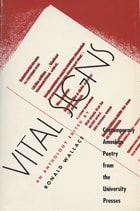
Vital signs
contemporary American poetry from the university pressesRonald Wallace
University of Wisconsin Press, 1989
The selections in this anthology represent the full range and vitality of contemporary American poetry--from minimalism to epic, from free verse to traditional form, from plain conversation to richly embroidered tapestry, form passionate political utterance to intense personal drama, from light verse to tough lyricism. Since 1950 university presses have published more than 900 volumes of original poetry , opening the canon to a wide range of rich and exciting voices. Nearly 200 of the those volumes are represented here.
Vital Signs features poems by such well established poets as John Ashbery, Marge Piercy, Adrienne Rich, and James Wright. Because the presses have also played a role in discovering and promoting the work of new poets, the reader will find here poems by many younger writers as well.