Results by title
7 books match the query 'Continent'
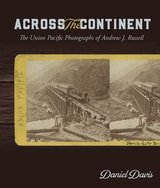
Across the Continent
The Union Pacific Photographs of Andrew Joseph RussellDaniel Davis
University of Utah Press, 2018
Copublished with the Utah State Historical Society. Affiliated with the Utah Division of State History, Utah Department of Heritage & Arts
Andrew J. Russell is primarily known as the man who photographed the famous “East and West Shaking Hands” image of the Golden Spike ceremony on May 10, 1869. He also took nearly one thousand other images that document almost every aspect of the construction of the Union Pacific Railroad. Across the Continent is the most detailed study to date of the life and work of an often-overlooked but prolific artist who contributed immensely not only to documentation of the railroad but also to the nation’s visualization of the American West and, earlier, the Civil War.
The central focus in the book is on the large body of work Russell produced primarily to satisfy the needs of the Union Pacific. Daniel Davis posits that this set of Russell’s photos is best understood not through one or a handful of individual images, but as a photographic archive. Taken as a whole, that archive shows that Russell intended for viewers never to forget who built the Union Pacific. His images celebrate working people—masons working on bridge foundations, freighters and their wagons, surveyors with their transits, engine crews posed on their engines, as well as tracklayers, laborers, cooks, machinists, carpenters, graders, teamsters, and clerks pushing paper.
Russell contributed to a golden age of Western photography that visually introduced the American West to the nation, changing its public image from that of a Great American Desert to a place of apparently unlimited economic potential.
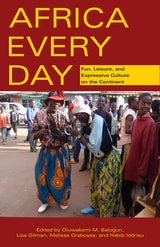
Africa Every Day
Fun, Leisure, and Expressive Culture on the ContinentOluwakemi M. Balogun
Ohio University Press, 2019
Conversion of a Continent
Contemporary Religious Change in Latin AmericaSteigenga, Timothy
Rutgers University Press, 2007
Conversion of a Continent brings together twelve original essays that document and explore competing explanations for how and why conversion has occurred. Contributors draw on various insights from social movement theory to religious studies to help outline its impact on national attitudes and activities, gender relations, identity politics, and reverse waves of missions from Latin America aimed at the American immigrant community.
Unlike other studies on religious conversion, this volume pays close attention to who converts, under what circumstances, the meaning of conversion to the individual, and how the change affects converts’ beliefs and actions. The thematic focus makes this volume important to students and scholars in both religious studies and Latin American studies.
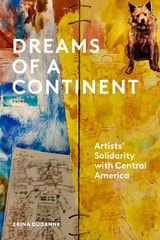
Dreams of a Continent
Artists' Solidarity with Central AmericaErina Duganne
University of Texas Press, 2026
A biography of Artists Call, an influential 1980s artist group that protested US intervention in Latin America.
The 1980s saw the flourishing of neoliberalism in all realms of culture. In the fine arts, libertarian individualism, media sensationalism, and profit motive converged in million-dollar auctions—and a widespread insistence that activism had no place in the arts. Yet even some participants of this elite New York art world resisted. Dreams of a Continent tells the forgotten story of a diverse collective that defied culture-industry norms by condemning Reagan-era imperialism in Latin America while building transnational solidarity.
Drawing on fresh archival discoveries, Erina Duganne reconstructs the political imagination of Artists Call Against U.S. Intervention in Central America. A network with more than a thousand members in New York City, Artists Call produced thirty-one exhibitions in its brief life, along with poetry readings and performances that brought together US and Latin American cultural workers in support of self-determination throughout the hemisphere. This richly illustrated volume shows how the aesthetics of Artists Call emphasized historical contingency in order to envision radically alternative futures. In the process, its activism fostered a global community that overcame stark North-South power imbalances.

Illinois
Crossroads of a ContinentLois A. Carrier
University of Illinois Press, 1993
Writing in a fast-paced, down-to-earth style, Lois Carrier introduces a host of innovations and innovators associated with Illinois: Jane Addams and Louis Armstrong, Frank Lloyd Wright and Walt Disney, Cracker Jack and the Ferris wheel. From the Cahokia Mounds to Chicago, Illinois: Crossroads of a Continent provides a panoramic history for students and general readers.
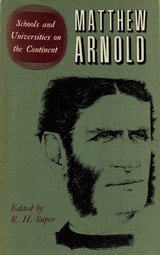
Schools and Universities on the Continent
The Complete Prose Works of Matthew ArnoldMatthew Arnold; Edited by R. H. Super
University of Michigan Press, 1964
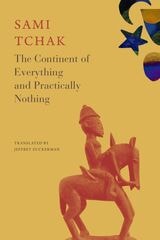
The Continent of Everything and Practically Nothing
Sami Tchak
Seagull Books, 2026
A Togolese novel that delivers a rich, intimate portrait of a scholar whose life is inextricably bound to Africa.
For the French ethnologist Maurice Boyer, Africa isn't just a place; it’s a mirage, an enigma, a mirror reflecting his desires and doubts. The fieldwork he undertook in Tèdi, Togo, where he lived for years among the Tem people and tried to understand their customs and rituals, has left him with questions that have lingered: Who was a friend and who was a foe? Which stories were true and which were illusions? As decades pass and the roles of Aurélie, his wife, and Safi, his former student, begin to shift, Boyer finds himself wrestling not only with his own choices but with the legacy of knowledge itself.
Through the lens of this profound postcolonial quest, Sami Tchak explores Africa’s rich, complex reality through this intimate story of a scholar reconsidering his own understanding of culture, ethnology, and history. The Continent of Everything and Practically Nothing asks whether assembling more data can truly capture the complexity of a continent, and explores how academic ambition, history, and emotion shape how we understand the world, and how we live in it.