Results by title
11 books match the query 'Contours'
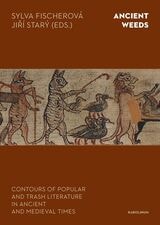
Ancient Weeds
Contours of Popular and Trash Literature in Ancient and Medieval TimesEdited by Sylva Fischerová and Jirí Starý
Karolinum Press, 2023
The common story in literary studies is that the emergence of popular and junk literature is related to the emergence of modern society due to the rise of literacy and the shortening of workdays. Ancient Weeds upends this misconception by demonstrating that antiquity had its fair share of literary pieces that fit the definition of popular, trivial, and junk literature. The authors analyze artifacts such as the ancient Egyptian Turin Papyrus, ancient love novels, Christian hagiographies and passion plays, lives of Jesus and Marian hymns, Old Norse tales and lying sagas, and Spanish blind romances. Through numerous excerpts, it becomes clear that the line between junk and high literature is thinner than it seems. They reveal how seemingly low themes such as sex and violence often overlap with the themes of high literature. In many cases, low literature is more imaginative and subversive than canonical texts, and bizarreness and non-conformity do not necessarily equate to the ephemerality of a work. As Ancient Weeds shows, thousands of years after it was written, low literature can still be a great source of entertainment today.

Contours Of The Heart
Sunaina Maira
Rutgers University Press, 1998
The anthology challenges undifferentiated, stereotypical images of South Asians in North America, portraying instead the subtleties of their varied, sometimes invisible experiences. It includes fiction, poetry, essays, and photography.
Contours of Change
Muslim Courts, Women, and Islamic Society in Colonial Bathurst, the Gambia, 1905-1965Bala Saho
Michigan State University Press, 2018
Contours of Israeli Politics
Jewish Ethnicity, Religious Nationalism, and DemocracyHannah M. Ridge
Temple University Press, 2025
The timely Contours of Israeli Politics focuses on the socio-political ramifications of this hierarchy within the upper stratum of Israeli society. Using public opinion studies and qualitative data, Hannah Ridge examines the effects of this social hierarchy to address attitudes on Israeli ethnicity and religious majoritarianism, support for Israeli democracy, and preference for an expanded territorial state and peace with its neighbors.
As various Jewish ethnic groups face greater pressure to assert their in-group membership (their Jewishness), they are more likely to protect the status privileges of that group. This can strengthen their ideas about identity, nationalism, democratic values, and conflict attitudes. Ridge’s findings reveal the ways in which Jewish ethnicity continues to influence the politics of Israel, a Jewish ethno-religious state.
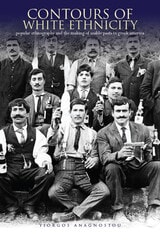
Contours of White Ethnicity
Popular Ethnography and the Making of Usable Pasts in Greek AmericaYiorgos Anagnostou
Ohio University Press, 2009
In Contours of White Ethnicity, Yiorgos Anagnostou explores the construction of ethnic history and reveals how and why white ethnics selectively retain, rework, or reject their pasts. Challenging the tendency to portray Americans of European background as a uniform cultural category, the author demonstrates how a generalized view of American white ethnics misses the specific identity issues of particular groups as well as their internal differences.
Interdisciplinary in scope, Contours of White Ethnicity uses the example of Greek America to illustrate how the immigrant past can be used to combat racism and be used to bring about solidarity between white ethnics and racial minorities. Illuminating the importance of the past in the construction of ethnic identities today, Anagnostou presents the politics of evoking the past to create community, affirm identity, and nourish reconnection with ancestral roots, then identifies the struggles to neutralize oppressive pasts.
Although it draws from the scholarship on a specific ethnic group, Contours of White Ethnicity exhibits a sophisticated, interdisciplinary methodology, which makes it of particular interest to scholars researching ethnicity and race in the United States and for those charting the directions of future research for white ethnicities.
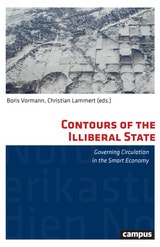
Contours of the Illiberal State
Governing Circulation in the Smart EconomyEdited by Boris Vormann and Christian Lammert
Campus Verlag, 2019
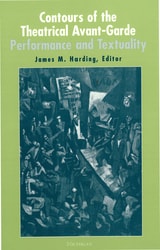
Contours of the Theatrical Avant-Garde
Performance and TextualityJames M. Harding, Editor
University of Michigan Press, 2000
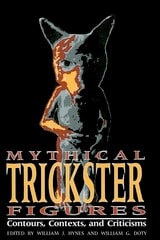
Mythical Trickster Figures
Contours, Contexts, and CriticismsEdited by William J. Hynes and William G. Doty
University of Alabama Press, 1997
The first substantial collection of essays about the trickster since 1955
Mythical Trickster Figures, is the first substantial collection of essays about the trickster to appear since Radin’s 1955 The Trickster. Contributions by leading scholars treat a wide range of manifestations of this mischievous character, ranging from the Coyote of the American Southwest to such African figures as Eshu-Elegba and Ananse, the Japanese Susa-no-o, the Greek Hermes, Christian adaptations of Saint Peter, and examples found in contemporary American fiction and drama.
The many humorous trickster stories included are fascinating in themselves, but Hynes and Doty also highlight the wide range of features of the trickster—the figure whose comic appearance often signifies that the most serious cultural values are being both challenged and enforced.
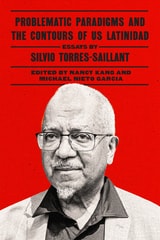
Problematic Paradigms and the Contours of US Latinidad
Essays by Silvio Torres-SaillantEdited by Nancy Kang and Michael Nieto Garcia
University of Texas Press, 2026
Silvio Torres-Saillant’s collected writings examine political contradictions within Latinx identity in the United States.
Since the 1990s Silvio Torres-Saillant’s work has questioned the notion of Latinidad, challenging presumptions of panethnic unity within the US Hispanic population and assessing dominant modes of Latinx representation. The essays in Problematic Paradigms and the Contours of US Latinidad examine the dynamics of a diverse collective of over 65 million people whose cultural heritage, ancestral origins, and belief systems arguably differ as much as they resemble one another. The volume dissects prevailing assumptions, namely the essentializing sense of homogeneity in the Latinx “community,” which mask important nuances and fascinating contradictions. Torres-Saillant also targets the role of marketing and mass communications in shaping popular perceptions of ethnic groups, thereby tracing connections between media rhetoric and the language of scholarship.
Newly revised by editors Nancy Kang and Michael Nieto Garcia, this collection curates Torres-Saillant’s core contributions to Latinx studies over the last two decades and underscores the veteran scholar’s evolving thoughts on key conversations in the field. The epilogue narrates his beginnings in Caribbean studies, acknowledges his ongoing analysis of Dominican blackness, and discourages uncritical views of cultural heritage.

The Contours of America’s Cold War
Matthew Farish
University of Minnesota Press, 2010
Geographic knowledge generated for the Cold War was a form of power, Farish argues, and it was given an urgency in the panels, advisory boards, and study groups established to address the challenges of an atomic world. He investigates how the scales of the city, the continent, the region, the globe, and, by extension, outer space, were brought together as strategic spaces, categories that provided a cartographic orientation for the Cold War and influenced military deployments, diplomacy, espionage, and finance.
Farish analyzes the surprising range of knowledge production involved in the project of claiming and classifying American space. Backed by military and intelligence funding, physicists and policy makers, soldiers and social scientists came together to study and shape the United States and its place in a divided world.
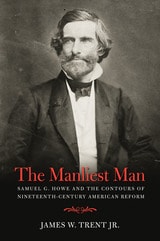
The Manliest Man
Samuel G. Howe and the Contours of Nineteenth-Century American ReformJames W. Trent
University of Massachusetts Press, 2012
A native of Boston and a physician by training, Samuel G. Howe (1801–1876) led a remarkable life. He was a veteran of the Greek War of Independence, a fervent abolitionist, and the founder of both the Perkins School for the Blind and the Massachusetts School for Idiotic and Feeble-Minded Children. Married to Julia Ward Howe, author of “Battle Hymn of the Republic,” he counted among his friends Senator Charles Sumner, public school advocate Horace Mann, and poet Henry Wadsworth Longfellow.
Always quick to refer to himself as a liberal, Howe embodied the American Renaissance's faith in the perfectibility of human beings, and he spoke out in favor of progressive services for disabled Americans. A Romantic figure even in his own day, he embraced a notion of manliness that included heroism under fire but also compassion for the underdog and the oppressed. Though hardly a man without flaws and failures, he nevertheless represented the optimism that characterized much of antebellum American reform.
The first full-length biography of Samuel G. Howe in more than fifty years, The Manliest Man explores his life through private letters and personal and public documents. It offers an original view of the reformer's personal life, his association with social causes of his time, and his efforts to shape those causes in ways that allowed for the greater inclusion of devalued people in the mainstream of American life.