Results by title
98 books match the query 'Control' and 6 start with a
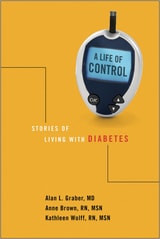
A Life of Control
Stories of Living with DiabetesAlan L. Graber
Vanderbilt University Press, 2010
The people who describe their experiences with diabetes range from teenagers to physicians, immigrants, athletes, pregnant women, accountants, a prisoner, and a dairy farmer. They speak of the variety of ways they handle monitoring, diet, insurance coverage, sports, and fashion. Some talk of how they manage to drive trucks for a living or, for recreation, fly airplanes or go spelunking. Many speak frankly of their anxieties and frustrations.
The authors acknowledge that both the patient and clinician have a story about their relationship, and describe the richness and tension in their interaction. Families, too, are sources of both support and conflict. These relationships are acknowledged in the organization of the book, which is divided into sections defined by the main elements of diabetes control: patient self-determination, the role of the family, the social situation, and the patient-clinician encounter.
The book provides a wealth of information about diabetes, including material on prevention, complications, and new technology, as well as a superb glossary, but it is not intended as a textbook on diabetes or as a self-care manual for patients. Rather the book provides a textured account of the health professional's view of diabetes control and the perspective of the patient whose life is complicated by diabetes.

Advances in Command, Control and Communication Systems
C.J. Harris
The Institution of Engineering and Technology, 1987

Advances in Power System Modelling, Control and Stability Analysis
Federico Milano
The Institution of Engineering and Technology, 2016

Advances in Power System Modelling, Control and Stability Analysis
Federico Milano
The Institution of Engineering and Technology, 2022
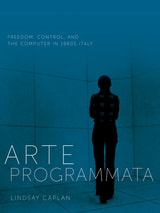
Arte Programmata
Freedom, Control, and the Computer in 1960s ItalyLindsay Caplan
University of Minnesota Press, 2022
Tracing the evolution of the Italian avant-garde’s pioneering experiments with art and technology and their subversion of freedom and control
In postwar Italy, a group of visionary artists used emergent computer technologies as both tools of artistic production and a means to reconceptualize the dynamic interrelation between individual freedom and collectivity. Working contrary to assumptions that the rigid, structural nature of programming limits subjectivity, this book traces the multifaceted practices of these groundbreaking artists and their conviction that technology could provide the conditions for a liberated social life.
Situating their developments within the context of the Cold War and the ensuing crisis among the Italian left, Arte Programmata describes how Italy’s distinctive political climate fueled the group’s engagement with computers, cybernetics, and information theory. Creating a broad range of immersive environments, kinetic sculptures, domestic home goods, and other multimedia art and design works, artists such as Bruno Munari, Enzo Mari, and others looked to the conceptual frameworks provided by this new technology to envision a way out of the ideological impasses of the age.
Showcasing the ingenuity of Italy’s earliest computer-based art, this study highlights its distinguishing characteristics while also exploring concurrent developments across the globe. Centered on the relationships between art, technology, and politics, Arte Programmata considers an important antecedent to the digital age.