Results by title
2 books match the query 'Cooper, Elizabeth'
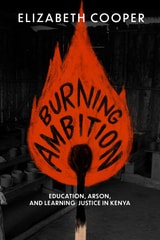
Burning Ambition
Education, Arson, and Learning Justice in KenyaElizabeth Cooper
University of Wisconsin Press, 2022
Burning Ambition explores how young people learn to understand and influence the workings of power and justice in their society. Since 2008, hundreds of secondary schools across Kenya have been targeted with fire by their students. Through an in-depth study of Kenyan secondary students’ use of arson, Elizabeth Cooper asks why. With insightful ethnographic analysis, she shows that these young students deploy arson as moral punishment for perceived injustices and arson proves an effective tactic in their politics from below.
Drawing from years of research and a rich array of sources, Cooper accounts for how school fires stoke a national conversation about the limited means for ordinary Kenyans, and especially youth, to peacefully influence the governance of their own lives. Further, Cooper argues that Kenyan students’ actions challenge the existing complacency with the globalized agenda of “education for all,” demonstrating that submissive despondency is not the only possible response to the failed promises of education to transform material and social inequalities.
Drawing from years of research and a rich array of sources, Cooper accounts for how school fires stoke a national conversation about the limited means for ordinary Kenyans, and especially youth, to peacefully influence the governance of their own lives. Further, Cooper argues that Kenyan students’ actions challenge the existing complacency with the globalized agenda of “education for all,” demonstrating that submissive despondency is not the only possible response to the failed promises of education to transform material and social inequalities.
[more]
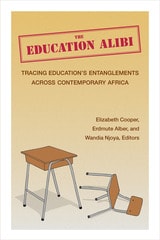
The Education Alibi
Tracing Education's Entanglements Across Contemporary AfricaElizabeth Cooper, Erdmute Alber, and Wandia Njoya, Editors
University of Michigan Press, 2025
Education is generally promoted as the key to the future of Africa in global development discourses about the continent. Education’s official story in Africa continues to be one of innocence and public good, yet, since colonial times, education has constituted an area of intense contestation. The Education Alibi asks if it is possible that while claiming to be doing one thing, education has also been doing another in African communities. The concept of the “alibi” shines an interrogative light on institutions’ and actors’ use of education to divert scrutiny from other effects. Through ethnographic research and critical analysis across the continent, this volume focuses on people’s lived experiences to demonstrate how contemporary education systems in fact deepen economic, racialized, gendered, urban-rural, linguistic, religious, and other intranational and international inequalities.
[more]