Results by title
3 books match the query 'Copying'
Multiples in Pre-Modern Art
Edited by Walter Cupperi
Diaphanes, 2014
Multiples in Pre-Modern Art looks at the production and reception of replicas and multiples before the nineteenth century. A wide variety of media are considered, including metal, marble, terra cotta, textiles, plaster, porcelain, canvas, wood, and wax. Through a series of questions—What happens if a copy purposely points not to an original but to another copy? What does it matter that some serially made multiples are not identical?—many of the works are reappraised as significant art forms in their own right.
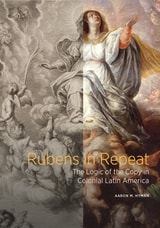
Rubens in Repeat
The Logic of the Copy in Colonial Latin AmericaAaron M. Hyman
J. Paul Getty Trust, The, 2021
Winner of the Latin American Studies Association's 2022 Best Book in Colonial Latin American Studies.
This book examines the reception in Latin America of prints designed by the Flemish artist Peter Paul Rubens, showing how colonial artists used such designs to create all manner of artworks and, in the process, forged new frameworks for artistic creativity.
Peter Paul Rubens (1577–1640) never crossed the Atlantic himself, but his impact in colonial Latin America was profound. Prints made after the Flemish artist’s designs were routinely sent from Europe to the Spanish Americas, where artists used them to make all manner of objects.
Rubens in Repeat is the first comprehensive study of this transatlantic phenomenon, despite broad recognition that it was one of the most important forces to shape the artistic landscapes of the region. Copying, particularly in colonial contexts, has traditionally held negative implications that have discouraged its serious exploration. Yet analyzing the interpretation of printed sources and recontextualizing the resulting works within period discourse and their original spaces of display allow a new critical reassessment of this broad category of art produced in colonial Latin America—art that has all too easily been dismissed as derivative and thus unworthy of sustained interest and investigation. This book takes a new approach to the paradigms of artistic authorship that emerged alongside these complex creative responses, focusing on the viceroyalties of New Spain and Peru in the seventeenth and eighteenth centuries. It argues that the use of European prints was an essential component of the very framework in which colonial artists forged ideas about what it meant to be a creator.
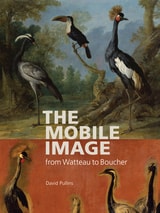
The Mobile Image from Watteau to Boucher
David Pullins
J. Paul Getty Trust, The, 2024
This book provides a new way of thinking about eighteenth-century French art and visual culture by prioritizing production over reception. Abandoning the ideologically driven discourse that distinguished fine from decorative art between the 1690s and 1770s, The Mobile Image reveals how the two have been inextricably bound from the earliest stages of artistic instruction through the daily life of painters’ workshops. In this study, author David Pullins defines artisanal and artistic means of learning, seeing, and making through a system of “mobile images”: motifs that were effectively engineered for mobility and designed never to be definitive, always awaiting replication and circulation. He examines the careers of Antoine Watteau, Jean-Baptiste Oudry, and François Boucher, situating them against a much broader cast of actors—such as printmakers, publishers, anonymous studio assistants, and architects, among others—to place eighteenth-century painting within a wider context of media and making.