Results by title
4 books match the query 'Cosmetics industry'
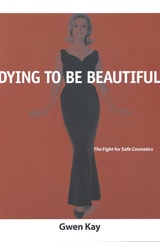
DYING TO BE BEAUTIFUL
FIGHT FOR SAFE COSMETICSGwen Kay
The Ohio State University Press, 2005
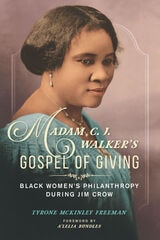
Madam C. J. Walker's Gospel of Giving
Black Women's Philanthropy during Jim CrowTyrone McKinley Freeman
University of Illinois Press, 2020
- AFP/Skystone Partners Prize for Research on Fundraising and Philanthropy, Association of Fundraising Professionals, 2021
- Terry McAdam Book Award, given by the Alliance for Nonprofit Management
- 2023 Peter Dobkin Hall History of Philanthropy Prize from the Association for Research on Nonprofit and Voluntary Action (ARNOVA).
Founder of a beauty empire, Madam C. J. Walker was celebrated as America's first self-made female millionaire in the early 1900s. Known as a leading African American entrepreneur, Walker was also devoted to an activist philanthropy aimed at empowering African Americans and challenging the injustices inflicted by Jim Crow.
Tyrone McKinley Freeman's biography highlights how giving shaped Walker's life before and after she became wealthy. Poor and widowed when she arrived in St. Louis in her twenties, Walker found mentorship among black churchgoers and working black women. Her adoption of faith, racial uplift, education, and self-help soon informed her dedication to assisting black women's entrepreneurship, financial independence, and activism. Walker embedded her philanthropy in how she grew her business, forged alliances with groups like the National Association of Colored Women, funded schools and social service agencies led by African American women, and enlisted her company's sales agents in local charity and advocacy work.
Illuminating and dramatic, Madam C. J. Walker’s Gospel of Giving broadens our understanding of black women’s charitable giving and establishes Walker as a foremother of African American philanthropy.
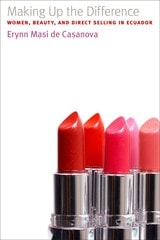
Making Up the Difference
Women, Beauty, and Direct Selling in EcuadorBy Erynn Masi de Casanova
University of Texas Press, 2011
Globalization and economic restructuring have decimated formal jobs in developing countries, pushing many women into informal employment such as direct selling of cosmetics, perfume, and other personal care products as a way to "make up the difference" between household income and expenses. In Ecuador, with its persistent economic crisis and few opportunities for financially and personally rewarding work, women increasingly choose direct selling as a way to earn income by activating their social networks. While few women earn the cars and trips that are iconic prizes in the direct selling organization, many use direct selling as part of a set of household survival strategies.
In this first in-depth study of a cosmetics direct selling organization in Latin America, Erynn Masi de Casanova explores women's identities as workers, including their juggling of paid work and domestic responsibilities, their ideas about professional appearance, and their strategies for collecting money from customers. Focusing on women who work for the country's leading direct selling organization, she offers fascinating portraits of the everyday lives of women selling personal care products in Ecuador's largest city, Guayaquil. Addressing gender relations (including a look at men's direct and indirect involvement), the importance of image, and the social and economic context of direct selling, Casanova challenges assumptions that this kind of flexible employment resolves women's work/home conflicts and offers an important new perspective on women's work in developing countries.
Styling Masculinity
Gender, Class, and Inequality in the Men's Grooming IndustryBarber, Kristen
Rutgers University Press, 2016