Results by title
7 books match the query 'Crafting'
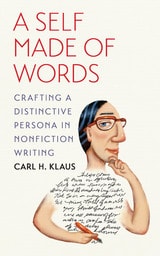
A Self Made of Words
Crafting a Distinctive Persona in Nonfiction WritingCarl H. Klaus
University of Iowa Press, 2013
Klaus divides his book into two parts: first, an introduction to the nature and function of a persona, then a survey of the most important elements of writing that contribute to the character of a persona, from point of view and organization to diction and sentence structure. Both parts contain exercises that will give you practice in developing a persona of your choice. Challenging and stimulating, each of his exercises focuses on a distinctly different aspect of composition and style, so as to help you develop the skills of a versatile and personable writer. By focusing on the most important ways of projecting your self in nonfiction prose, you can learn to craft a distinctive self in your writing.
Crafting the Female Subject
Narrative Innovation in the Short Fiction of Emilia Pardo BazánSusan M. McKenna
Catholic University of America Press, 2009
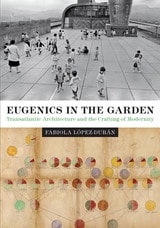
Eugenics in the Garden
Transatlantic Architecture and the Crafting of ModernityBy Fabiola López-Durán
University of Texas Press, 2018
Winner, Robert Motherwell Book Award, Outstanding Book on Modernism in the Arts, The Dedalus Foundation, 2019
As Latin American elites strove to modernize their cities at the turn of the twentieth century, they eagerly adopted the eugenic theory that improvements to the physical environment would lead to improvements in the human race. Based on Jean-Baptiste Lamarck’s theory of the “inheritance of acquired characteristics,” this strain of eugenics empowered a utopian project that made race, gender, class, and the built environment the critical instruments of modernity and progress.
Through a transnational and interdisciplinary lens, Eugenics in the Garden reveals how eugenics, fueled by a fear of social degeneration in France, spread from the realms of medical science to architecture and urban planning, becoming a critical instrument in the crafting of modernity in the new Latin world. Journeying back and forth between France, Brazil, and Argentina, Fabiola López-Durán uncovers the complicity of physicians and architects on both sides of the Atlantic, who participated in a global strategy of social engineering, legitimized by the authority of science. In doing so, she reveals the ideological trajectory of one of the most celebrated architects of the twentieth century, Le Corbusier, who deployed architecture in what he saw as the perfecting and whitening of man. The first in-depth interrogation of eugenics’ influence on the construction of the modern built environment, Eugenics in the Garden convincingly demonstrates that race was the main tool in the geopolitics of space, and that racism was, and remains, an ideology of progress.
Storytelling Tips
Creating, Crafting & Telling StoriesMark Goldman
Parkhurst Brothers, Inc., 2015
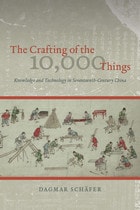
The Crafting of the 10,000 Things
Knowledge and Technology in Seventeenth-Century ChinaDagmar Schäfer
University of Chicago Press, 2011
The last decades of the Ming dynasty, though plagued by chaos and destruction, saw a significant increase of publications that examined advances in knowledge and technology. Among the numerous guides and reference books that appeared during this period was a series of texts by Song Yingxing (1587–1666?), a minor local official living in southern China. His Tiangong kaiwu, the longest and most prominent of these works, documents the extraction and processing of raw materials and the manufacture of goods essential to everyday life, from yeast and wine to paper and ink to boats, carts, and firearms.
In The Crafting of the 10,000 Things, Dagmar Schäfer probes this fascinating text and the legacy of its author to shed new light on the development of scientific thinking in China, the purpose of technical writing, and its role in and effects on Chinese history. Meticulously unfolding the layers of Song’s personal and cultural life, Schäfer chronicles the factors that motivated Song to transform practical knowledge into written culture. She then examines how Song gained, assessed, and ultimately presented knowledge, and in doing so articulates this era’s approaches to rationality, truth, and belief in the study of nature and culture alike. Finally, Schäfer places Song’s efforts in conjunction with the work of other Chinese philosophers and writers, before, during, and after his time, and argues that these writings demonstrate collectively a uniquely Chinese way of authorizing technology as a legitimate field of scholarly concern and philosophical knowledge.
Offering an overview of a thousand years of scholarship, The Crafting of the 10,000 Things explains the role of technology and crafts in a culture that had an outstandingly successful tradition in this field and was a crucial influence on the technical development of Europe on the eve of the Industrial Revolution.
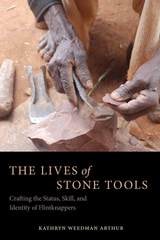
The Lives of Stone Tools
Crafting the Status, Skill, and Identity of FlintknappersKathryn Weedman Arthur
University of Arizona Press, 2018
Anthropologist Kathryn Weedman Arthur offers insights from her more than twenty years working with the Gamo. She deftly addresses historical and present-day experiences and practices, privileging the Gamo’s perspectives. Providing a rich, detailed look into the world of lithic technology, Arthur urges us to follow her into a world that recognizes Indigenous theories of material culture as valid alternatives to academic theories. In so doing, she subverts long-held Western perspectives concerning gender, skill, and lifeless status of inorganic matter.
The book offers the perspectives that, contrary to long-held Western views, stone tools are living beings with a life course, and lithic technology is a reproductive process that should ideally include both male and female participation. Only individuals of particular lineages knowledgeable in the lives of stones may work with stone technology. Knappers acquire skill and status through incremental guided instruction corresponding to their own phases of maturation. The tools’ lives parallel those of their knappers from birth (procurement), circumcision (knapping), maturation (use), seclusion (storage), and death (discardment).
Given current expectations that the Gamo’s lithic technology may disappear with the next generation, The Lives of Stone Tools is a work of vital importance and possibly one of the last contemporaneous books about a population that engages with the craft daily.
Write Your Way In
Crafting an Unforgettable College Admissions EssayRachel Toor
University of Chicago Press, 2017
The good news? You already have the “secret sauce” for crafting a compelling personal essay: your own experiences and your unique voice.
More than twenty million students apply to college every year; many of them look similar in terms of test scores, grades, courses taken, extracurricular activities. Admissions officers wade through piles of files. As an applicant, you need to think about what will interest an exhausted reader. What can you write that will make her argue to admit you instead of the thousands of other applicants?
A good essay will be conversational and rich in vivid details, and it could only be written by one person—you. This book will help you figure out how to find and present the best in yourself. You’ll acquire some useful tools for writing well—and may even have fun—in the process.