Results by title
56 books match the query 'Crafts & Hobbies' and 5 start with a

A Manual for Neanderthals
By H. Mewhinney
University of Texas Press, 1957
The story of humanity’s earliest days on earth has come down to us chiefly in the tools and weapons early hominids shaped from flint. With these tools, they gained ascendancy over less dexterous beasts and began the slow conquest of their environment. Other records, including their very bones, have largely rotted away, but their tools of flint endure.
H. Mewhinney presents A Manual for Neanderthals as “a common-sense, down-to-earth study of how flint tools and weapons were made—or for that matter, can still be made by any descendant of Stone Age man.”
The author first sets the scene with a delightful and informative disquisition on flintflaking and flint-flakers, and then explains clearly and concisely how he and earlier Neanderthals have made flint artifacts, illustrating each step with drawings and photographs.
Archeologists and anthropologists will discover in this book a modest but genuine contribution to their fields, while collectors of Indian relics and people who like to tinker with tools and master unusual skills will find it a surprisingly practical guide to an interesting and ancient art. With patience, and with A Manual for Neanderthals at your side, you too can learn to flake flint.
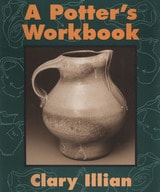
A Potter's Workbook
Clary Illian
University of Iowa Press, 1999
In A Potter's Workbook, renowned studio potter and teacher Clary Illian presents a textbook for the hand and the mind. Her aim is to provide a way to see, to make, and to think about the forms of wheel-thrown vessels; her information and inspiration explain both the mechanics of throwing and finishing pots made simply on the wheel and the principles of truth and beauty arising from that traditional method.
Each chapter begins with a series of exercises that introduce the principles of good form and good forming for pitchers, bowls, cylinders, lids, handles, and every other conceivable functional shape. Focusing on utilitarian pottery created on the wheel, Illian explores sound, lively, and economically produced pottery forms that combine an invitation to mindful appreciation with ease of use. Charles Metzger's striking photographs, taken under ideal studio conditions, perfectly complement her vigorous text.
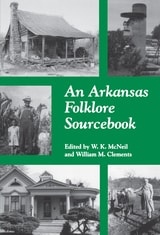
An Arkansas Folklore Sourcebook
W.K. McNeil
University of Arkansas Press, 1992
Arkansas’s rich folk tradition is shown by the variety of its manifestations: a 250-year-old ballad, an archaic method of hewing railroad crossties with a broadax, the use of poultices and toddies to treat the common cold, and swamps of evil repute are all parts of the tradition that constitutes Arkansas folklore. In fact, as the essays selected by W.K. McNeil and William M. Clements show, these few examples only begin to tell the story.
Starting with a working description of folklore as “cultural material that is traditional and unofficial” and characterized by a pattern of oral transmission, variation, formulaic structures, and usually uncertain origin, the authors survey in detail a wide array of folk objects, activities, beliefs, and customs. Among the rich offerings in this sourcebook are a discussion of the history of folklore research in Arkansas, an examination of some of the traditional songs and music still being preformed, a thoughtful exploration of the serious side of “tall tales” and “windies,” an investigation of folk architecture in Arkansas and what it reveals about our cultural origins, a study of many traditional foods and there preparation methods, an analysis of superstitions and beliefs, and a description of festivals and celebrations that are observed to this day.
Complemented by biographies of reference works and audio and video recordings of the state’s folk materials, An Arkansas Folklore Sourcebook is the first complete guide to the study of one state’s “unofficial culture.”

Arkansas Coloring Book
Brenda Zodrow
University of Arkansas Press, 1990
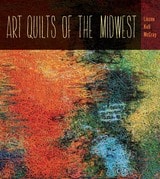
Art Quilts the Midwest
Linzee Kull McCray
University of Iowa Press, 2015
As a writer covering textiles, art, and craft, Linzee Kull McCray wondered just how deeply fiber artists were influenced by their surroundings. Focusing on midwestern art quilters in particular, she put out a call for entries and nearly 100 artists responded; they were free to define those aspects of midwesterness that most affected their work. The artists selected for inclusion in this book embrace the Midwest’s climate, land, people, and culture, and if they don’t always embrace it wholeheartedly, then they use their art to react to it. The proof can be seen in the varied, powerful quilts in this energizing book.
Enlivened by the Midwest’s landscapes and seasons, Sally Bowker paints her fabrics with acrylics, creating marks and meaning with layers of hand stitching and appliqued bits of fabric. Shin-hee Chin uses sketchlike stitching for its ability to penetrate fabric and create depth; living in the Midwest helps her stay balanced between eastern philosophy and western culture. The metals and mesh that Diane Núñez incorporates into her quilts connect to her days as a jeweler as well as to the topography of her home state of Michigan. Pat Owoc prepares papers with disperse dyes, then selects from as many as 150 to create her fabrics; her art-quilt series honors midwestern pioneers. Martha Warshaw photographs old fabrics, tweaks the images in Photoshop, and prints the results for her pieces, which connect her to the legacy of quilting in past generations.
The Midwest has always had strong textile communities. Now the twenty artists featured in this beautifully illustrated book have created a new community of original art forms that bring new life to an old tradition.
The Artists
Marilyn Ampe, St. Paul, Minnesota
Gail Baar, Buffalo Grove, Illinois
Sally Bowker, Cornucopia, Wisconsin
Peggy Brown, Nashville, Indiana
Shelly Burge, Lincoln, Nebraska
Shin-hee Chin, McPherson, Kansas
Sandra Palmer Ciolino, Cincinnati, Ohio
Jacquelyn Gering, Chicago, Illinois
Kate Gorman, Westerville, Ohio
Donna Katz, Chicago, Illinois
Beth Markel, Rochester Hills, Michigan
Diane Núñez, Southfield, Michigan
Pat Owoc, St. Louis, Missouri
BJ Parady, Batavia, Illinois
Bonnie Peterson, Houghton, Michigan
Luanne Rimel, St. Louis, Missouri
Barbara Schneider, Woodstock, Illinois
Susan Shie, Wooster, Ohio
Martha Warshaw, Cincinnati, Ohio
Erick Wolfmeyer, Iowa City, Iowa