Results by title
28 books match the query 'Creative Ability'
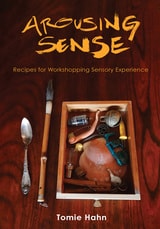
Arousing Sense
Recipes for Workshopping Sensory ExperienceTomie Hahn
University of Illinois Press, 2021
User-friendly and practical, Arousing Sense is a guide to how teaching through sensory experience can lead to positive, transformative impact in the classroom and everyday life.
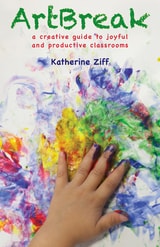
ArtBreak
A Creative Guide to Joyful and Productive ClassroomsKatherine Ziff
Ohio University Press, 2016
Play is the central, universally significant activity of childhood. Self-directed play in which adults have a supporting rather than directing role is critical to the development and well-being of children. Yet as children have their days and nights increasingly scripted and planned for them, opportunities for play have disappeared over the last half century, especially in schools.
ArtBreak’s innovation lies in its creative framework. Former school counselor, current professor of counseling, and practicing artist Katherine Ziff developed and tested the program over five years, integrating theory and practice from art therapy, counseling, and child-centered education. The result is a choice-based, guided play experience based on the developmental and restorative possibilities of art making.
A detailed how-to guide, this book is the flexible and accessible toolbox that teachers, parents, and counselors need to facilitate relaxing, art-based play that allows children to freely explore, plan, and pursue their own interests with adult support. Easy to implement, ArtBreak can be added to the regular routines of classroom, home, therapy office, or other community setting at whatever scale suits space, time, and budget. No art training is required, only a willingness to embark on a play journey with children.
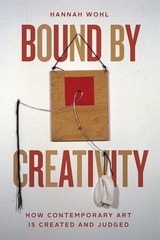
Bound by Creativity
How Contemporary Art Is Created and JudgedHannah Wohl
University of Chicago Press, 2021
Bound by Creativity reveals how artists develop conceptions of their distinctive creative visions through experimentation and social interactions. Ultimately, we come to appreciate how judgment is integral to the creative process, both resulting in the creation of original works while also limiting an artist’s ability to break new ground. Exploring creativity through the lens of judgment sheds new light on the production of cultural objects, markets, and prestige.
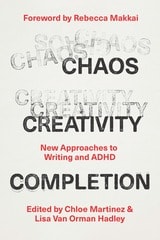
Chaos, Creativity, Completion
New Approaches to Writing and ADHDEdited by Chloe Martinez and Lisa Van Orman Hadley
University of Chicago Press, 2026
A rising number of ADHD diagnoses, particularly among adults, is not only confirmed by medical studies and mainstream reporting but also borne out across social media and elsewhere among people who’d been privately coping with persistent, often inexpressible challenges. Many of the contributors to this collection can attest to how a later-in-life diagnosis radically demystified the patterns, impulses, and impasses that had affected their lives and their writing. The essays in Chaos, Creativity, Completion reflect the ways poets, novelists, memoirists, filmmakers, and others have come to understand and engage the relationship between their ADHD and their creative tool kits.
These essays consider how writers can embrace rather than mask their neurodifference, offering multiple ways of finding writing practices that work for ADHD brains—including techniques that often look quite different from traditional writing instruction. Some essays are analytical, some are reflective, and some are delightfully weird, employing humor, research, personal narrative, deep description, close reading, and experimental approaches to genre and form. Each essay also concludes with a writing prompt, providing readers with opportunities to expand their own creative toolkits. Finally, the book includes an interview with David Kessler, a licensed therapist and nationally recognized ADHD advocate, and an appendix with a glossary of helpful terms and a list of recommended resources, from books and organizations to apps and gadgets.
Just as the experience of ADHD varies from person to person, so, too, do the ways those experiences can be expressed. Chaos, Creativity, Completion is a kaleidoscopic, adventurous series of takes on what writing looks like today.
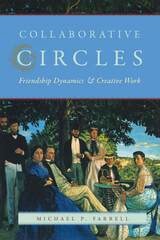
Collaborative Circles
Friendship Dynamics and Creative WorkMichael P. Farrell
University of Chicago Press, 2001
In a unique study that will become a rich source of ideas for professionals and anyone interested in fostering creative work in the arts and sciences, Michael P. Farrell looks at the group dynamics in six collaborative circles: the French Impressionists; Sigmund Freud and his friends; C. S. Lewis, J. R. R. Tolkien, and the Inklings; social reformers Elizabeth Cady Stanton and Susan B. Anthony; the Fugitive poets; and the writers Joseph Conrad and Ford Maddox Ford. He demonstrates how the unusual interactions in these collaborative circles drew out the creativity in each member. Farrell also presents vivid narrative accounts of the roles played by the members of each circle. He considers how working in such circles sustains the motivation of each member to do creative work; how collaborative circles shape the individual styles of the persons within them; how leadership roles and interpersonal relationships change as circles develop; and why some circles flourish while others flounder.
Creativity and Its Discontents
China's Creative Industries and Intellectual Property Rights OffensesLaikwan Pang
Duke University Press, 2012
Curiosity Studies
A New Ecology of KnowledgePerry Zurn
University of Minnesota Press, 2020
The first English-language collection to establish curiosity studies as a unique field
From science and technology to business and education, curiosity is often taken for granted as an unquestioned good. And yet, few people can define curiosity. Curiosity Studies marshals scholars from more than a dozen fields not only to define curiosity but also to grapple with its ethics as well as its role in technological advancement and global citizenship. While intriguing research on curiosity has occurred in numerous disciplines for decades, no rigorously cross-disciplinary study has existed—until now.
Curiosity Studies stages an interdisciplinary conversation about what curiosity is and what resources it holds for human and ecological flourishing. These engaging essays are integrated into four clusters: scientific inquiry, educational practice, social relations, and transformative power. By exploring curiosity through the practice of scientific inquiry, the contours of human learning, the stakes of social difference, and the potential of radical imagination, these clusters focus and reinvigorate the study of this universal but slippery phenomenon: the desire to know.
Against the assumption that curiosity is neutral, this volume insists that curiosity has a history and a political import and requires precision to define and operationalize. As various fields deepen its analysis, a new ecosystem for knowledge production can flourish, driven by real-world problems and a commitment to solve them in collaboration. By paying particular attention to pedagogy throughout, Curiosity Studies equips us to live critically and creatively in what might be called our new Age of Curiosity.
Contributors: Danielle S. Bassett, U of Pennsylvania; Barbara M. Benedict, Trinity College; Susan Engel, Williams College; Ellen K. Feder, American U; Kristina T. Johnson, Massachusetts Institute of Technology; Narendra Keval; Christina León, Princeton U; Tyson Lewis, U of North Texas; Amy Marvin, U of Oregon; Hilary M. Schor, U of Southern California; Seeta Sistla, Hampshire College; Heather Anne Swanson, Aarhus U.
Depression
A Public FeelingAnn Cvetkovich
Duke University Press, 2012
Cvetkovich draws on an unusual archive, including accounts of early Christian acedia and spiritual despair, texts connecting the histories of slavery and colonialism with their violent present-day legacies, and utopian spaces created from lesbian feminist practices of crafting. She herself seeks to craft a queer cultural analysis that accounts for depression as a historical category, a felt experience, and a point of entry into discussions about theory, contemporary culture, and everyday life. Depression: A Public Feeling suggests that utopian visions can reside in daily habits and practices, such as writing and yoga, and it highlights the centrality of somatic and felt experience to political activism and social transformation.
Drawing Your Stress Away
A Draw-It-Yourself Coloring BookLucia Capacchione
Ohio University Press, 2017
Exile and Creativity
Signposts, Travelers, Outsiders, Backward GlancesSusan Rubin Suleiman, ed.
Duke University Press, 1998
In essays that range chronologically from the Renaissance to the 1990s, geographically from the Danube to the Andes, and historically from the Inquisition to the Holocaust, the complexities and tensions of exile and the diversity of its experiences are examined. Recognizing exile as an interior experience as much as a physical displacement, this collection discusses such varied topics as intellectual exile and seventeenth-century French literature; different versions of home and of the novel in the writings of Bakhtin and Lukács; the displacement of James Joyce and Clarice Lispector; a young journalist’s meeting with James Baldwin in the south of France; Jean Renoir’s Hollywood years; and reflections by the descendents of European emigrés. Strikingly, many of the essays are themselves the work of exiles, bearing out once more the power of the personal voice in scholarship.
With the exception of the contribution by Henry Louis Gates Jr., these essays were originally published in a special double issue of Poetics Today in 1996. Exile and Creativity will engage a range of readers from those whose specific interests include the problems of displacement and diaspora and the European Holocaust to those whose broad interests include art, literary and cultural studies, history, film, and the nature of human creativity.
Contributors. Zygmunt Bauman, Janet Bergstrom, Christine Brooke-Rose, Hélène Cixous, Tibor Dessewffy, Marianne Hirsch, Denis Hollier, Henry Louis Gates Jr., Linda Nochlin, Leo Spitzer, Susan Rubin Suleiman, Thomas Pavel, Doris Sommer, Nancy Huston, John Neubauer, Ernst van Alphen, Alicia Borinsky, Svetlana Boym, Jacqueline Chénieux-Gendron
Fashioning China
Precarious Creativity and Women Designers in Shanzhai CultureSara Liao
Pluto Press, 2020
Broadening the digital labor debate beyond typical masculine and techno-utopic readings, Sara Liao studies the precarious practices of women trying to create sustainable and creative lives, vividly illustrating a fashion culture that exists online as a significant part of the digital economy.
Drawing on material from interviews, participant observation, archives, policy documents, films and advertisements, Liao takes a multi-disciplinary approach to the topic, charting out the politics of intellectual property rights, globalization, technocracy, patriarchy and nationalism in a non-Western context.
Hello, This Is Your Body Talking
A Draw-It-Yourself Coloring BookLucia Capacchione
Ohio University Press, 2017
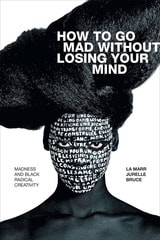
How to Go Mad without Losing Your Mind
Madness and Black Radical CreativityLa Marr Jurelle Bruce
Duke University Press, 2020

Locating Cultural Creativity
John Liep
Pluto Press, 2001
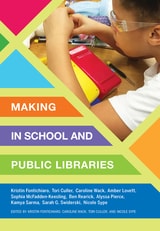
Making in School and Public Libraries
Edited by Kristin Fontichiaro, Caroline Wack, Tori Culler, and Nicole Sype
Michigan Publishing Services, 2020
Readers will gain practical insights about how to
- Define goals and target audiences
- Customize programs to meet community needs
- Equip a makerspace
- Document activities
- Assess achievements and areas for growth
- Engage makers in a variety of technology and hands-on activities, including robots, 3D printing, sewing, cardboard challenges, knitting and crochet, design thinking, and zines
The authors’ experiences include co-creating one of the nation’s first school library makerspaces; establishing after-school maker programs with elementary and middle school learners; co-designing one-off and ongoing maker events for community-building in diverse public libraries; engaging with senior citizens in a low-income Senior Summer Camp pilot; and state, national, and international workshops for teachers, librarians, and youth mentors.
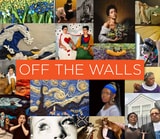
Off the Walls
Inspired Re-Creations of Iconic ArtworksSarah Waldorf
J. Paul Getty Trust, The, 2020
Van Gogh’s Starry Night made out of spaghetti? Cat with a Pearl Earring? Frida Kahlo self-portraits with pets and toilet paper? While the world reeled from the rapid spread of the novel coronavirus (COVID-19), thousands of people around the globe, inspired by challenges from Getty and other museums, raided toy chests, repurposed pantry items, and enlisted family, roommates, and animals to re-create famous works of art at home. Astonishing in their creativity, wit, and ingenuity, these creations remind us of the power of art to unite us and bring joy during troubled times. Off the Walls: Inspired Re-Creations of Iconic Artworks celebrates these imaginative re-creations, bringing highlights from this challenge together in one whimsical, irresistible volume. Getty Publications will donate all profits from the sale of this book to a charity supporting art and artists.
Please RSVP
Questions on Collaborative Aesthetics, Trans-Subjectivity, and the Politics of LoveApril Durham
Dartmouth College Press, 2019
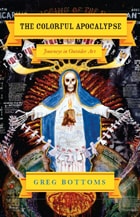
The Colorful Apocalypse
Journeys in Outsider ArtGreg Bottoms
University of Chicago Press, 2007
The Reverend Howard Finster was twenty feet tall, suspended in darkness. Or so he appeared in the documentary film that introduced a teenaged Greg Bottoms to the renowned outsider artist whose death would help inspire him, fourteen years later, to travel the country. Beginning in Georgia with a trip to Finster’s famous Paradise Gardens, his journey—of which The Colorful Apocalypse is a masterly chronicle—is an unparalleled look into the lives and visionary works of some of Finster’s contemporaries: the self-taught evangelical artists whose beliefs and oeuvres occupy the gray area between madness and Christian ecstasy.
With his prodigious gift for conversation and quietly observant storytelling, Bottoms draws us into the worlds of such figures as William Thomas Thompson, a handicapped ex-millionaire who painted a 300-foot version of the book of Revelation; Norbert Kox, an ex-member of the Outlaws biker gang who now lives as a recluse in rural Wisconsin and paints apocalyptic visual parables; and Myrtice West, who began painting to express the revelatory visions she had after her daughter was brutally murdered. These artists’ works are as wildly varied as their life stories, but without sensationalizing or patronizing them, Bottoms—one of today’s finest young writers—gets at the heart of what they have in common: the struggle to make sense, through art, of their difficult personal histories.
In doing so, he weaves a true narrative as powerful as the art of its subjects, a work that is at once an enthralling travelogue, a series of revealing biographical portraits, and a profound meditation on the chaos of despair and the ways in which creativity can help order our lives.
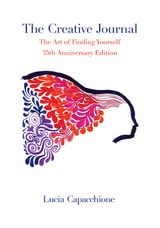
The Creative Journal
The Art of Finding Yourself: 35th Anniversary EditionLucia Capacchione
Ohio University Press, 2015
Originally released in 1980, Lucia Capacchione’s The Creative Journal has become a classic in the fields of art therapy, memoir and creative writing, art journaling, and creativity development. Using more than fifty prompts and vibrantly illustrated examples, Capacchione guides readers through drawing and writing exercises to release feelings, explore dreams, and solve problems creatively. Topics include emotional expression, healing the past, exploring relationships, self-inventory, health, life goals, and more. The Creative Journal introduced the world to Capacchione’s groundbreaking technique of writing with the nondominant hand for brain balancing, finding innate wisdom, and developing creative potential.
This thirty-fifth anniversary edition includes a new introduction and an appendix listing the many venues that have adopted Capacchione’s methods, including public schools, recovery programs, illness support groups, spiritual retreats, and prisons. The Creative Journal has become a mainstay text for college courses in psychology, art therapy, and creative writing. It has proven useful for journal keepers, counselors, and teachers. Through doodles, scribbles, written inner dialogues, and letters, people of all ages have discovered vast inner resources.
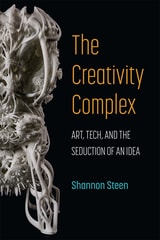
The Creativity Complex
Art, Tech, and the Seduction of an IdeaShannon Steen
University of Michigan Press, 2023
“Creativity” is a word that excites and dazzles us. It promises brilliance and achievement, a shield against conformity, a channel for innovation across the arts, sciences, technology, and education, and a mechanism for economic revival and personal success. But it has not always evoked these ideas. The Creativity Complex traces the history of how creativity has come to mean the things it now does, and explores the ethical implications of how we use this term today for both the arts and for the social world more broadly. Richly researched, the book explores how creativity has been invoked in arenas as varied as Enlightenment debates over the nature of cognition, Victorian-era intelligence research, the Cold War technology race, contemporary K-12 education, and even modern electoral politics. Ultimately, The Creativity Complex asks how our ideas about creativity are bound up with those of self-fulfillment, responsibility, and the individual, and how these might seduce us into joining a worldview and even a set of social imperatives that we might otherwise find troubling.
The Creativity Question
Albert Rothenberg and Carl Hausman, eds.
Duke University Press, 1976
The organization of The Creativity Question is unique: it illustrates the various approaches and basic assumptions underlying studies of creativity throughout the course of history up to the present time. The main body of selections appears under the categories of descriptions, attempts at explanation, and alternate approaches. As specific orientations to creativity can be traced to particular initiating thinkers and investigators, there is a special chapter on seminal accounts containing selections from the works of Plato, Aristotle, Kant, Galton, and Freud. Another chapter includes recent illustrations of special types of exploratory trends: creativity of women, brain research, synectics, extrasensory perception, behaviorism, and creativity computer programming. This organization highlights the tension between strictly scientific accounts and alternative approaches offering new ways of understanding. The editors have provided for the books as a whole and for each chapter explanation and discussion of the basic issues raised by the various approaches to creativity.
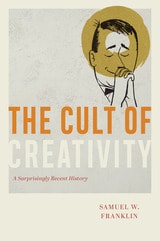
The Cult of Creativity
A Surprisingly Recent HistorySamuel W. Franklin
University of Chicago Press, 2023
Creativity is one of American society’s signature values, but the idea that there is such a thing as “creativity”—and that it can be cultivated—is surprisingly recent, entering our everyday speech in the 1950s. As Samuel W. Franklin reveals, postwar Americans created creativity, through campaigns to define and harness the power of the individual to meet the demands of American capitalism and life under the Cold War. Creativity was championed by a cluster of professionals—psychologists, engineers, and advertising people—as a cure for the conformity and alienation they feared was stifling American ingenuity. It was touted as a force of individualism and the human spirit, a new middle-class aspiration that suited the needs of corporate America and the spirit of anticommunism.
Amid increasingly rigid systems, creativity took on an air of romance; it was a more democratic quality than genius, but more rarified than mere intelligence. The term eluded clear definition, allowing all sorts of people and institutions to claim it as a solution to their problems, from corporate dullness to urban decline. Today, when creativity is constantly sought after, quantified, and maximized, Franklin’s eye-opening history of the concept helps us to see what it really is, and whom it really serves.
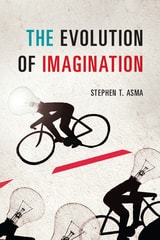
The Evolution of Imagination
Stephen T. Asma
University of Chicago Press, 2017
Guided by neuroscience, animal behavior, evolution, philosophy, and psychology, Asma burrows deep into the human psyche to look right at the enigmatic but powerful engine that is our improvisational creativity—the source, he argues, of our remarkable imaginational capacity. How is it, he asks, that a story can evoke a whole world inside of us? How are we able to rehearse a skill, a speech, or even an entire scenario simply by thinking about it? How does creativity go beyond experience and help us make something completely new? And how does our moral imagination help us sculpt a better society? As he shows, we live in a world that is only partly happening in reality. Huge swaths of our cognitive experiences are made up by “what-ifs,” “almosts,” and “maybes,” an imagined terrain that churns out one of the most overlooked but necessary resources for our flourishing: possibilities. Considering everything from how imagination works in our physical bodies to the ways we make images, from the mechanics of language and our ability to tell stories to the creative composition of self-consciousness, Asma expands our personal and day-to-day forms of imagination into a grand scale: as one of the decisive evolutionary forces that has guided human development from the Paleolithic era to today. The result is an inspiring look at the rich relationships among improvisation, imagination, and culture, and a privileged glimpse into the unique nature of our evolved minds.
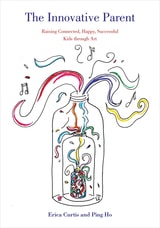
The Innovative Parent
Raising Connected, Happy, Successful Kids through ArtErica Curtis
Ohio University Press, 2019
2019 National Parenting Products Award Winner
Even the best talk-based practices in parenting can be limiting. How can art help parents temper storms of emotion, defuse sibling conflicts, get teeth brushed, and raise happy, successful kids? In The Innovative Parent, Erica Curtis and Ping Ho integrate cutting-edge research, years of clinical expertise, and their own parenting experience into a revolutionary yet practical guide to creative parenting. Plentiful illustrations and anecdotes bring concepts to life and show art in action with kids and parents.
Together, Curtis and Ho let parents in on art therapy trade secrets to help children make sense of emotions, build connections with others, develop problem-solving skills, resolve day-to-day conflicts, process and retain information, confront fears and anxiety, and much more. These are complex tasks for something as seemingly simple as making art, yet therein lies the beauty of The Innovative Parent: its down-to-earth approach is simple, doable, and fun.
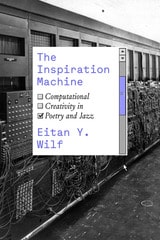
The Inspiration Machine
Computational Creativity in Poetry and JazzEitan Y. Wilf
University of Chicago Press, 2023
In The Inspiration Machine, Eitan Y. Wilf explores the transformative potentials that digital technology opens up for creative practice through three ethnographic cases, two with jazz musicians and one with a group of poets. At times dissatisfied with the limitations of human creativity, these artists do not turn to computerized algorithms merely to execute their preconceived ideas. Rather, they approach them as creative partners, delegating to them different degrees of agentive control and artistic decision-making in the hopes of finding inspiration in their output and thereby expanding their own creative horizons.
The algorithms these artists develop and use, however, remain rooted in and haunted by the specific social predicaments and human shortfalls that they were intended to overcome. Experiments in the digital thus hold an important lesson: although Wilf’s interlocutors returned from their adventures with computational creativity with modified, novel, and enriched capacities and predilections, they also gained a renewed appreciation for, and at times a desire to re-inhabit, non-digital creativity. In examining the potentials and pitfalls of seemingly autonomous digital technologies in the realm of art, Wilf shows that computational solutions to the real or imagined insufficiencies of human practice are best developed in relation to, rather than away from, the social and cultural contexts that gave rise to those insufficiencies, in the first place.
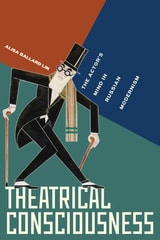
Theatrical Consciousness
The Actor’s Mind in Russian ModernismAlisa Ballard Lin
Northwestern University Press, 2025
Investigating late imperial Russian and early Soviet modernism’s reinvention of the actor
In this wide-ranging study, Alisa Ballard Lin argues that Russian theatrical theory and practice contributed to a broad pre- and postrevolutionary discourse about the mind, profoundly reshaping concepts of consciousness, perception, identity, and the constitution of the subject. Theatrical Consciousness: The Actor’s Mind in Russian Modernism examines efforts in Russian theater—from around the turn of the century through the mid-1930s—to stimulate, train, imagine, and ultimately understand the actor’s, as well as the spectator’s, mind. Discussing key figures of the period, including Nikolai Evreinov, Konstantin Stanislavsky, Vsevolod Meyerhold, and Alexander Tairov, Lin identifies an underappreciated dimension of humanism within Russian modernism: a humanism that resisted the pressures of an increasingly technologized, industrialized, and politicized modernity that challenged the place of the human within it.
Toward a Cognitive Theory of Narrative Acts
Edited by Frederick Luis Aldama
University of Texas Press, 2010
Toward a Cognitive Theory of Narrative Acts brings together in one volume cutting-edge research that turns to recent findings in cognitive and neurobiological sciences, psychology, linguistics, philosophy, and evolutionary biology, among other disciplines, to explore and understand more deeply various cultural phenomena, including art, music, literature, and film. The essays fulfilling this task for the general reader as well as the specialist are written by renowned authors H. Porter Abbott, Patrick Colm Hogan, Suzanne Keen, Herbert Lindenberger, Lisa Zunshine, Katja Mellman, Lalita Pandit Hogan, Klarina Priborkin, Javier Gutiérrez-Rexach, Ellen Spolsky, and Richard Walsh. Among the works analyzed are plays by Samuel Beckett, novels by Maxine Hong Kingston, music compositions by Igor Stravinsky, art by Jean-Baptiste-Simeon Chardin, and films by Michael Haneke. Each of the essays shows in a systematic, clear, and precise way how music, art, literature, and film work in and of themselves and also how they are interconnected. Finally, while each of the essays is unique in style and methodological approach, together they show the way toward a unified knowledge of artistic creativity.
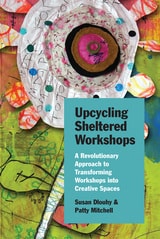
Upcycling Sheltered Workshops
A Revolutionary Approach to Transforming Workshops into Creative SpacesSusan Dlouhy
Ohio University Press, 2015
At a time when the traditional sheltered workshop model has fallen under rightful criticism, and a new paradigm for disability programming is not yet in place, Upcycling Sheltered Workshops offers a revolutionary alternative. As many push to dismantle sheltered workshops, Susan Dlouhy and Patty Mitchell present the Creative Abundance Model, a proven method that redirects sheltered workshops from routine to creativity, putting participants in the driver’s seat.
The Creative Abundance Model does away with the repetitive tasks that characterize traditional workshops. Instead, it is a structured but more open program that incorporates art, music, and other creative pursuits, freeing participants to discover their individual skills and talents. The authors both advocate for the model and provide instructions for implementing it, outlining such steps as obtaining funding, gaining the support and participation of the surrounding community, and preparing studios. Case studies from around the nation and inspiring photographs illustrate Dlouhy and Mitchell’s methods and document the many ways in which participants in Creative Abundance thrive.