Results by title
7 books match the query 'Crete'
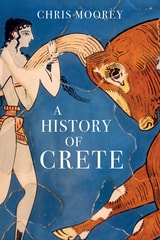
A History of Crete
Chris Moorey
Haus Publishing, 2019
To guide us through this spectacular history, Chris Moorey, who has lived in Crete for over twenty years, provides an engaging and lively account of the island spanning from the Stone Age to the present day. A History of Crete steps in to fill a gap in scholarship on this fascinating island, providing the first complete history of Crete to be published for over twenty years, and the first ever that is written with a wide readership in mind.
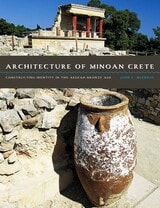
Architecture of Minoan Crete
Constructing Identity in the Aegean Bronze AgeBy John C. McEnroe
University of Texas Press, 2010
Ever since Sir Arthur Evans first excavated at the site of the Palace at Knossos in the early twentieth century, scholars and visitors have been drawn to the architecture of Bronze Age Crete. Much of the attraction comes from the geographical and historical uniqueness of the island. Equidistant from Europe, the Middle East, and Africa, Minoan Crete is on the shifting conceptual border between East and West, and chronologically suspended between history and prehistory. In this culturally dynamic context, architecture provided more than physical shelter; it embodied meaning. Architecture was a medium through which Minoans constructed their notions of social, ethnic, and historical identity: the buildings tell us about how the Minoans saw themselves, and how they wanted to be seen by others.
Architecture of Minoan Crete is the first comprehensive study of the entire range of Minoan architecture—including houses, palaces, tombs, and cities—from 7000 BC to 1100 BC. John C. McEnroe synthesizes the vast literature on Minoan Crete, with particular emphasis on the important discoveries of the past twenty years, to provide an up-to-date account of Minoan architecture. His accessible writing style, skillful architectural drawings of houses and palaces, site maps, and color photographs make this book inviting for general readers and visitors to Crete, as well as scholars.

Crete and James
Personal Letters of Lucretia and James GarfieldJohn Shaw
Michigan State University Press, 1994
Crete and James is a collection of letters exchanged by James A. Garfield and Lucretia Randolph Garfield during the mid-nineteenth century. Of the 1,200 or so letters written, the 300 included this work chronicle their courtship and marriage, and also discuss the Civil War, political affairs, and the details of daily life during the years 1853-1881. In them, we watch Crete grow from a shy girl into a self-confident woman who guides her husband in social and political matters. Through James’s flamboyant yet scholarly style, and Lucretia’s detailed, perceptive insights, we come to know them as though they were our close friends. Through their correspondence, the reader also meets the many people involved in their lives. Crete and James will be of great interest to those studying women’s history.
Imports and Immigrants
Near Eastern Contacts with Iron Age CreteGail L. Hoffman
University of Michigan Press, 1998
Drawing together all the evidence and arguments for Near Eastern immigrants in Crete, Hoffman demonstrates there are basic problems with the accepted interpretations. Evidence of continued technical expertise casts doubt on the necessity of reintroduction, while careful scrutiny of the evidence supporting immigrant craftsmen reveals many inadequacies in the currently accepted analyses.
Imports and Immigrants identifies the need for reassessing all dimensions of the question of artistic relationships between ancient Greece and other regions of the Aegean basin and suggests new avenues of inquiry in this important debate. The volume also reassesses arguments made for the presence of Near Eastern immigrants in Crete. This book includes a catalogue indispensable for future work on these issues and illustrations of most of the known imports to Crete.
Gail L. Hoffman is Associate Professor of Greek Art and Archaeology, Department of Classics, Yale University.
Subversive Archaism
Troubling Traditionalists and the Politics of National HeritageMichael Herzfeld
Duke University Press, 2021

The Body Impolitic
Artisans and Artifice in the Global Hierarchy of ValueMichael Herzfeld
University of Chicago Press, 2003
Michael Herzfeld takes us inside a rich variety of small-town Cretan artisans' workshops to show how apprentices are systematically thwarted into learning by stealth and guile. This harsh training reinforces a stereotype of artisans as rude and uncultured. Moreover, the same stereotypes that marginalize artisans locally also operate to marginalize Cretans within the Greek nation and Greece itself within the international community. What Herzfeld identifies as "the global hierarchy of value" thus frames the nation's ancient monuments and traditional handicrafts as evidence of incurable "backwardness."
Herzfeld's sensitive observations offer an intimately grounded way of understanding the effects of globalization and of one of its most visible offshoots, the heritage industry, on the lives of ordinary people in many parts of the world today.

The Golden Step
A Walk Through the Heart of CreteChristopher Somerville
Haus Publishing, 2012