Results by title
3 books match the query 'Criminals in literature'
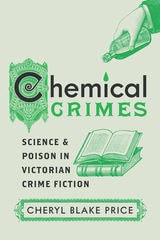
Chemical Crimes
Science and Poison in Victorian Crime FictionCheryl Blake Price
The Ohio State University Press, 2019
From the Newgate and Silver Fork novels of the 1830s to the emergent genres of science and detective fiction of the 1890s, Price advocates for the classification of a new type of poisoner, one who combined crime with methodical scientific know-how: the chemical criminal. Chemical Crimes shows how authors used the subversiveness of chemical crimes to challenge the supposed disciplinary force of forensic detection and suggests that generic developments were inspired as much by criminal scientific innovation as they were by the rise of the detective–scientist. By focusing on chemical crime’s appearance at significant moments, this book traces how reactions to Victorian science inspired change in nineteenth-century crime fiction.
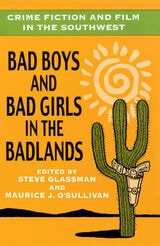
Crime Fiction and Film in the Southwest
Bad Boys and Bad Girls in the BadlandsEdited by Steve Glassman and Maurice O'Sullivan
University of Wisconsin Press, 2001
When Joe Leaphorn and Jim Chee, Tony Hillerman’s oddly matched tribal police officers, patrol the mesas and canyons of their Navajo reservation, they join a rich traditon of Southwestern detectives. In Crime Fiction and Film in the Southwest, a group of literary critics tracks the mystery and crime novel from the Painted Desert to Death Valley and Salt Lake City. In addition, the book includes the first comprehensive bibliography of mysteries set in the Southwest and a chapter on Southwest film noir from Humphrey Bogart’s tough hood in The Petrified Forest to Russell Crowe’s hard-nosed cop in L.A. Confidential.
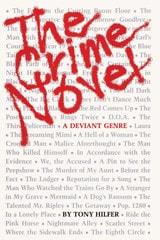
The Crime Novel
A Deviant GenreBy Tony Hilfer
University of Texas Press, 1990
Although rarely distinguished from the detective story, the crime novel offers readers a quite different experience. In the detective novel, a sympathetic detective figure uses reason and intuition to solve the puzzle, restore order, and reassure readers that "right" will always prevail. In the crime novel, by contrast, the "hero" is either the killer, the victim, a guilty bystander, or someone falsely accused, and the crime may never be satisfactorily solved.
These and other fundamental differences are set out by Tony Hilfer in The Crime Novel, the first book that completely defines and explores this popular genre. Hilfer offers convincing evidence that the crime novel should be regarded as a genre distinct from the detective novel, whose conventions it subverts to develop conventions of its own.
Hilfer provides in-depth analyses of novels by Georges Simenon, Margaret Millar, Patricia Highsmith, and Jim Thompson. He also treats such British novelists as Patrick Hamilton, Shelley Smith, and Marie Belloc Lowndes, as well as the American novelists Cornell Woolrich, John Franklin Bardin, James M. Cain, and Fredric Brown. In addition, he defines the distinctions between the American crime novel and the British, showing how their differences correspond to differences in American and British detective fiction.
This well-written study will appeal to a general audience, as well as teachers and students of detective and mystery fiction. For anyone interested in the genre, it offers valuable suggestions of "what to read next."