Results by title
4 books match the query 'Criticism, Redaction'
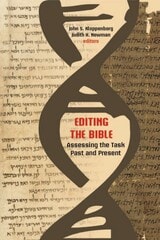
Editing the Bible
Assessing the Task Past and PresentJohn S. Kloppenborg
SBL Press, 2012
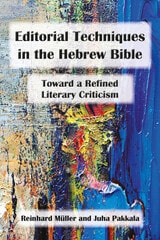
Editorial Techniques in the Hebrew Bible
Toward a Refined Literary CriticismReinhard Müller
SBL Press, 2022
Editorial Techniques in the Hebrew Bible: Toward a Refined Literary Criticism presents and applies a model for understanding and reconstructing the diachronic development of the Hebrew Bible through historical criticism (or the historical-critical method). Reinhard Müller and Juha Pakkala refine the methodologies of literary and redaction criticism through a systematic investigation of the evidence of additions, omissions, replacements, and transpositions that are documented by divergent ancient textual traditions. At stake is not only historical criticism but also the Hebrew Bible as a historical source, for historical criticism has been and continues to be the only method to unwind those scribal changes that left no traces in textual variants.
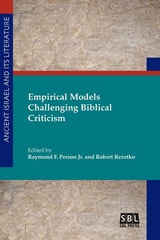
Empirical Models Challenging Biblical Criticism
Raymond F. Person
SBL Press, 2016
Cutting edge reflections on biblical text formation
Empirical models based on ancient Near Eastern literature and variations between different textual traditions have been used to lend credibility to the identification of the sources behind biblical literature and the different editorial layers. In this volume, empirical models are used to critique the exaggerated results of identifying sources and editorial layers by demonstrating that, even though much of ancient literature had such complex literary histories, our methods are often inadequate for the task of precisely identifying sources and editorial layers. The contributors are Maxine L. Grossman, Bénédicte Lemmelijn, Alan Lenzi, Sara J. Milstein, Raymond F. Person Jr., Robert Rezetko, Stefan Schorch, Julio Trebolle Barrera, Ian Young, and Joseph A. Weaks.
Features:
- Evidence that many ancient texts are composite texts with complex literary histories
- Ten essays and an introduction cover texts from Mesopotamia, the Hebrew Bible, the New Testament, and the Dead Sea Scrolls
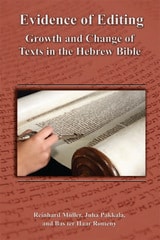
Evidence of Editing
Growth and Change of Texts in the Hebrew BibleReinhard Müller
SBL Press, 2014
A new perspective on editorial activity in the Hebrew Bible for research and teaching
Evidence of Editing lays out the case for substantial and frequent editorial activity within the Hebrew Bible. The authors show how editors omitted, expanded, rewrote, and compiled both smaller and larger phrases and passages to address religious and political change. The book refines the exegetical method of literary and redaction criticism, and its results have important consequences for the future use of the Hebrew Bible in historical and theological studies.
Features:
- Hebrew, Greek, and Aramaic examples of editorial activity
- Clear explanations of the distinctions between textual, literary, and redaction criticism
- Fifteen chapters attesting to continual editorial activity in the Torah, the Prophets, and the Writings