Results by title
11 books match the query 'Criticism, interpretation, etc., Jewish'
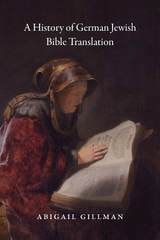
A History of German Jewish Bible Translation
Abigail Gillman
University of Chicago Press, 2018
This book is the first in English to offer a close analysis of German Jewish translations as part of a larger cultural project. Looking at four distinct waves of translations, Abigail Gillman juxtaposes translations within each that sought to achieve similar goals through differing means. As she details the history of successive translations, we gain new insight into the opportunities and problems the Bible posed for different generations and gain a new perspective on modern German Jewish history.
Beloved David—Advisor, Man of Understanding, and Writer
A Festschrift in Honor of David SternNaftali S. Cohn
SBL Press, 2024

Disembodied Souls
The Nefesh in Israel and Kindred Spirits in the Ancient Near East, with anRichard C. Steiner
SBL Press, 2015
A reevaluation of the concept of the soul based on the latest evidence
Biblical scholars have long claimed that the Israelites “could not conceive of a disembodied nefesh [soul].” Steiner rejects that claim based on a broad spectrum of textual, linguistic, archaeological, and anthropological evidence spanning the millennia from prehistoric times to the present. The biblical evidence includes a prophecy of Ezekiel condemning women who pretend to trap the wandering souls of sleeping people. The extrabiblical evidence suggests that a belief in the existence of disembodied souls was part of the common religious heritage of the peoples of the ancient Near East.
Features
- A re-examination of the evidence for and against disembodied souls in the Hebrew Bible
- A new look at the nature and behavior of disembodied souls in the Hebrew Bible
- A new study of the meaning and sociolinguistic background of the Katumuwa inscription
Hidden Truths from Eden
Esoteric Readings of Genesis 1-3Caroline Vander Stichele
SBL Press, 2014
Examine a rich history of spiritual interpretations from antiquity to the present
Since the sixteenth century CE, the field of biblical studies has focused on the literal meaning of texts. This collection seeks to rectify this oversight by integrating the study of esoteric readings into academic discourse. Case studies focusing on the first three chapters of Genesis cover different periods and methods from early Christian discourse through zoharic, kabbalistic and alchemical literature to modern and post-postmodern approaches.
Features:
- Discussions, comparisons, and analyses of esoteric appropriations of Genesis 1–3
- Essays on creation myths, gender, fate and free will, the concepts of knowledge, wisdom, and gnosis
- Repsonses to papers that provide a range of view points
Reimagining Apocalypticism
Apocalyptic Literature in the Dead Sea Scrolls and Related WritingsLorenzo DiTommaso
SBL Press, 2023
Strength to Strength
Essays in Honor of Shaye J. D. CohenMichael L. Satlow
SBL Press, 2018
Essays that engage the scholarship of Shaye J. D. Cohen
The essays in Strength to Strength honor Shaye J. D. Cohen across a range of ancient to modern topics. The essays seek to create an ongoing conversation on issues of identity, cultural interchange, and Jewish literature and history in antiquity, all areas of particular interest for Cohen. Contributors include: Moshe J. Bernstein, Daniel Boyarin, Jonathan Cohen, Yaakov Elman, Ari Finkelstein, Charlotte Elisheva Fonrobert, Steven D. Fraade, Isaiah M. Gafni, Gregg E. Gardner, William K. Gilders, Martin Goodman, Leonard Gordon, Edward L. Greenstein, Erich S. Gruen, Judith Hauptman, Jan Willem van Henten, Catherine Hezser, Tal Ilan, Richard Kalmin, Yishai Kiel, Ross S. Kraemer, Hayim Lapin, Lee I. Levine, Timothy H. Lim, Duncan E. MacRae, Ivan Marcus, Mahnaz Moazami, Rachel Neis, Saul M. Olyan, Jonathan J. Price, Jeffrey L. Rubenstein, Michael L. Satlow, Lawrence H. Schiffman, Daniel R. Schwartz, Joshua Schwartz, Karen Stern, Stanley Stowers, and Burton L. Visotzky.
Features:
- A full bibliography of Cohen’s published works
- An essay on the contributions of Cohen
Surviving Lamentations
Catastrophe, Lament, and Protest in the Afterlife of a Biblical BookTod Linafelt
University of Chicago Press, 2000
In Surviving Lamentations, Tod Linafelt offers an alternative reading of Lamentations in light of the "literature of survival" (works written by survivors of catastrophe) as well as literary and philosophical reflections on "the survival of literature." He refocuses attention on the figure of Zion as a manifestation of a basic need to give voice to suffering, and traces the afterlife of Lamentations in Jewish literature, in which text after text attempts to provide the response to Zion's lament that is lacking in Lamentations itself.
Seen through Linafelt's eyes, Lamentations emerges as uncannily relevant to contemporary discourse on survival.
The Bible in the Sixteenth Century
David C. Steinmetz
Duke University Press, 1990
Contributors. Irena Backus, Guy Bedouelle, Kalman P. Bland, Kenneth G. Hagen, Scott H. Hagen, Scott H. Hendrix, R. Gerald Hobbs, Jean-Claude Margolin, H. C. Erik Midelfort, Richard A. Muller, John B. Payne, David C. Steinmetz
The Jewish Middle Ages
Carol Bakhos
SBL Press, 2023
For many, the Middle Ages in general evokes a sense of the sinister and brings to mind a world of fear, superstition, and religious fanaticism. For Jews it was a period marked by persecutions, pogroms, and expulsions. Yet at the same time, the Middle Ages was also a time of lively cultural exchange and heightened creativity for Jews. In The Jewish Middle Ages, contributors explore the ways in which the stories of biblical women, including, Eve, Sarah, Hagar, Rebekah, Zipporah, Ruth, Esther, and Judith, make their way into the rich tapestry of medieval Jewish literature, mystical texts, and art, particularly in works emanating from Ashkenazic circles. Contributors include Carol Bakhos, Judith R. Baskin, Elisheva Baumgarten, Dagmar Börner-Klein, Constanza Cordoni, Rachel Elior, Meret Gutmann-Grün, Robert A. Harris, Yuval Katz-Wilfing, Sheila Tuller Keiter, Katrin Kogman-Appel, Gerhard Langer, Aurora Salvatierra Ossorio, and Felicia Waldman. These essays give us a glimpse into the role women played and the authority they assumed in medieval Jewish culture beyond the rabbinic centers of Palestine and Babylonia.
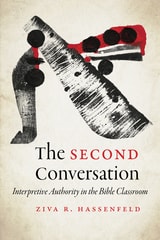
The Second Conversation
Interpretive Authority in the Bible ClassroomZiva R. Hassenfeld
Brandeis University Press, 2024
In The Second Conversation, university professor Ziva R. Hassenfeld returns to the middle school classroom to study her own seventh grade Bible class. The book explores dilemmas of practice she encountered around interpretive authority in the classroom. She analyzes the questions that came up in her teaching within the context of the most influential religious education scholarship, literacy scholarship, sociocultural theory and literary theory. She highlights the importance of two conversations about interpretive rules within the classroom, the first about the text’s meaning, and the second about competing conventions for determining its meaning. Instructors of any type of literature will benefit from Hassenfeld’s study, which offers rich ideas about when and how teachers enforce a classroom’s way of reading or follow a student’s line of inquiry toward more flexible interpretation.
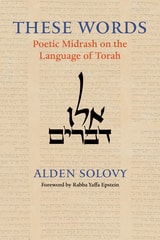
These Words
Poetic Midrash on the Language of TorahAlden Solovy
Central Conference of American Rabbis, 2023
In These Words, liturgist Alden Solovy distills the Torah into its very essence: the individual words it contains. Echoing the midrash that the Torah has seventy faces, Solovy selects seventy of its Hebrew words that are pregnant with meaning. For each word, he delves into the etymology, translation, and usage, providing deeper insights into familiar texts. Then Solovy presents a beautiful poem—what he calls “poetic midrash”—inspired by and interpreting each word. From b’reishit (“in beginning”) to shamayim (“heavens”) to zachor (“remember”), These Words will change the way you look at the language of the Torah.