Results by title
3 books match the query 'Crops'

Environmental Safety of Genetically Engineered Crops
Rebecca Grumet
Michigan State University Press, 2010
Since the mid-1990s, when the technology was first introduced, the cultivation of genetically engineered (GE) crops has grown exponentially. In the U.S. alone, adoption rates for transgenic cotton, corn, and soybeans are between 70–90%. Across the globe, 14 million farmers grow GE crops in more than twenty countries. Yet many countries are discussing and debating the use and adoption of GE technology because of concerns about their impact on the environment and human health. Now, in this comprehensive handbook, a team of international experts present the scientific basis for GE crops, placing them in the context of current agricultural systems, and examining the potential environmental risks posed by their deployment. An integrated approach to an increasingly hot and globally debated topic, the book considers the past, present, and future of GE crops, and offers an invaluable perspective for regulation and policy development.
[more]

Genetic Improvement of Crops
Emergent TechniquesIrwin Rubenstein
University of Minnesota Press, 1980
Genetic Improvement of Crops was first published in 1980. Minnesota Archive Editions uses digital technology to make long-unavailable books once again accessible, and are published unaltered from the original University of Minnesota Press editions.Recent years have seen the emergence of a number of in vitro techniques that hold promise for the genetic alteration of higher organisms by non-traditional means. These new techniques may eventually modify the genetic structure of cash crop plants and, in practical terms, may lead to substantial improvement of crop production and to disease resistance in plants.This volume brings together 10 research reports by scientists actively engaged in developing genetic techniques in plants and other organisms. The first section explores both the potential for application of these techniques and the genetic needs of plant breeders. Other sections deal with genome organization and function; recombinant DNA technology and application; gene transfer; organelle transfer; and plant tissue culture.
[more]
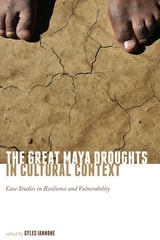
Great Maya Droughts in Cultural Context
Case Studies in Resilience and VulnerabilityGyles Iannone
University Press of Colorado, 2014
In The Great Maya Droughts in Cultural Context, contributors reject the popularized link between societal collapse and drought in Maya civilization, arguing that a series of periodic “collapses,” including the infamous Terminal Classic collapse (AD 750–1050), were not caused solely by climate change–related droughts but by a combination of other social, political, and environmental factors. New and senior scholars of archaeology and environmental science explore the timing and intensity of droughts and provide a nuanced understanding of socio-ecological dynamics, with specific reference to what makes communities resilient or vulnerable when faced with environmental change.Contributors recognize the existence of four droughts that correlate with periods of demographic and political decline and identify a variety of concurrent political and social issues. They argue that these primary underlying factors were exacerbated by drought conditions and ultimately led to societal transitions that were by no means uniform across various sites and subregions. They also deconstruct the concept of “collapse” itself—although the line of Maya kings ended with the Terminal Classic collapse, the Maya people and their civilization survived.
The Great Maya Droughts in Cultural Context offers new insights into the complicated series of events that impacted the decline of Maya civilization. This significant contribution to our increasingly comprehensive understanding of ancient Maya culture will be of interest to students and scholars of archaeology, anthropology, geography, and environmental studies.
[more]