Results by title
2 books match the query 'Cross-cultural orientation'

Ethnographic Chiasmus
Essays on Culture, Conflict and RhetoricIvo Strecker
Michigan State University Press, 2011
The essays assembled in this volume are shaped by conditions—both enabling and constraining—that can perhaps best be described as an “ethnographic chiasmus.” This expression refers to the surprise and reversal of position that are characteristic of fieldwork, and it attends to the fact that transcultural understanding comes about as a meeting, touching, or “crossing.” Chiasmus also pertains to the relationship between culture and rhetoric in general. Culture structures rhetoric; rhetoric structures culture. Both are coemergent. In order to elucidate this process, ethnography has to focus on the manifold modes of rhetoric through which culture-specific patterns of thought and action are created.
[more]
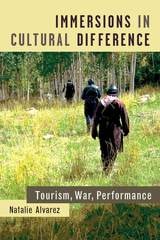
Immersions in Cultural Difference
Tourism, War, PerformanceNatalie Alvarez
University of Michigan Press, 2018
In a time of intensifying xenophobia and anti-immigration measures, this book examines the impulse to acquire a deeper understanding of cultural others. Immersions in Cultural Difference takes readers into the heart of immersive simulations, including a simulated terrorist training camp in Utah; mock Afghan villages at military bases in Canada and the UK; a fictional Mexico-US border run in Hidalgo, Mexico; and an immersive tour for settlers at a First Nations reserve in Manitoba, Canada. Natalie Alvarez positions the phenomenon of immersive simulations within intersecting cultural formations: a neoliberal capitalist interest in the so-called “experience economy” that operates alongside histories of colonization and a heightened state of xenophobia produced by War on Terror discourse. The author queries the ethical stakes of these encounters, including her own in relation to the field research she undertakes. As the book moves from site to site, the reader discovers how these immersions function as intercultural rehearsal theaters that serve a diverse set of strategies and pedagogical purposes: they become a “force multiplier” within military strategy, a transgressive form of dark tourism, an activist strategy, and a global, profit-generating practice for a neoliberal capitalist marketplace.
[more]