Results by title
5 books match the query 'Cryptography'
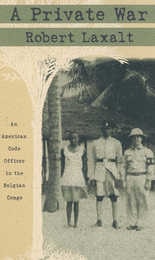
A Private War
An American Code Officer in the Belgian CongoRobert Laxalt
University of Nevada Press, 1998
In this vivid memoir, Laxalt recalls his service during WWII as a code officer in the Belgian Congo. In this remote jungle outpost, a secret war was being fought for control of the world’s future. Deep in the Congo lay a mine that produced a little-known substance called uranium, and for reasons no one then understood, the Allies and the Germans were struggling ferociously to control this mine and its ore. The cloth edition is a limited numbered, signed edition.
Frontiers in Securing IP Cores
Forensic detective control and obfuscation techniquesAnirban Sengupta
The Institution of Engineering and Technology, 2020
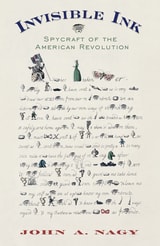
Invisible Ink
Spycraft of the American RevolutionJohn A. Nagy
Westholme Publishing, 2010
The Critical Role of Espionage During the War of Independence and the Techniques Spies Used
During the American Revolution, espionage was critical to the successes and failures of both Continental and British efforts, and those employed in cloakand- dagger operations always risked death. While the most notorious episode of spying during the war—the Benedict Arnold affair—was a failure, most intelligence operations succeeded. Spycraft was no more wholly embraced than by the American commander-in-chief, George Washington. Washington relied on a vast spy network and personally designed sophisticated battle plan deceptions and counterintelligence efforts, some surprisingly modern in form. In Invisible Ink: Spycraft of the American Revolution, award-winning author John A. Nagy briefly traces the history of spy techniques from ancient China through Elizabethan England before embarking on the various techniques used by spies on both sides of the war to exchange secret information. These methods included dictionary codes, diplomatic ciphers, dead drops, hidden compartments (such as a hollowed-out bullet or a woman’s garter), and even musical notation, as well as efforts of counterintelligence, including “Black Chambers,” where postal correspondence was read by cryptologists. Throughout, the author provides examples of the various codes and ciphers employed, many of which have not been previously described. In addition, the author analyzes some of the key spy rings operating during the war, most notably the Culper ring that provided information to Washington from inside British-controlled New York City. Based on nearly two decades of primary research, including the author’s discovery of previously unrecognized spies and methods, Invisible Ink is a major contribution to the history of conflict and technology.
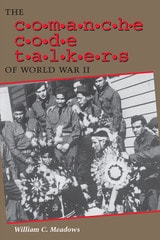
The Comanche Code Talkers of World War II
By William C. Meadows
University of Texas Press, 2003
Among the allied troops that came ashore in Normandy on D-Day, June 6, 1944, were thirteen Comanches in the 4th Infantry Division, 4th Signal Company. Under German fire they laid communications lines and began sending messages in a form never before heard in Europe—coded Comanche. For the rest of World War II, the Comanche Code Talkers played a vital role in transmitting orders and messages in a code that was never broken by the Germans.
This book tells the full story of the Comanche Code Talkers for the first time. Drawing on interviews with all surviving members of the unit, their original training officer, and fellow soldiers, as well as military records and news accounts, William C. Meadows follows the group from their recruitment and training to their active duty in World War II and on through their postwar lives up to the present. He also provides the first comparison of Native American code talking programs, comparing the Comanche Code Talkers with their better-known Navajo counterparts in the Pacific and with other Native Americans who used their languages, coded or not, for secret communication. Meadows sets this history in a larger discussion of the development of Native American code talking in World Wars I and II, identifying two distinct forms of Native American code talking, examining the attitudes of the American military toward Native American code talkers, and assessing the complex cultural factors that led Comanche and other Native Americans to serve their country in this way.
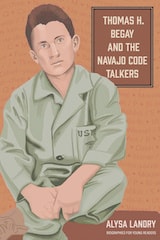
Thomas H. Begay and the Navajo Code Talkers
Alysa Landry
Ohio University Press, 2023