Results by title
161 books match the query 'Cuba' and 5 start with a
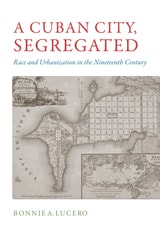
A Cuban City, Segregated
Race and Urbanization in the Nineteenth CenturyBonnie A. Lucero
University of Alabama Press, 2019
Founded as a white colony in 1819, Cienfuegos, Cuba, quickly became home to people of African descent, both free and enslaved, and later a small community of Chinese and other immigrants. Despite the racial, ethnic, and cultural diversity that defined the city’s population, the urban landscape was characterized by distinctive racial boundaries, separating the white city center from the heterogeneous peripheries. A Cuban City, Segregated: Race and Urbanization in the Nineteenth Century explores how the de facto racial segregation was constructed and perpetuated in a society devoid of explicitly racial laws.
Drawing on the insights of intersectional feminism, Bonnie A. Lucero shows that the key to understanding racial segregation in Cuba is recognizing the often unspoken ways specifically classed notions and practices of gender shaped the historical production of race and racial inequality. In the context of nineteenth-century Cienfuegos, gender, race, and class converged in the concept of urban order, a complex and historically contingent nexus of ideas about the appropriate and desired social hierarchy among urban residents, often embodied spatially in particular relationships to the urban landscape.
As Cienfuegos evolved subtly over time, the internal logic of urban order was driven by the construction and defense of a legible, developed, aesthetically pleasing, and, most importantly, white city center. Local authorities produced policies that reduced access to the city center along class and gendered lines, for example, by imposing expensive building codes on centric lands, criminalizing poor peoples’ leisure activities, regulating prostitution, and quashing organized labor. Although none of these policies mentioned race outright, this new scholarship demonstrates that the policies were instrumental in producing and perpetuating the geographic marginality and discursive erasure of people of color from the historic center of Cienfuegos during its first century of existence.
Acoustic Properties
Radio, Narrative, and the New Neighborhood of the AmericasTom McEnaney
Northwestern University Press, 2017
Based on original archival research in Buenos Aires, Havana, Paris, and the United States, the book develops a literary media theory that understands sound as a transmedial phenomenon and radio as a transnational medium. Analyzing the construction of new social and political relations in the wake of the United States’ 1930s Good Neighbor Policy, Acoustic Properties challenges standard narratives of hemispheric influence through new readings of Richard Wright’s cinematic work in Argentina, Severo Sarduy’s radio plays in France, and novels by John Dos Passos, Manuel Puig, Raymond Chandler, and Carson McCullers. Alongside these writers, the book also explores Che Guevara and Fidel Castro’s Radio Rebelde, FDR’s fireside chats, Félix Caignet’s invention of the radionovela in Cuba, Evita Perón’s populist melodramas in Argentina, Orson Welles’s experimental New Deal radio, Cuban and U.S. “radio wars,” and the 1960s African American activist Robert F. Williams’s proto–black power Radio Free Dixie.
From the doldrums of the Great Depression to the tumult of the Cuban Revolution, Acoustic Properties illuminates how novelists in the radio age converted writing into a practice of listening, transforming realism as they struggled to channel and shape popular power.
After Love
Queer Intimacy and Erotic Economies in Post-Soviet CubaNoelle Stout
Duke University Press, 2014
An Island Called Home
Returning to Jewish CubaRuth Behar, Photographs by Humberto Mayol
Rutgers University Press, 2007
Yiddish-speaking Jews thought Cuba was supposed to be a mere layover on the journey to the United States when they arrived in the island country in the 1920s. They even called it “Hotel Cuba.” But then the years passed, and the many Jews who came there from Turkey, Poland, and war-torn Europe stayed in Cuba. The beloved island ceased to be a hotel, and Cuba eventually became “home.” But after Fidel Castro came to power in 1959, the majority of the Jews opposed his communist regime and left in a mass exodus. Though they remade their lives in the United States, they mourned the loss of the Jewish community they had built on the island.
As a child of five, Ruth Behar was caught up in the Jewish exodus from Cuba. Growing up in the United States, she wondered about the Jews who stayed behind. Who were they and why had they stayed? What traces were left of the Jewish presence, of the cemeteries, synagogues, and Torahs? Who was taking care of this legacy? What Jewish memories had managed to survive the years of revolutionary atheism?
An Island Called Home is the story of Behar’s journey back to the island to find answers to these questions. Unlike the exotic image projected by the American media, Behar uncovers a side of Cuban Jews that is poignant and personal. Her moving vignettes of the individuals she meets are coupled with the sensitive photographs of Havana-based photographer Humberto Mayol, who traveled with her.
Together, Behar’s poetic and compassionate prose and Mayol’s shadowy and riveting photographs create an unforgettable portrait of a community that many have seen though few have understood. This book is the first to show both the vitality and the heartbreak that lie behind the project of keeping alive the flame of Jewish memory in Cuba.
Reader Guide (http://rutgerspress.rutgers.
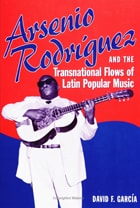
Arsenio Rodríguez and the Transnational Flows of Latin Popular Music
David F. García
Temple University Press, 2006