Results by title
5 books match the query 'Cudjoe, Selwyn R.'
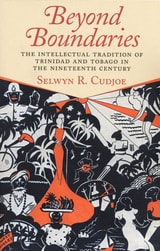
Beyond Boundaries
The Intellectual tradition of Trinidad and Tobago in the Nineteenth CenturySelwyn R. Cudjoe
University of Massachusetts Press, 2003
When V. S. Naipaul received the Nobel Prize for Literature in 2001, the award marked the culmination of a literary tradition that was almost two hundred years in the making. The island nation of Trinidad and Tobago has produced such important writers and thinkers as C. L. R. James, J. J. Thomas, Eric Williams, Oliver Cromwell Cox, Sylvester Williams, George Padmore, Earl Lovelace, Arnold Rampersad, and Merle Hodge. Yet this literary legacy is not well known, particularly with respect to works dating from the nineteenth century.
Beyond Boundaries traces the development of the country's literary and intellectual history from the “Narrative of Louisa Calderon” (1803) to Stephen Cobham's Rupert Gray: A Tale of Black and White (1907). Selwyn R. Cudjoe examines a wide range of narratives by and about the people of Trinidad and Tobago, from treatises in the natural sciences, to journals and memoirs, histories, slave narratives, travelers' accounts, poems, stories, novels, theatrical works, and writings in the popular press. Along the way, he discusses such seminal works as Jean Baptiste Philippe's Free Mulatto (1824) and Maxwell Philip's Emmanuel Appadocca (1854), the first indigenous novel. He explores books that shed light on ideological processes, such as J. J. Thomas's The Theory and Practice of Creole Grammar (1869) and Froudacity (1899). He examines how notions of savagery and civilization were deployed in the writings of the dominant class to stymie the growing self-awareness of the colonized. And he traces the rise of racial pride and nationalist sentiments among Indo- and Afro-Trinidadians.
Cudjoe demonstrates how Enlightenment concepts, English literature, African philosophy, Hindu theology, Islamic passion plays, and the culture of carnival all contributed to this body of ideas to create a vibrant literature, which in turn helped to shape a national identity.
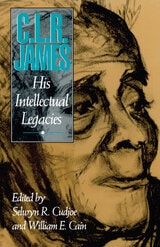
C.L.R. James
His Intellectual LegaciesEdited by Selwyn R. Cudjoe and William E. Cain
University of Massachusetts Press, 1995
C.L.R. James (1901–1989) made important contributions in a host of fields—literature, criticism, cultural studies, political theory, history, and philosophy. One of the most astute minds of this century, he served as mentor for two generations of international intellectuals. He contributed enormously to their understanding of the colonial question, the Negro question, the Russian question, the role of dialectics in proletarian struggle, and the theory and practice of Marxism in the Americas. In addition to The Black Jacobins, his incisive account of the Haitian revolution of the 1790s, and Notes on Dialectics, James published a range of other books, including a classic work on the game of cricket and a study of Herman Melville.
This collection of essays offers a variety of fresh perspectives on James's life and writings. Included are reminiscences of those who knew James well and critical essays by eminent scholars. The book is the first to offer a full treatment of James's many contributions to twentieth-century intellectual life.
Caribbean Women Writers
Essays from the First International ConferenceSelwyn R. Cudjoe
University of Massachusetts Press, 1990
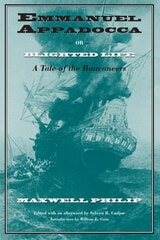
Emmanuel Appadocca; or, Blighted Life
A Tale of the BoucaneersMaxwell Philip
University of Massachusetts Press, 1997
This 1854 novel traces a mulatto son's quest for vengeance against his white father, a sugar planter who abandoned him and his mother. Intent on redeeming his mother's honor and outraged by the cruelty and greed that slavery has engendered Appadocca sails the seas with a band of ruthless pirates on a ship named the Black Schooner. The novel, written by the important activist and intellectual Michel Maxwell Philip (1829–1888) deals with themes, symbols, and literary techniques that are reminiscent of other major authors such as Melville, Douglass, and Stowe. This new edition with scholarly commentaries and annotations will reorient our understanding of the development of Caribbean literature in relation to English and American literary production.
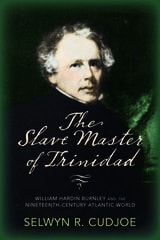
The Slave Master of Trinidad
William Hardin Burnley and the Nineteenth-Century Atlantic WorldSelwyn R. Cudjoe
University of Massachusetts Press, 2018
William Hardin Burnley (1780–1850) was the largest slave owner in Trinidad during the nineteenth century. Born in the United States to English parents, he settled on the island in 1802 and became one of its most influential citizens and a prominent agent of the British Empire. A central figure among elite and moneyed transnational slave owners, Burnley moved easily through the Atlantic world of the Caribbean, the United States, Great Britain, and Europe, and counted among his friends Alexis de Tocqueville, British politician Joseph Hume, and prime minister William Gladstone.
In this first full-length biography of Burnley, Selwyn R. Cudjoe chronicles the life of Trinidad's “founding father” and sketches the social and cultural milieu in which he lived. Reexamining the decades of transition from slavery to freedom through the lens of Burnley's life, The Slave Master of Trinidad demonstrates that the legacies of slavery persisted in the new post-emancipation society.