Results by title
7 books match the query 'Cultivation'
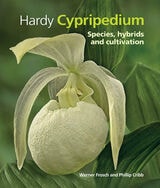
Hardy Cypripedium
Species, Hybrids and CultivationWerner Frosch, Phillip Cribb
Royal Botanic Gardens, Kew, 2012
Hardy Cypripedium presents the fifty species and one hundred hybrids of the slipper orchid through more than three hundred photos. It also provides plant descriptions, ecology, distribution, and cultivation methods. Sections on history, morphology, and conservation round out the guide. Professional and amateur growers, as well as fans of orchids of all types, will find a wealth of useful information in this beautiful book.
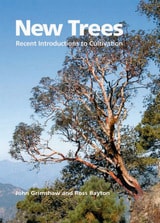
New Trees
Recent Introductions to CultivationJohn Grimshaw and Ross Bayton
Royal Botanic Gardens, Kew, 2009
This comprehensive volume, commissioned by the International Dendrology Society, covers more than eight hundred tree species that have been introduced to cultivation in the United Kingdom, Europe, and North America in recent decades. Up until now there has been no comparable source of information. Featuring horticultural notes from a network of growers and enthusiasts, backed up by data from recent scientific studies, the book presents a remarkable amount of information in a fashion accessible to amateurs as well as specialists. More than one hundred line drawings and nearly six hundred photographs—many portraying rarely seen trees—offer aids to identification. Introductory chapters covering conservation and modern techniques of tree-growing, and a comprehensive glossary and bibliography, round out the volume and make New Trees incomparable—and indispensable.

Opium in the Balkans
Cultivation, Processing, and Trade during the Interwar PeriodVladan Jovanović
Central European University Press, 2025
Macedonian raw opium was a highly sought-after pharmaceutical raw material. This book focuses on its cultivation and production, and the trafficking of opium-based narcotics. Vladan Jovanović offers fresh insight into a neglected and marginalized subject, tracing and contextualizing both the licit and the illicit processing and trade of opium alkaloids from the Western Balkans through Turkey, and on to the rest of the world between the two World Wars.
His approach is to explore the subject both from the top down, involving the League of Nations and politicians and diplomats, as well as from the bottom up, through the analysis of the activities of smugglers, police, and ordinary people who participated in the production and distribution of opium. The author describes the process of relocating the illegal processing industry from Turkey and Bulgaria to Yugoslavia. He insightfully shows the implicit continuity of relations between the former Ottoman Empire and the newly constituted Yugoslav state in the form of bilateral political agreements.
He pays special attention to the illegal activities within the legal pharmaceutical industry and also exposes the role of criminal networks, which he situates in the appropriate political and social context. The exploration of this sensitive historical subject extends to other Balkan countries, along with Turkey, Western Europe, and the United States.
People of the Wheat
Culture and Cultivation in North TexasRebecca Sharpless
University of Texas Press, 2026
How wheat growing, milling, and baking shaped the people and culture of North Texas.
In the national imaginary, America’s amber fields of grain lie in the country’s center, but for more than a century, they also grew across one pocket of the South: North Texas. From the 1840s to the 1970s, the state's agriculture, dominated in lore by cotton in the east and livestock in the open range, was heavily invested in the cultivation, processing, sale, and consumption of wheat. Recalling a forgotten history, Rebecca Sharpless shows how the rhythms of the wheat harvest—and the evolution of the milling, distribution, and baking industries—governed daily life in what is now known as the Dallas–Fort Worth Metroplex.
In the 1840s, Anglo settlers discovered that grain flourished in North Texas and quickly built an economy that included wheat in fields, mills, and kitchens. After the Civil War, hand labor gave way to mechanization, greatly increasing production. Commercial bakeries churned out novel confections, and big cities were built on the bounty of the countryside. In the second half of the twentieth century, as production moved northward, industrial milling and baking declined, but home baking boomed, flour advertising supported regional music, and wheat fortunes financed the region’s cultural life. Sharpless covers 150 years of wheat’s very human history and shows how the labor that cultivated it, the sustenance it provided, and the prosperity it generated left an indelible mark on the people and institutions of Texas.

The Cultivation of Whiteness
Science, Health, and Racial Destiny in AustraliaWarwick Anderson
Duke University Press, 2006
“[Anderson] writes with passion, wit, and panache, and the principal virtues of The Cultivation of Whiteness are the old-fashioned ones of thoroughness, accuracy, and impeccable documentation. . . . [His] sensitive study is a model of how contentious historical issues can be confronted.”—W. F. Bynum, Times Literary Supplement
“One of the virtues of The Cultivation of Whiteness is that it brings together aspects of Australian life and history that are now more often separated—race and environment, blood and soil, medicine and geography, tropical science and urban health, biological thought and national policy, Aboriginality and immigration, the body and the mind. The result is a rich and subtle history of ideas that is both intellectual and organic, and that vividly evokes past states of mind and their lingering, haunting power.”—Tom Griffiths, Sydney Morning Herald

The Good Life in the Scientific Revolution
Descartes, Pascal, Leibniz, and the Cultivation of VirtueMatthew L. Jones
University of Chicago Press, 2006
Amid the unrest, dislocation, and uncertainty of seventeenth-century Europe, readers seeking consolation and assurance turned to philosophical and scientific books that offered ways of conquering fears and training the mind—guidance for living a good life.
The Good Life in the Scientific Revolution presents a triptych showing how three key early modern scientists, René Descartes, Blaise Pascal, and Gottfried Leibniz, envisioned their new work as useful for cultivating virtue and for pursuing a good life. Their scientific and philosophical innovations stemmed in part from their understanding of mathematics and science as cognitive and spiritual exercises that could create a truer mental and spiritual nobility. In portraying the rich contexts surrounding Descartes’ geometry, Pascal’s arithmetical triangle, and Leibniz’s calculus, Matthew L. Jones argues that this drive for moral therapeutics guided important developments of early modern philosophy and the Scientific Revolution.
Transcendentalism and the Cultivation of the Soul
Barry M. Andrews
University of Massachusetts Press, 2017