Results by title
28 books match the query 'Cultural'

Aboriginal TM
The Cultural and Economic Politics of RecognitionJennifer Adese
University of Manitoba Press, 2022
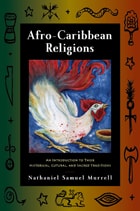
Afro-Caribbean Religions
An Introduction to Their Historical, Cultural, and Sacred TraditionsNathaniel Samuel Murrell
Temple University Press, 2009
This accessibly written introduction to Afro-Caribbean religions examines the cultural traditions and transformations of all of the African-derived religions of the Caribbean along with their cosmology, beliefs, cultic structures, and ritual practices. Ideal for classroom use, Afro-Caribbean Religions also includes a glossary defining unfamiliar terms and identifying key figures.
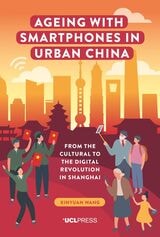
Ageing with Smartphones in Urban China
From the Cultural to the Digital Revolution in ShanghaiXinyuan Wang
University College London, 2023
The current oldest generation in Shanghai was born at a time when the average household could not afford electric lights, but today they can turn their lights off using smartphone apps. Grounded in extensive ethnographic fieldwork in Shanghai, Ageing with Smartphones in Urban China tackles the intersection between the “two revolutions” experienced by the older generation in Shanghai: the contemporary smartphone-based digital revolution and the earlier communist revolutions and argues that we can only understand the smartphone revolution if we first appreciate the long-term consequences of these people’s experiences during the communist revolutions. Supported by detailed ethnographic material, the observations and analysis here provide a panorama view of the social landscape of contemporary China, addressing such topics the digital and everyday life, aging and healthcare, intergenerational relations and family development, community building and grassroots organizations, collective memories, and political attitudes among ordinary Chinese people.
American Indian Languages
Cultural and Social ContextsShirley Silver and Wick R. Miller
University of Arizona Press, 1997
Authors Silver and Miller demonstrate the complexity and diversity of these languages while dispelling popular misconceptions. Their text reveals the linguistic richness of languages found throughout the Americas, emphasizing those located in the western United States and Mexico, while drawing on a wide range of other examples found from Canada to the Andes. It introduces readers to such varied aspects of communicating as directionals and counting systems, storytelling, expressive speech, Mexican Kickapoo whistle speech, and Plains sign language.
The authors have included basics of grammar and historical linguistics, while emphasizing such issues as speech genres and other sociolinguistic issues and the relation between language and worldview. They have incorporated a variety of data that have rarely or never received attention in nontechnical literature in order to underscore the linguistic diversity of the Americas, and have provided more extensive language classification lists than are found in most other texts.
American Indian Languages: Cultural and Social Contexts is a comprehensive resource that will serve as a text in undergraduate and lower-level graduate courses on Native American languages and provide a useful reference for students of American Indian literature or general linguistics. It also introduces general readers interested in Native Americans to the amazing diversity and richness of indigenous American languages.
Coverage includes:
Achumawi, Acoma, Algonquin, Apache, Araucanian, Arawakan, Athapascan, Atsugewi, Ayamara, Bacairi, Bella Coola, Beothuk, Biloxi, Blackfoot, Caddoan, Cahto, Cahuilla, Cakchiquel, Carib, Cayuga, Chemehuevi, Cherokee, Chibchan, Chichimec, Chimakuan, Chimariko, Chinook, Chipewyan, Choctaw-Chickasaw, Chol, Cocopa, Coeur d'Alene, Comanche, Coos, Cora, Cree, Creek, Crow, Cubeo, Cupeño, Dakota, Delaware, Diegueño, Eskimo-Aleut, Esselen, Eyak, Fox, Gros Ventre, Guaraní, Guarijío, Haida, Havasupai, Hill Patwin, Hopi, Huastec, Huave, Hupa, Inuit-Inupiaq, Iroquois, Jaqaru, Je, Jicaque, Kalapuyan, Kamia, Karankawas, Karuk, Kashaya, Keres, Kickapoo, Kiliwa, Kiowa-Tanoan, Koasati, Konkow, Kuna, Kwakiutl, Kwalhioqua-Tlatskanai, Lakota, Lenca, Luiseño, Maidu, Mapuche, Markoosie, Mayan, Mazahua, Mazatec, Métis, Mexica, Micmac, Misumalpan, Mitchif, Miwok, Mixe-Zoquean, Mixtec, Mobilian, Mohave, Mohawk, Muskogean, Nahuatl, Natchez, Navajo, Nez Perce, Nheengatú, Nicola, Nomlaki, Nootka, Ojibwa, Oneida, O'odham, Otomí, Paiute, Palaihnihan, Panamint, Panoan, Paya, Pima, Pipil, Pomo, Poplocan, Pueblo, Puquina, Purpecha, Quechua, Quiché, Quileute, Sahaptian, Salish, Seneca, Sequoyah, Seri, Serrano, Shasta, Shoshoni, Sioux, Sirenikski, Slavey, Subtiaba-Tlapanec, Taíno, Takelma, Tanaina, Tarahumara, Tequistlatecan, Tewa, Tlingit, Toba, Toltec, Totonac, Tsimshian, Tubatulabal, Tukano, Tunica, Tupí, Ute, Uto-Aztecan, Vaupés, Venture¤o, Wakashan, Walapai, Wappo, Washo, Wintu, Wiyot, Xinca, Yahi, Yana, Yokuts, Yucatec, Yuchi, Yuki, Yuma, Yurok, Zapotec, Zoquean, and Zuni.
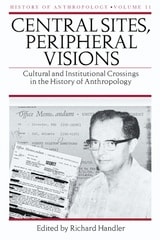
Central Sites, Peripheral Visions
Cultural and Institutional Crossings in the History of AnthropologyEdited by Richard Handler
University of Wisconsin Press, 2006
The terms "center" and "periphery" are particularly relevant to anthropologists, since traditionally they look outward from institutional "centers"-universities, museums, government bureaus-to learn about people on the "peripheries." Yet anthropology itself, as compared with economics, politics, or history, occupies a space somewhat on the margins of academe. Still, anthropologists, who control esoteric knowledge about the vast range of human variation, often find themselves in a theoretically central position, able to critique the "universal" truths promoted by other disciplines.
Central Sites, Peripheral Visions presents five case studies that explore the dilemmas, moral as well as political, that emerge out of this unique position. From David Koester's analysis of how ethnographic descriptions of Iceland marginalized that country's population, to Kath Weston's account of an offshore penal colony where officials mixed prison work with ethnographic pursuits; from Brad Evans's reflections on the "bohemianism" of both the Harlem vogue and American anthropology, to Arthur J. Ray's study of anthropologists who serve as expert witnesses in legal cases, the essays in the eleventh volume of the History of Anthropology Series reflect on anthropology's always problematic status as centrally peripheral, or peripherally central.
Finally, George W. Stocking, Jr., in a contribution that is almost a book in its own right, traces the professional trajectory of American anthropologist Robert Gelston Armstrong, who was unceremoniously expelled from his place of privilege because of his communist sympathies in the 1950s. By taking up Armstrong's unfinished business decades later, Stocking engages in an extended meditation on the relationship between center and periphery and offers "a kind of posthumous reparation," a page in the history of the discipline for a distant colleague who might otherwise have remained in the footnotes.
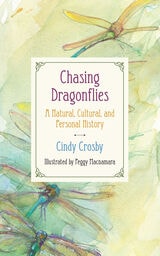
Chasing Dragonflies
A Natural, Cultural, and Personal HistoryCindy Crosby; Illustrations by Peggy Macnamara
Northwestern University Press, 2020
Chasing Dragonflies: A Natural, Cultural, and Personal History is an engaging, beautifully illustrated introduction to these remarkable insects. Drawing on her experiences as a natural history instructor, dragonfly monitor, cancer survivor, grandmother, and steward, Crosby tells the stories of dragonflies: their roles in poetry and art, their fascinating sex life—unique within the animal kingdom—and their evolution from dark-water dwellers to denizens of the air. We follow Crosby and other citizen-scientists into the prairies, wetlands, and woodlands of the Midwest, where they observe the environment and chronicle dragonfly populations and migration to decipher critical clues about our changing waterways and climate.
Woven throughout are personal stories: reflections on the author’s cancer diagnosis and recovery, change, loss, aging, family, joy, and discovering what it means to be at home in the natural world. Crosby draws an intimate portrait of a landscape teeming with variety and mystery, one that deserves our attention and conservation. As warm as it is informative, this book will interest gardeners, readers of literary nonfiction, and anyone intrigued by transformation, whether in nature or our personal lives.

Class Act
The Cultural and Political Life of Ewan MaccollBen Harker
Pluto Press, 2007
MacColl became a communist at fourteen and spent six decades at the cultural forefront of numerous political struggles, producing plays, songs and radio programmes on subjects ranging from the Spanish Civil War to the Poll Tax. Charting his involvement in radical theatre, his ground breaking radio work in the UK and the USA, as well as his musical influences and legacy, his three marriages, and his relationship with his songwriter daughter Kirstie MacColl, this is a lively account of a much-loved icon of 20th century folk music.
Drawing on extensive research, Class Act is a freshly conceived and energetically written account of a highly creative and controversial activist.
Cultural and Environmental History of Cienega Valley, Southeastern Arizona
Frank W. Eddy and Maurice E. Cooley
University of Arizona Press, 1983
Heritage Keywords
Rhetoric and Redescription in Cultural HeritageKathryn Lafrenz Samuels
University Press of Colorado, 2015
Situated at the intersection of scholarship and practice, Heritage Keywords positions cultural heritage as a transformative tool for social change. This volume unlocks the persuasive power of cultural heritage—as it shapes experiences of change and crafts present and future possibilities from historic conditions—by offering new ways forward for cultivating positive change and social justice in contemporary social debates and struggles. It draws inspiration from deliberative democratic practice, with its focus on rhetoric and redescription, to complement participatory turns in recent heritage work.
Through attention to the rhetorical edge of cultural heritage, contributors to this volume offer innovative reworkings of critical heritage categories. Each of the fifteen chapters examines a key term from the field of heritage practice—authenticity, civil society, cultural diversity, cultural property, democratization, difficult heritage, discourse, equity, intangible heritage, memory, natural heritage, place, risk, rights, and sustainability—to showcase the creative potential of cultural heritage as it becomes mobilized within a wide array of social, political, economic, and moral contexts.
This highly readable collection will be of interest to students, scholars, and professionals in heritage studies, cultural resource management, public archaeology, historic preservation, and related cultural policy fields.
Contributors include Jeffrey Adams, Sigrid Van der Auwera, Melissa F. Baird, Alexander Bauer, Malcolm A. Cooper, Anna Karlström, Paul J. Lane, Alicia Ebbitt McGill, Gabriel Moshenska, Regis Pecos, Robert Preucel, Trinidad Rico, Cecelia Rodéhn, Joshua Samuels, Kathryn Lafrenz Samuels, and Klaus Zehbe.
Justice as Translation
An Essay in Cultural and Legal CriticismJames Boyd White
University of Chicago Press, 1990
"White has given us not just a novel answer to the traditional jurisprudential questions, but also a new way of reading and evaluating judicial opinions, and thus a new appreciation of the liberty which they continue to protect."—Robin West, Times Literary Supplement
"James Boyd White should be nominated for a seat on the Supreme Court, solely on the strength of this book. . . . Justice as Translation is an important work of philosophy, yet it is written in a lucid, friendly style that requires no background in philosophy. It will transform the way you think about law."—Henry Cohen, Federal Bar News & Journal
"White calls us to rise above the often deadening and dreary language in which we are taught to write professionally. . . . It is hard to imagine equaling the clarity of eloquence of White's challenge. The apparently effortless grace of his prose conveys complex thoughts with deceptive simplicity."—Elizabeth Mertz, Yale Journal of Law and the Humanities
"Justice as Translation, like White's earlier work, provides a refreshing reminder that the humanities, despite the pummelling they have recently endured, can be humane."—Kenneth L. Karst, Michigan Law Review

Last Water on the Devil's Highway
A Cultural and Natural History of Tinajas AltasBill Broyles, Gayle Harrison Hartmann, Thomas E. Sheridan, Gary Paul Nabhan, and Mary Charlotte Thurtle
University of Arizona Press, 2013
Now an expert cast of authors describes, narrates, and explains the human and natural history of this special place in a thorough and readable account. Addressing the latest archaeological and historical findings, they reveal why Tinajas Altas was so important and how it related to other waterholes in the arid borderlands. Readers can feel like pioneers, following in the footsteps of early Native Americans, Spanish priests and soldiers, gold seekers and borderland explorers, tourists, and scholars.
Combining authoritative writing with a rich array of more than 180 illustrations and maps as well as detailed appendixes providing up-to-date information on the wildlife and plants that live in the area, Last Water on the Devil’s Highway allows readers to uncover the secrets of this fascinating place, revealing why it still attracts intrepid tourists and campers today.
Louise Erdrich's Justice Trilogy
Cultural and Critical ContextsConnie A. Jacobs
Michigan State University Press, 2021

Mammography Wars
Analyzing Attention in Cultural and Medical DisputesAsia Friedman
Rutgers University Press, 2023
Mammography is a routine health screening performed forty million times each year in the United States, yet it remains one of the most deeply contested topics in medicine, with national health care organizations supporting conflicting guidelines. In Mammography Wars, sociologist Asia Friedman examines cultural and medical disagreements over mammography. At issue is whether to screen women under age fifty, which is rooted in deeper questions about early detection and the assumed linear and progressive development of breast cancer. Based on interviews with doctors and scientists, interviews with women ages 40 to 50, and newspaper coverage of mammography, Friedman uses the sociology of attention to map the cognitive structure of the “mammography wars,” offering insights into the entrenched nature of debates over mammography that often get missed when applying a medical lens. Friedman’s analysis also suggests the sociology of attention’s unique potential for analyzing cultural conflicts beyond mammography, and even beyond medicine.
Mixed Messages
Cultural and Genetic Inheritance in the Constitution of Human SocietyRobert A. Paul
University of Chicago Press, 2015
Examining a wide array of cultures, Paul reveals how the inherent tensions between these two modes of transmission generate many of the features of human society, such as marriage rules, initiation rituals, gender asymmetry, and sexual symbolism. Exploring differences in the requirements, range, and agendas of genetic and symbolic reproduction, he shows that a properly conceived dual inheritance model does a better job of accounting for the distinctive character of actual human societies than either evolutionary or socio-cultural construction theories can do alone. Ultimately this book offers a powerful call for a synthesis of the traditions inspired by Darwin, Durkheim, and Freud—one that is critically necessary if we are to advance our understanding of human social life.
Nazi Culture
Intellectual, Cultural, and Social Life in the Third ReichGeorge L. Mosse
University of Wisconsin Press, 2003
What was life like under the Third Reich? What went on between parents and children? What were the prevailing attitudes about sex, morality, religion? How did workers perceive the effects of the New Order in the workplace? What were the cultural currents—in art, music, science, education, drama, and on the radio?
Professor Mosse’s extensive analysis of Nazi culture—groundbreaking upon its original publication in 1966—is now offered to readers of a new generation. Selections from newspapers, novellas, plays, and diaries as well as the public pronouncements of Nazi leaders, churchmen, and professors describe National Socialism in practice and explore what it meant for the average German.
By recapturing the texture of culture and thought under the Third Reich, Mosse’s work still resonates today—as a document of everyday life in one of history’s darkest eras and as a living memory that reminds us never to forget.
Obesity
Cultural and Biocultural PerspectivesBrewis, Alexandra A
Rutgers University Press, 2010
Grounded in a holistic anthropological approach and using a range of ethnographic and ecological case studies, Obesity shows that the human tendency to become and stay fat makes perfect sense in terms of evolved human inclinations and the physical and social realities of modern life. Drawing on her own fieldwork in the rural United States, Mexico, and the Pacific Islands over the last two decades, Alexandra A. Brewis addresses such critical questions as why obesity is defined as a problem and why some groups are so much more at risk than others. She suggests innovative ways that anthropology and other social sciences can use community-based research to address the serious public health and social justice concerns provoked by the global spread of obesity.

On Interpretation
Sociology for Interpreters of Natural and CulturalGary E. Machlis
Oregon State University Press, 1992
Opening the Books
Essays on the Cultural and Social History of the British Communist PartyGeoff Andrews
Pluto Press, 1995
Pioneering Minds Worldwide
On the Entrepreneurial Principles of the Cultural and Creative IndustriesEdited by Giep Hagoort, Aukje Thomassen, and Rene Kooyman
Eburon Academic Publishers, 2012
Prestige Television
Cultural and Artistic Value in Twenty-First-Century AmericaSeth Friedman
Rutgers University Press, 2023
Sounds of the Underground
A Cultural, Political and Aesthetic Mapping of Underground and Fringe MusicStephen Graham
University of Michigan Press, 2016
Spanish-Language Television
Cultural and Industrial TransformationsManuel G. Avilés-Santiago and Jillian M. Báez
University of Texas Press, 2025
How Spanish-language television networks continue to thrive in a rapidly changing media landscape.
The US television industry has suffered blow after blow amid media convergence and the rise of streaming. Those legacy broadcasters that survive are much diminished and highly dependent on live programming—the last redoubt of old media. There is an exception, though: Spanish-language television is thriving.
Spanish-Language Television surveys the Latinx media landscape to better appreciate why Univision and Telemundo have flourished while others faltered. Manuel G. Avilés-Santiago and Jillian M. Báez show that the major Spanish-language networks are unusually flexible and open to innovation in hopes of reaching new demographics. Univision and Telemundo were early to streaming. To appeal to “billennial” audiences—bilingual millennials—who threatened to stray from TV, they rebuilt the telenovela, which now features social commentary, diverse characters, and genre crossovers. Today’s reality programs defy old norms of linguistic correctness, and the airwaves are becoming less hospitable to racism and sexism, resulting in rising ratings and ad revenues. The first book-length treatment of reception patterns in Latinx TV, Spanish-Language Television deepens our understanding of new media in a moment of transformation and possibility.
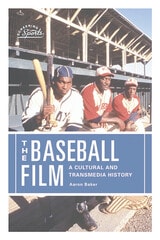
The Baseball Film
A Cultural and Transmedia HistoryAaron Baker
Rutgers University Press, 2022
This study offers an extensive look at nearly one hundred years of baseball-themed movies, documentaries, and TV shows. Film and sports scholar Aaron Baker examines works like A League of their Own (1992) and Sugar (2008), which dramatize the underrepresented contributions of female and immigrant players, alongside classic baseball movies like The Natural that are full of nostalgia for a time when native-born white men could use the game to achieve the American dream. He further explores how biopics have both mythologized and demystified such legendary figures as Ty Cobb, Babe Ruth, Lou Gehrig, Jackie Robinson and Fernando Valenzuela.
The Baseball Film charts the variety of ways that Hollywood presents the game as integral to American life, whether showing little league as a site of parent-child bonding or depicting fans’ lifelong love affairs with their home teams. Covering everything from Bull Durham (1988) to The Bad News Bears (1976), this book offers an essential look at one of the most cinematic of all sports.
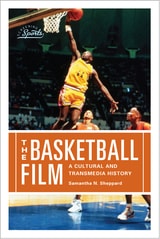
The Basketball Film
A Cultural and Transmedia HistorySamantha N. Sheppard
Rutgers University Press, 2027
The Basketball Film: A Cultural and Transmedia History reveals how stories about the game extend far beyond the court. From classic Hollywood dramas to independent documentaries, basketball films capture the rhythms of play while reflecting deeper struggles over race, identity, community, and aspiration. This groundbreaking study examines the basketball court as both a stage and a mirror for American life—where questions of belonging, opportunity, and cultural power are played out on and off the court. Moving across film, television, and video games, the book traces how basketball’s visual culture has evolved alongside the sport’s rise to global prominence. Through close readings of both celebrated and overlooked works, The Basketball Film offers an expansive and engaging portrait of how basketball has been imagined, represented, and mythologized across popular culture, revealing what the game continues to mean to audiences and players alike.
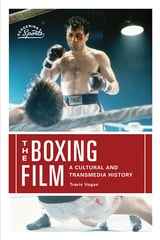
The Boxing Film
A Cultural and Transmedia HistoryTravis Vogan
Rutgers University Press, 2021
The Colorado Plateau
Cultural, Biological, and Physical ResearchCharles van Riper
University of Arizona Press, 2004

The Social Use of Media
Cultural and Social Scientific Perspectives on Audience ResearchEdited by Helena Bilandzic, Geoffroy Patriarche, and Paul J. Traudt
Intellect Books, 2012
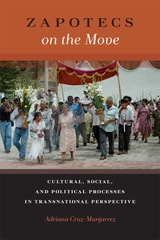
Zapotecs on the Move
Cultural, Social, and Political Processes in Transnational PerspectiveCruz-Manjarrez, Adriana
Rutgers University Press, 2013
Based on multi-site fieldwork conducted over a five-year period, Adriana Cruz-Manjarrez analyzes how and why Yalálag Zapotec identity and culture have been reconfigured in the United States, using such cultural practices as music, dance, and religious rituals as a lens to bring this dynamic process into focus. By illustrating the sociocultural, economic, and political practices that link immigrants in Los Angeles to those left behind, the book documents how transnational migration has reflected, shaped, and transformed these practices in both their place of origin and immigration.