Results by title
2 books match the query 'Cultural Imaginary'

Envisioning Taiwan
Fiction, Cinema, and the Nation in the Cultural ImaginaryJune Yip
Duke University Press, 2004
Yip traces a distinctly Taiwanese sense of self vis-à-vis China, Japan, and the West through two of the island’s most important cultural movements: the hsiang-t’u (or “nativist”) literature of the 1960s and 1970s, and the Taiwanese New Cinema of the 1980s and 1990s. At the heart of the book are close readings of the work of the hsiang-t’u writer Hwang Chun-ming and the New Cinema filmmaker Hou Hsiao-hsien. Key figures in Taiwan’s assertion of a national identity separate and distinct from China, both artists portray in vibrant detail daily life on the island. Through Hwang’s and Hou’s work and their respective artistic movements, Yip explores “the imagining of a nation” on the local, national, and global levels. In the process, she exposes a perceptible shift away from traditional models of cultural authenticity toward a more fluid, postmodern hybridity—an evolution that reflects both Taiwan’s peculiar multicultural reality and broader trends in global culture.
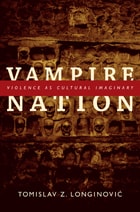
Vampire Nation
Violence as Cultural ImaginaryTomislav Z. Longinovi
Duke University Press, 2011
Interpreting oral and written narratives and visual culture, Longinović traces the early modern invention of ‘the serbs’ and the category’s twentieth-century transformations. He describes the influence of Bram Stoker’s nineteenth-century novel Dracula on perceptions of the Balkan region and reflects on representations of hybrid identities and their violent destruction in the works of the region’s most prominent twentieth-century writers. Concluding on a hopeful note, Longinović considers efforts to imagine a new collective identity in non-nationalist terms. These endeavors include the emigrant Yugoslav writer David Albahari’s Canadian Trilogy and Cyber-Yugoslavia, a mock nation-state with “citizens” in more than thirty countries.