51 books match the query 'Cultural Politics' and 6 start with a
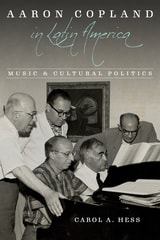
cover of Aaron Copland in Latin America: Music and Cultural Politics

Aaron Copland in Latin America

Music and Cultural Politics

Carol A. Hess

University of Illinois Press, 2023

Between 1941 and 1963, Aaron Copland made four government-sponsored tours of Latin America that drew extensive attention at home and abroad. Interviews with eyewitnesses, previously untapped Latin American press accounts, and Copland’s diaries inform Carol A. Hess’s in-depth examination of the composer’s approach to cultural diplomacy. As Hess shows, Copland’s tours facilitated an exchange of music and ideas with Latin American composers while capturing the tenor of United States diplomatic efforts at various points in history. In Latin America, Copland’s introduced works by U.S. composers (including himself) through lectures, radio broadcasts, live performance, and conversations. Back at home, he used his celebrity to draw attention to regional composers he admired. Hess’s focus on Latin America’s reception of Copland provides a variety of outside perspectives on the composer and his mission. She also teases out the broader meanings behind reviews of Copland and examines his critics in the context of their backgrounds, training, aesthetics, and politics.
[more]
cover of Accessible Citizenships: Disability, Nation, and the Cultural Politics of Greater Mexico

Accessible Citizenships

Disability, Nation, and the Cultural Politics of Greater Mexico

Julie Avril Minich

Temple University Press, 2013

Accessible Citizenships examines Chicana/o cultural representations that conceptualize political community through images of disability. Working against the assumption that disability is a metaphor for social decay or political crisis, Julie Avril Minich analyzes literature, film, and visual art post-1980 in which representations of non-normative bodies work to expand our understanding of what it means to belong to a political community.
 
Minich shows how queer writers like Arturo Islas and Cherríe Moraga have reconceptualized Chicano nationalism through disability images. She further addresses how the U.S.-Mexico border and disabled bodies restrict freedom and movement. Finally, she confronts the changing role of the nation-state in the face of neoliberalism as depicted in novels by Ana Castillo and Cecile Pineda. 
 
Accessible Citizenships illustrates how these works gesture towards less exclusionary forms of citizenship and nationalism. Minich boldly argues that the corporeal images used to depict national belonging have important consequences for how the rights and benefits of citizenship are understood and distributed.

A volume in the American Literatures Initiative
[more]
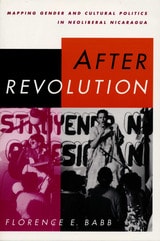
cover of After Revolution: Mapping Gender and Cultural Politics in Neoliberal Nicaragua

After Revolution

Mapping Gender and Cultural Politics in Neoliberal Nicaragua

By Florence E. Babb

University of Texas Press, 2001

Nicaragua's Sandinista revolution (1979-1990) initiated a broad program of social transformation to improve the situation of the working class and poor, women, and other non-elite groups through agrarian reform, restructured urban employment, and wide access to health care, education, and social services. This book explores how Nicaragua's least powerful citizens have fared in the years since the Sandinista revolution, as neoliberal governments have rolled back these state-supported reforms and introduced measures to promote the development of a market-driven economy.

Drawing on ethnographic research conducted throughout the 1990s, Florence Babb describes the negative consequences that have followed the return to a capitalist path, especially for women and low-income citizens. In addition, she charts the growth of women's and other social movements (neighborhood, lesbian and gay, indigenous, youth, peace, and environmental) that have taken advantage of new openings for political mobilization. Her ethnographic portraits of a low-income barrio and of women's craft cooperatives powerfully link local, cultural responses to national and global processes.
[more]
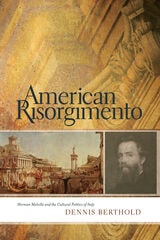
cover of American Risorgimento: Herman Melville and the Cultural Politics of Italy

American Risorgimento

Herman Melville and the Cultural Politics of Italy

Dennis Berthold

The Ohio State University Press, 2009
Although Herman Melville is typically considered one of America’s earliest cosmopolitan writers, scholarship has focused primarily on his involvement with the South Seas, England, and the Holy Land. In American Risorgimento: Herman Melville and the Cultural Politics of Italy, Dennis Berthold extends Melville’s transnational vision both geographically and historically by examining his many references to Italy and Rome in the context of the Risorgimento, Italy’s long quest for independence and political unity.
 
Melville’s contemporaries, notably Margaret Fuller and Henry T. Tuckerman, recognized the similarities between the Risorgimento and America’s struggle for national identity, and the influx of exiles from the failed Italian revolutions of 1820 and 1831 made Melville’s New York a hotbed of Risorgimento sympathies. Literary and political expostulations on Italy’s plight combined to create a distinctively American view of the Risorgimento that Melville elaborated in his fiction through allusions, characterizations, and direct commentary on Roman history, Dante, Machiavelli, Pope Pius IX, and Giuseppe Mazzini.
 
Melville followed the unfolding drama of Italian nationalism more closely than any other major American writer and found in it tropes and themes that fueled his turn to poetry, particularly after his visit to Italy in 1857. The Civil War, a crisis for American nationalism as urgent and profound as the Risorgimento, reinforced the symbolic parallels between the United States and Italy and led Melville to meditate on Giuseppe Garibaldi and other Italian patriots in one of his longest poems. 
 
Melville’s literary appropriations of Italian history, art, and politics demonstrate that transnational cultural exchanges are not confined to later American writing but originate with the country’s earliest authors and their recognition that any national literature worthy of the name must incorporate a broad international frame of reference.
 
Dennis Berthold is professor of English at Texas A&M University, College Station.
[more]
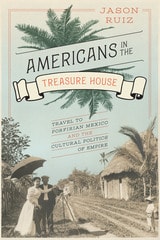
cover of Americans in the Treasure House: Travel to Porfirian Mexico and the Cultural Politics of Empire

Americans in the Treasure House

Travel to Porfirian Mexico and the Cultural Politics of Empire

By Jason Ruiz

University of Texas Press, 2014

When railroads connected the United States and Mexico in 1884 and overland travel between the two countries became easier and cheaper, Americans developed an intense curiosity about Mexico, its people, and its opportunities for business and pleasure. Indeed, so many Americans visited Mexico during the Porfiriato (the long dictatorship of Porfirio Díaz, 1876–1911) that observers on both sides of the border called the hordes of tourists and business speculators a “foreign invasion,” an apt phrase for a historical moment when the United States was expanding its territory and influence.

Americans in the Treasure House examines travel to Mexico during the Porfiriato, concentrating on the role of travelers in shaping ideas of Mexico as a logical place for Americans to extend their economic and cultural influence in the hemisphere. Analyzing a wealth of evidence ranging from travelogues and literary representations to picture postcards and snapshots, Jason Ruiz demonstrates that American travelers constructed Mexico as a nation at the cusp of modernity, but one requiring foreign intervention to reach its full potential. He shows how they rationalized this supposed need for intervention in a variety of ways, including by representing Mexico as a nation that deviated too dramatically from American ideals of progress, whiteness, and sexual self-control to become a modern “sister republic” on its own. Most importantly, Ruiz relates the rapid rise in travel and travel discourse to complex questions about national identity, state power, and economic relations across the U.S.–Mexico border.
[more]
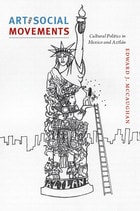
cover of Art and Social Movements: Cultural Politics in Mexico and Aztlán

Art and Social Movements

Cultural Politics in Mexico and Aztlán

Edward J. McCaughan

Duke University Press, 2012

Art and Social Movements offers a comparative, cross-border analysis of the role of visual artists in three social movements from the late 1960s through the early 1990s: the 1968 student movement and related activist art collectives in Mexico City, a Zapotec indigenous struggle in Oaxaca, and the Chicano movement in California. Based on extensive archival research and interviews, Edward J. McCaughan explores how artists helped to shape the identities and visions of a generation of Mexican and Chicano activists by creating new visual discourses.

McCaughan argues that the social power of activist artists emanates from their ability to provoke people to see, think, and act in innovative ways. Artists, he claims, help to create visual languages and spaces through which activists can imagine and perform new collective identities and forms of meaningful citizenship. The artists' work that he discusses remains vital today—in movements demanding fuller democratic rights and social justice for working people, women, ethnic communities, immigrants, and sexual minorities throughout Mexico and the United States. Integrating insights from scholarship on the cultural politics of representation with structural analyses of specific historical contexts, McCaughan expands our understanding of social movements.

[more]