Results by title
17 books match the query 'Cultural Psychology'
Anxiety in and about Africa
Multidisciplinary Perspectives and ApproachesAndrea Mariko Grant
Ohio University Press, 2021
How does anxiety impact narratives about African history, culture, and society?
This volume demonstrates the richness of anxiety as an analytical lens within African studies. Contributors call attention to ways of thinking about African spaces—physical, visceral, somatic, and imagined—as well as about time and temporality. Through a multidisciplinary approach, the volume also brings histories of anxiety in colonial settings into conversation with work on the so-called negative emotions in disciplines beyond history. While anxiety has long been acknowledged for its ability to unsettle colonial narratives, to reveal the vulnerability of the colonial enterprise, this volume shows it can equally complicate contemporary narratives, such as those of sustainable development, migration, sexuality, and democracy. These essays therefore highlight the need to take emotions seriously as contemporary realities with particular histories that must be carefully mapped out.
Between Foreign and Family
Return Migration and Identity Construction among Korean Americans and Korean ChineseLee, Helene K
Rutgers University Press, 2018
Between Foreign and Family explores the impact of inconsistent rules of ethnic inclusion and exclusion on the economic and social lives of Korean Americans and Korean Chinese living in Seoul. These actors are part of a growing number of return migrants, members of an ethnic diaspora who migrate “back” to the ancestral homeland from which their families emigrated. Drawing on ethnographic observations and interview data, Helene K. Lee highlights the “logics of transnationalism” that shape the relationships between these return migrants and their employers, co-workers, friends, family, and the South Korean state.
While Koreanness marks these return migrants as outsiders who never truly feel at home in the United States and China, it simultaneously traps them into a liminal space in which they are neither fully family, nor fully foreign in South Korea. Return migration reveals how ethnic identity construction is not an indisputable and universal fact defined by blood and ancestry, but a contested and uneven process informed by the interplay of ethnicity, nationality, citizenship, gender, and history.
Black Identity Viewed from a Barber's Chair
Nigrescence and EudaimoniaWilliam E. Cross, Jr.
Temple University Press, 2021
Throughout his esteemed career, William Cross has tried to reconcile how Black men he met in the barber shop “seemed so normal,” but the portrayal in college textbooks of Black people in general—and the Black working class in particular—is self-hating and pathological. In Black Identity Viewed from a Barber’s Chair, Cross revisits his ground-breaking model on Black identity awakening known as Nigrescence, connects W. E. B. DuBois’s concept of double consciousness to an analysis of how Black identity is performed in everyday life, and traces the origins of the deficit perspective on Black culture to scholarship dating back to the 1930s. He follows with a critique showing such deficit and Black self-hatred tropes were always based on extremely weak evidence.
Black Identity Viewed from a Barber’s Chair ends with a new understanding of the psychology of slavery that helps explain why and how, during the first twelve years of emancipation, countless former slaves exhibited amazing psychological, political, and cultural independence. Once free, their previously hidden psychology became public.
His booksets out to disrupt and agitate as Cross attempts to more accurately capture the humanity of Black people that has been overlooked in previous research.
Cultural Anxieties
Managing Migrant Suffering in FranceStéphanie Larchanche
Rutgers University Press, 2020
Deaf-Blind Reality
Living the LifeScott M. Stoffel
Gallaudet University Press, 2012
Most stories about disabled people are written for the sake of being inspirational. These stories tend to focus on some achievement, such as sports or academics, but rarely do they give a true and complete view of the challenges individuals must deal with on a daily basis. For example: How does a deaf-blind person interact with hearing-sighted people at a family reunion? How does she shop for groceries? What goes through his mind when he enters a classroom full of non-handicapped peers? These aren’t questions you are likely to find answers to while reading that incredible tale of success. They are, however, issues that a deaf-blind person wishes others understood.
Deaf-Blind Reality: Living the Life explores what life is really like for persons with a combination of vision and hearing loss, and in a few cases, other disabilities as well. Editor Scott M. Stoffel presents extensive interviews with 12 deaf-blind individuals, including himself, who live around the world, from Missouri to New Zealand, Louisiana to South Africa, and Ohio to England. These contributors each describe their families’ reactions and the support they received; their experiences in school and entering adulthood; and how they coped with degeneration, ineffective treatments, and rehabilitation. Each discusses their personal education related to careers, relationships, and communication, including those with cochlear implants. Deaf-Blind Reality offers genuine understanding of the unspectacular but altogether daunting challenges of daily life for deaf-blind people.
Empowering Men of Color on Campus
Building Student Community in Higher EducationBrooms, Derrick R.
Rutgers University Press, 2018

Erich Fromm and Critical Criminology
Beyond the Punitive SocietyEdited by Kevin Anderson and Richard Quinney
University of Illinois Press, 2000
Linking the writings of the great humanist psychologist Erich Fromm to criminology, this collection shows how viewing crime patterns and the criminal justice system from Fromm's humanist perspective opens a path to more effective and more humane ways of understanding and dealing with crime and criminals.
Contributors to Erich Fromm and Critical Criminology draw on Fromm's writings on alienation, sadomasochism, and patriarchal/matriarchal values to assess the kinds of crimes being committed and the kinds of people committing them. They explore the spiritual and intellectual sources of Fromm's thought--including Jewish theology, Freudian psychoanalysis, Marxism, and Buddhism--and demonstrate how his socialist humanism points toward a society free of crime and violence. This volume also includes translations of two of Fromm's early articles on criminal justice, never before available in English, in which he develops a psychoanalytic Marxist critique of the role of criminal justice in a class society.
At a time when American society seems bent, to an unprecedented degree, on imprisonment, executions, and other violent responses to the problem of crime, Fromm's humanist critique offers a unique vantage point from which to renew and develop a critical criminology.
Learning from the High Priestess
Affect, Femme Care, and Somatic PracticeAnn Cvetkovich
Duke University Press, 2026
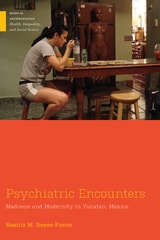
Psychiatric Encounters
Madness and Modernity in Yucatan, MexicoReyes-Foster, Beatriz M.
Rutgers University Press, 2019
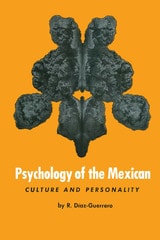
Psychology of the Mexican
Culture and PersonalityBy R. Díaz-Guerrero
University of Texas Press, 1975
In his quest to understand and describe the behavior of the Mexican, the distinguished Mexican psychologist R. Díaz-Guerrero combines a strong theoretical interest in the relationship of culture to personality with a pragmatic concern for methodology. This collection of essays is rooted both in studies of Mexican psychology as an independent phenomenon and in cross-cultural comparisons of Mexicans, Mexican-Americans, and Anglo-Americans.
Dr. Díaz-Guerrero discusses Mexican attitudes toward sex roles and the family, motivations of the Mexican worker, and other topics. He compares Mexican and American concepts of respect and analyzes the relation between neurosis and the Mexican family structure. He attempts to determine the degree of mental, personal, and social health of urban Mexicans. The importance of basic sociocultural premises, such as "The mother is the dearest person in existence," and "The stricter the parents are, the better the children turn out," is explored. In one essay, Díaz-Guerrero notes the differences in typical reactions to stress in Mexico and the United States, concluding that the American pattern involves active response to stress, whereas the Mexican response tends to be more passive.
Psychology of the Mexican deals with a variety of historical, psychological, biological, social, economic, and anthropological variables, attempting to treat them in a scientific way through the use of carefully constructed questionnaires, with detailed statistical analyses of the results. On the basis of data obtained in this way, the author formulates broad conceptual schemes with immediate application to the understanding of human behavior in real situations. He is particularly intrigued by the way the individual relates to the significant people in his environment. For the Mexican, he says, such interpersonal relationships are the most important part of life; in contrast to the American insistence on liberty and equality, Mexican culture emphasizes affiliation and love.
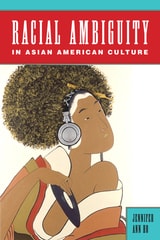
Racial Ambiguity in Asian American Culture
Ho, Jennifer Ann
Rutgers University Press, 2015
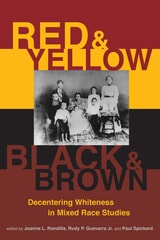
Red and Yellow, Black and Brown
Decentering Whiteness in Mixed Race StudiesRondilla, Joanne L
Rutgers University Press, 2017
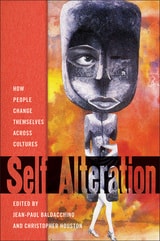
Self-Alteration
How People Change Themselves across CulturesJean-Paul Baldacchino
Rutgers University Press, 2024
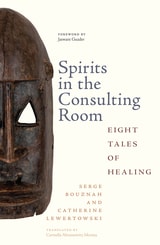
Spirits in the Consulting Room
Eight Tales of HealingSerge Bouznah
Rutgers University Press, 2023
Drawn from two decades of their experience with transcultural mediation, Spirits in the Consulting Room tells the stories of eight patients—mainly migrants—and their families. Each chapter focuses on a different patient, and Christelle, Djibril, Moncef, Alhassane, Jacinthe, Amy, Cyril, Alice, and Pierre leap off the page as distinct people with unique situations. Together, these chapters reveal how patients’ comprehension of their symptoms is shaped by their cultural background, while recounting the challenges of translating that into terms the doctors can grasp.
The book shows how trained transcultural mediators can help to redress the power imbalance between doctors and the migrants they treat, providing patients with advocates who respect the authority of their background and experiences and don’t just take the side of the medical professionals. The groundbreaking insights modeled in this book can be applied to any medical situation where doctors and patients find themselves speaking different languages.
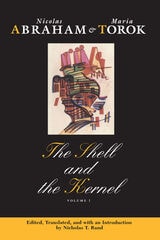
The Shell and the Kernel
Renewals of Psychoanalysis, Volume 1Nicolas Abraham and Maria Torok
University of Chicago Press, 1994
A landmark collection of the best work of two major figures in the study of psychoanalysis and literature
Central to their approach is a general theory of psychic concealment, a poetics of hiding. Whether in a clinical setting or a literary text, they search out the unspeakable secret as a symptom of devastating trauma revealed only in linguistic or behavioral encodings. Their view of trauma provides the linchpin for new psychic and linguistic structures such as the "transgenerational phantom," an undisclosed family secret handed down to an unwitting descendant, and the intra-psychic secret or "crypt," which entombs an unspeakable but consummated desire. Throughout, Abraham and Torok seek to restore communication with those intimate recesses of the mind which are, for one reason or another, denied expression.
Classics of French theory and practice, the essays in volume one include four previously uncollected works by Maria Torok. Nicholas Rand supplies a substantial introductory essay and commentary throughout. Abraham and Torok's theories of fractured meaning and their search for coherence in the face of discontinuity and disruption have the potential to reshape not only psychoanalysis but all disciplines concerned with issues of textual, oral, or visual interpretation.

To Sit on the Earth
A MemoirTobie Nathan
Seagull Books, 2024
In To Sit on the Earth, pioneering ethno-psychiatrist Tobie Nathan charts his intellectual and emotional journey, from his youthful infatuation with Freud and Wilhelm Reich to his mature adoption of anthropologist Georges Devereux’s ethnographic approach to psychoanalysis.
Expelled from Egypt as a Jew in 1956 when he was just a boy, Nathan spent his formative years on the outskirts of Paris. Caught up in situationist and Marxist politics, he enthusiastically participated in the revolutionary Events of May 1968. He then settled into a distinguished career as a writer, professor, and founding director of a free ethno-psychiatry clinic serving migrant populations in the French capital. Along the way, Nathan’s field research and practice took him to Benin, Burundi, and Brazil, where he sought out sorcerers, shamans, and other indigenous healers. As he did so, he encountered telling echoes of his ancestors’ age-old practices in Judeo-Arab Cairo.
Combining case histories and theoretical reflections with personal and familial anecdotes, while engaging with contemporary thinkers—including Sartre, Lacan, Bourdieu, and Foucault—this multi-layered, genre-defying memoir invites us to reconsider the beliefs that connect us to others and ourselves. To Sit on the Earth lays out a subtle, compelling case for the theological and cultural diversity essential to a thriving modernity.
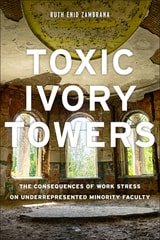
Toxic Ivory Towers
The Consequences of Work Stress on Underrepresented Minority FacultyRuth Enid Zambrana
Rutgers University Press, 2018