Results by title
14 books match the query 'Cultural industries'
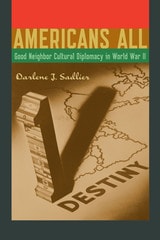
Americans All
Good Neighbor Cultural Diplomacy in World War IIBy Darlene J. Sadlier
University of Texas Press, 2012
Cultural diplomacy—“winning hearts and minds” through positive portrayals of the American way of life—is a key element in U.S. foreign policy, although it often takes a backseat to displays of military might. Americans All provides an in-depth, fine-grained study of a particularly successful instance of cultural diplomacy—the Office of the Coordinator of Inter-American Affairs (CIAA), a government agency established by President Franklin D. Roosevelt in 1940 and headed by Nelson A. Rockefeller that worked to promote hemispheric solidarity and combat Axis infiltration and domination by bolstering inter-American cultural ties.
Darlene J. Sadlier explores how the CIAA used film, radio, the press, and various educational and high-art activities to convince people in the United States of the importance of good neighbor relations with Latin America, while also persuading Latin Americans that the United States recognized and appreciated the importance of our southern neighbors. She examines the CIAA’s working relationship with Hollywood’s Motion Picture Society of the Americas; its network and radio productions in North and South America; its sponsoring of Walt Disney, Orson Welles, John Ford, Gregg Toland, and many others who traveled between the United States and Latin America; and its close ties to the newly created Museum of Modern Art, which organized traveling art and photographic exhibits and produced hundreds of 16mm educational films for inter-American audiences; and its influence on the work of scores of artists, libraries, book publishers, and newspapers, as well as public schools, universities, and private organizations.
Beyond Squid Game
Korean Media and the Netflix ParadigmBenjamin M. Han
University of Texas Press, 2026
Examining Netflix’s global influence through its complex global-local dynamics in Korean media.
Korea is a global entertainment powerhouse, thanks in no small part to Netflix. Analyzing the artistry and industry behind Netflix-produced Korean hits like Squid Game, The Glory, and Narco-Saints, Benjamin Han argues that Korea is ground zero for an emerging “Netflix Paradigm.” The US-based streaming platform generates massive profits by erasing boundaries of foreign and domestic production, even as it underscores the resilience of the national media within global popular culture.
Beyond Squid Game breaks down the intricate and often ambivalent relationship between Netflix and the Korean media business, drawing on interviews with creative workers navigating the streaming giant’s ever-increasing economic and cultural power. Challenging narratives that present Netflix as a revolutionary disruptor, Han shows how the company has replicated abroad the precarious labor conditions and tensions over intellectual property from which US studios have long benefited. At the same time, Beyond Squid Game underscores the complex dynamics of a globalized media industry in which cultural imperialism thrives on localization and perceived authenticity.
Creativity and Its Discontents
China's Creative Industries and Intellectual Property Rights OffensesLaikwan Pang
Duke University Press, 2012

Cultural Industries in Shanghai
Policy and Planning inside a Global CityEdited by Rong Yueming and Justin O’Connor
Intellect Books, 2018
Cultural Production of Hallyu in the Digital Platform Era
Industry PerspectivesDal Yong Jin
University of Michigan Press, 2025
Addressing the increasing significance of digital platforms, this work examines the transformative roles of over-the-top streaming services—Netflix, Viki, and V Live—video-sharing platforms such as YouTube, and social media platforms such as TikTok and Instagram, and the power relations between content producers, information technology sectors, the government, creative laborers, and audiences in the globalization of Korean culture and media. By developing critical cultural industries studies as a new theoretical framework, Cultural Production of Hallyu in the Digital Platform Era explores the ever-growing Korean Wave phenomenon with the advent of global digital platforms.
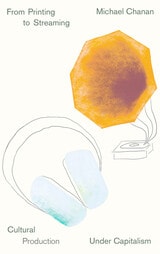
From Printing to Streaming
Cultural Production under CapitalismMichael Chanan
Pluto Press, 2022
A radical and comprehensive analysis of the commodification of artistic creation and the struggle to realize its potential in the digital age.
For mainstream economics, cultural production raises no special questions: creative expression is to be harvested for wealth creation like any other form of labor. As Karl Marx saw it, however, capital is hostile to the arts because it cannot fully control the process of creativity. But while he saw the arts as marginal to capital accumulation, that was before the birth of the mass media.
Engaging with the major issues in Marxist theory around art and capitalism, From Printing to Streaming traces how the logic of cultural capitalism evolved from the print age to digital times, tracking the development of printing, photography, sound recording, newsprint, advertising, film, and broadcasting, exploring the peculiarities of each as commodities, and their recent transformation by digital technology, where everything melts into computer code. Chanan demonstrates how these developments have had profound implications for both cultural creation and consumption.
Mass Media and Free Trade
NAFTA and the Cultural IndustriesEdited by Emile G. McAnany and Kenton T. Wilkinson
University of Texas Press, 1997
As United States television programs, movies, music, and other cultural products make their way around the globe, a vigorous debate over "cultural imperialism" is growing in many countries. This book brings together experts in economics, sociology, anthropology, the humanities, and communications to explore what effects the North American Free Trade Agreement will have on the flow of cultural products among Mexico, the United States, and Canada.
After an overview of free trade and the cultural industries, the book covers the following topics: dominance and resistance, cultural trade and identity in relation to Mexico and to French Canada, and intellectual property rights. Based on present trends, the contributors predict that there will be a steadily increasing flow of cultural products from the United States to its neighbors.
This book grew out of a 1994 conference that brought together leaders of the cultural industries, policy makers, and scholars. It represents state-of-the-art thinking about the global influence of U.S. cultural industries.
Pioneering Minds Worldwide
On the Entrepreneurial Principles of the Cultural and Creative IndustriesEdited by Giep Hagoort, Aukje Thomassen, and Rene Kooyman
Eburon Academic Publishers, 2012
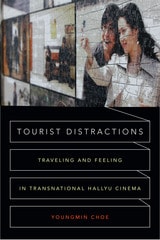
Tourist Distractions
Traveling and Feeling in Transnational Hallyu CinemaYoungmin Choe
Duke University Press, 2016
Transgenerational Media Industries
Adults, Children, and the Reproduction of CultureDerek Johnson
University of Michigan Press, 2019
Derek Johnson presents an innovative perspective that looks beyond the simple category of “kids’ media” to consider how entertainment industry strategies invite producers and consumers alike to cross boundaries between adulthood and childhood, professional and amateur, new media and old. Revealing the social norms, reproductive ideals, and labor hierarchies on which such transformations depend, he identifies the lines of authority and power around which legacy media institutions like television, comics, and toys imagine their futures in a digital age. Johnson proposes that it is not strategies of media production, but of media reproduction, that are most essential in this context. To understand these critical intersections, he investigates transgenerational industry practice in television co-viewing, recruitment of adult comic readers as youth outreach ambassadors, media professionals’ identification with childhood, the branded management of adult fans of LEGO, and the labor of child YouTube video creators. These dynamic relationships may appear to disrupt generational and industry boundaries alike. However, by considering who media industries empower when generating the future in these reproductive terms and who they leave out, Johnson ultimately demonstrates how their strategies reinforce existing power structures.
This book makes vital contributions to media studies in its fresh approach to the intersections of adulthood and childhood, its attention to the relationship between legacy and digital media industries, and its advancement of dialogue between media production and consumption researchers. It will interest scholars in media industry studies and across media studies more broadly, with particular appeal to those concerned about the current and future reach of media industries into our lives.
Understanding the Arts and Creative Sector in the United States
Cherbo, Joni Maya
Rutgers University Press, 2008
Illuminating key issues and reflecting the rapid growth of the field of arts and cultural policy, this book will be of interest to students at both the undergraduate and graduate levels, to arts educators and management professionals, government agency and foundation officials, and researchers and academics in the cultural policy field.
Van Gogh on Demand
China and the ReadymadeWinnie Won Yin Wong
University of Chicago Press, 2014
Virtual Hallyu
Korean Cinema of the Global EraKyung Hyun Kim
Duke University Press, 2011
In the late 1990s, South Korean film and other cultural products, broadly known as hallyu (Korean wave), gained unprecedented international popularity. Korean films earned an all-time high of $60.3 million in Japan in 2005, and they outperformed their Hollywood competitors at Korean box offices. In Virtual Hallyu, Kyung Hyun Kim reflects on the precariousness of Korean cinema’s success over the past decade. Arguing that state film policies and socioeconomic factors cannot fully explain cinema’s true potentiality, Kim draws on Deleuze’s concept of the virtual—according to which past and present and truth and falsehood coexist—to analyze the temporal anxieties and cinematic ironies embedded in screen figures such as a made-in-the-USA aquatic monster (The Host), a postmodern Chosun-era wizard (Jeon Woo-chi), a schizo man-child (Oasis), a weepy North Korean terrorist (Typhoon), a salary man turned vengeful fighting machine (Oldboy), and a sick nationalist (the repatriated colonial-era film Spring of Korean Peninsula). Kim maintains that the full significance of hallyu can only be understood by exposing the implicit and explicit ideologies of protonationalism and capitalism that, along with Korea’s ambiguous post-democratization and neoliberalism, are etched against the celluloid surfaces.
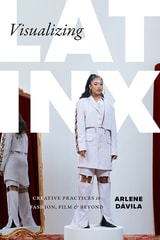
Visualizing Latinx
Creative Practices in Fashion, Film, and BeyondArlene Dávila
Duke University Press, 2026