Results by title
10 books match the query 'Culturally relevant pedagogy'
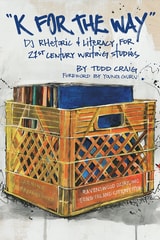
"K for the Way"
DJ Rhetoric and Literacy for 21st Century Writing StudiesTodd Craig
Utah State University Press, 2023
Using material from a larger qualitative research study that illustrates the Hip Hop DJ as a twenty-first-century new media reader, writer, and literary critic, Craig blends interviews from prominent and influential DJs in the Hip Hop community with narrative and interdisciplinary scholarship from writing studies, Hip Hop studies, African American studies, urban education, and ethnomusicology. The voices of DJs sit front and center, presenting a revolutionary conversation about writing and communication in the twenty-first century.
Weaving Craig’s life experiences with important discussions of racial literacies, “K for the Way” is a layered and utterly singular exploration of culture, identity, and literacy in America.
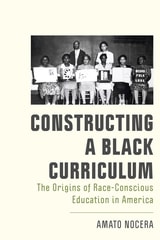
Constructing a Black Curriculum
The Origins of Race-Conscious Education in AmericaAmato Nocera
Rutgers University Press, 2027
Constructing a Black Curriculum reframes how we understand Black Americans’ intellectual and political engagement with education during the first half of the twentieth century. It traces the powerful, diffuse movement created by Black Americans to build what Nocera calls a “Black Curriculum:" a communal effort to represent Black identity, guide racial consciousness, and rebut claims of inferiority. This curriculum first developed as a public educational project in Black learned societies and during the Harlem Renaissance before making its way into schools. The struggle for a Black curriculum was not only a fight against white supremacy, but also an internal debate among Black advocates over the very nature of how race should be represented and taught. This book illuminates this struggle through the work of Black intellectuals (Alexander Crummell, Carter G. Woodson, Hubert Harrison, and Alain Locke) and the intellectual contributions of African American educators (Nannie Burroughs, Jane Dabney Shackelford, and Julia Davis). This essential history provides vital context for contemporary debates over curriculum reform, racial knowledge, and the enduring quest for educational equity.
Hip-Hop Civics
Connected Learning in the Rap ClassroomJabari M. Evans
University of Michigan Press, 2025
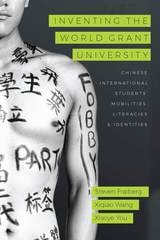
Inventing the World Grant University
Chinese International Students’ Mobilities, Literacies, and IdentitiesSteven Fraiberg
Utah State University Press, 2017
Through an exploration of the literacy practices of undergraduate Chinese international students in the United States and China, Inventing the World Grant University demonstrates the ways in which literacies, mobilities, and transnational identities are constructed and enacted across institutional and geographic borders.
Steven Fraiberg, Xiqiao Wang, and Xiaoye You develop a mobile literacies framework for studying undergraduate Chinese international students enrolling at Western institutions, whose numbers have increased in recent years. Focusing on the literacy practices of these students at Michigan State University and at Sinoway International Education Summer School in China, Fraiberg, Wang, and You draw on a range of mobile methods to map the travel of languages, identities, ideologies, pedagogies, literacies, and underground economies across continents. Case studies of administrators’, teachers’, and students’ everyday literacy practices provide insight into the material and social structures shaping and shaped by a globalizing educational landscape.
Advocating an expansion of focus from translingualism to transliteracy and from single-site analyses to multi-site approaches, this volume situates local classroom practices in the context of the world grant university. Inventing the World Grant University contributes to scholarship in mobility, literacy, spatial theory, transnationalism, and disciplinary enculturation. It further offers insight into the opportunities and challenges of enacting culturally relevant pedagogies.
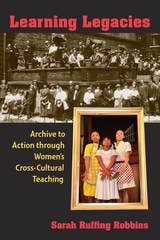
Learning Legacies
Archive to Action through Women's Cross-Cultural TeachingSarah Ruffing Robbins
University of Michigan Press, 2017
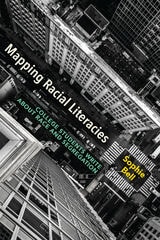
Mapping Racial Literacies
College Students Write about Race and SegregationSophie R. Bell
Utah State University Press, 2020
This textual ethnography embeds early college students’ writing in deep historical and theoretical contexts and looks for new ways that their writing contributes to and reshapes contemporary understandings of how US and global citizens are thinking about race. The book is a teaching narrative, tracing a teaching journey that considers student writing not only in the moments it is assigned but also in continual revisions of the course, making it a useful tool in helping college-age students see, explore, and articulate the role of race in determining their life experiences and opportunities.
Sophie Bell’s work narrates the experiences of a white teacher making mistakes in teaching about race and moving forward through those mistakes, considering that process valuable and, in fact, necessary. Providing a model for future scholars on how to carve out a pedagogically responsive identity as a teacher, Mapping Racial Literacies contributes to the scholarship on race and writing pedagogy and encourages teachers of early college classes to bring these issues front and center on the page, in the classroom, and on campus.
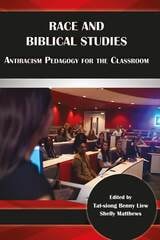
Race and Biblical Studies
Antiracism Pedagogy for the ClassroomTat-siong Benny Liew
SBL Press, 2022
Classrooms as communities are temporary, but the racial effects can be long term.
The biblical studies classroom can be a site of personal and social transformation. To make it a space for positive change, the contributors to this volume question and reevaluate traditional teaching practices and assessment tools that foreground white, Western scholarship in order to offer practical guidance for an antiracist pedagogy. The introduction and fifteen essays provide tools for engaging issues of social context and scriptural authority, nationalism and religious identities, critical race theory, and how race, gender, and class can be addressed empathetically. Contributors Sonja Anderson, Randall C. Bailey, Eric D. Barreto, Denise Kimber Buell, Greg Carey, Haley Gabrielle, Wilda C. Gafney, Julián Andrés González Holguín, Sharon Jacob, Tat-siong Benny Liew, Francisco Lozada Jr., Shelly Matthews, Roger S. Nam, Wongi Park, Jean-Pierre Ruiz, Abraham Smith, and Kay Higuera Smith share their experience creating classrooms that are spaces that enable the production of new knowledge without reproducing a white subject of the geopolitical West.
Teaching Israel
Studies of Pedagogy from the FieldEdited by Sivan Zakai and Matt Reingold
Brandeis University Press, 2024
Jewish Americans are divided in their views on Israel. While scholars have outlined philosophical principles to guide educators who teach about Israel, there has been less scholarship focused on the pedagogy surrounding the country. This book resituates teaching—the questions, dilemmas, and decision-making that teachers face—as central to both Israel studies and Israel education. Contributors illuminate how educators from differing pedagogical orientations, who teach in a range of educational settings learn, understand, undertake, and ultimately improve the work of teaching Israel. The volume also looks at the professional support and learning opportunities teachers may need to engage with these pedagogical questions.
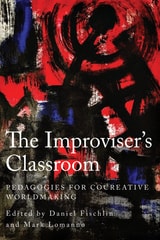
The Improviser's Classroom
Pedagogies for Cocreative WorldmakingEdited by Daniel Fischlin and Mark Lomanno
Temple University Press, 2024
Demonstrating how improvisation can inform scenes of teaching and learning, this volume also outlines how improvisatory techniques offer powerful, if not vital, tools for producing connection, creativity, accompaniment, reciprocity, meaningful revelation, and lifelong curiosity.
The Improviser's Classroom champions activist pedagogies and the public work essential for creating communities bound together by reciprocal care and equity.
Contributors: Sibongile Bhebhe, Judit Csobod, Michael Dessen, jashen edwards, Kate Galloway, Tomie Hahn, Petro Janse van Vuuren, Lauren Michelle Levesque, George Lipsitz, Rich Marsella, Tracy McMullen, Hafez Modirzadeh, Ed Sarath, Joe Sorbara, Jesse Stewart, Ellen Waterman, Carey West, and the editors
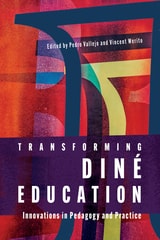
Transforming Diné Education
Innovations in Pedagogy and PracticeEdited by Pedro Vallejo and Vincent Werito
University of Arizona Press, 2022
Bringing together decades of teaching experience, contributors offer perspectives from school- and community-based programs, as well as the tribal, district, and university level. They address special education, language revitalization, wellness, self-determination and sovereignty, and university-tribal-community partnerships. These contributions foreground Diné ways of knowing both as an educational philosophy and as an active practice applied in the innovative programs the book highlights. The contributors deepen our understanding of the state of Navajo education by sharing their perspectives about effective teaching practices and the development of programs that advance educational opportunities for Navajo youth.
This work provides stories of Diné resilience, resistance, and survival. It articulates a Diné-centered pedagogy that will benefit educators and learners for generations to come. Transforming Diné Education fills a need in the larger literature of curricular and programmatic development and provides tools for academic success for all American Indian students.
Contributors
Berlinda Begay
Lorenda Belone
Michael “Mikki” Carroll
Quintina “Tina” Deschenie
Henry Fowler
Richard Fulton
Davis E. Henderson
Kelsey Dayle John
Lyla June Johnston
Tracia Keri Jojola
Tiffany S. Lee
Shawn Secatero
Michael Thompson
Pedro “Pete” Vallejo
Christine B. Vining
Vincent Werito
Duane “Chili” Yazzie