Results by title

14 books match the query 'Culture and globalization'

cover of Against Ecological Sovereignty: Ethics, Biopolitics, and Saving the Natural World

Against Ecological Sovereignty

Ethics, Biopolitics, and Saving the Natural World

Mick Smith

University of Minnesota Press, 2011

Against Ecological Sovereignty is a passionate defense of radical ecology that speaks directly to current debates concerning the nature, and dangers, of sovereign power. Engaging the work of Bataille, Arendt, Levinas, Nancy, and Agamben, among others, Mick Smith reconnects the political critique of sovereign power with ecological considerations, arguing that ethical and political responsibilities for the consequences of our actions do not end with those defined as human.

Against Ecological Sovereignty is the first book to turn Agamben’s analysis of sovereignty and biopolitics toward an investigation of ecological concerns. In doing so it exposes limits to that thought, maintaining that the increasingly widespread biopolitical management of human populations has an unrecognized ecological analogue—reducing nature to a “resource” for human projects. Smith contends that a radical ecological politics must resist both the depoliticizing exercise of sovereign power and the pervasive spread of biopolitics in order to reveal new possibilities for creating healthy human and nonhuman communities.

Presenting a stinging critique of human claims to sovereignty over the natural world, Smith proposes an alternative way to conceive of posthumanist ecological communities—one that recognizes the utter singularity of the beings in them.

[more]
cover of Catching History on the Wing: Race, Culture and Globalisation

Catching History on the Wing

Race, Culture and Globalisation

A. Sivanandan

Pluto Press, 2008

A. Sivanandan is a highly influential thinker on race, racism, globalisation and resistance. Since 1972, he has been the director of the Institute of Race Relations and the editor of Race & Class, which set the policy agenda on ethnicity and race in the UK and worldwide. Sivanandan has been writing for over forty years and this is the definitive collection of his work.

The articles selected span his entire career and are chosen for their relevance to today's most pressing issues. Included is a complete bibliography of Sivanandan’s writings, and an introduction by Colin Prescod (chair of the IRR), which sets the writings in context.

This book is highly relevant to undergraduate politics students and anyone reading or writing on race, ethnicity and immigration.
[more]
cover of Desiring China: Experiments in Neoliberalism, Sexuality, and Public Culture

Desiring China

Experiments in Neoliberalism, Sexuality, and Public Culture

Lisa Rofel

Duke University Press, 2007

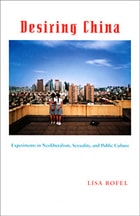
Through window displays, newspapers, soap operas, gay bars, and other public culture venues, Chinese citizens are negotiating what it means to be cosmopolitan citizens of the world, with appropriate needs, aspirations, and longings. Lisa Rofel argues that the creation of such “desiring subjects” is at the core of China’s contingent, piece-by-piece reconfiguration of its relationship to a post-socialist world. In a study at once ethnographic, historical, and theoretical, she contends that neoliberal subjectivities are created through the production of various desires—material, sexual, and affective—and that it is largely through their engagements with public culture that people in China are imagining and practicing appropriate desires for the post-Mao era.

Drawing on her research over the past two decades among urban residents and rural migrants in Hangzhou and Beijing, Rofel analyzes the meanings that individuals attach to various public cultural phenomena and what their interpretations say about their understandings of post-socialist China and their roles within it. She locates the first broad-based public debate about post-Mao social changes in the passionate dialogues about the popular 1991 television soap opera Yearnings. She describes how the emergence of gay identities and practices in China reveals connections to a transnational network of lesbians and gay men at the same time that it brings urban/rural and class divisions to the fore. The 1999–2001 negotiations over China’s entry into the World Trade Organization; a controversial women’s museum; the ways that young single women portray their longings in relation to the privations they imagine their mothers experienced; adjudications of the limits of self-interest in court cases related to homoerotic desire, intellectual property, and consumer fraud—Rofel reveals all of these as sites where desiring subjects come into being.
[more]
cover of Dwelling in American: Dissent, Empire, and Globalization

Dwelling in American

Dissent, Empire, and Globalization

John Muthyala

Dartmouth College Press, 2012
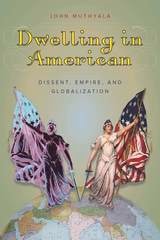
Globalization is not the Americanization of the world, argues John Muthyala. Rather, it is an uneven social, cultural, economic, and political process in which the policies and aspirations of powerful nation-states are entangled with the interests of other empires, nation-states, and communities. Dwelling in American: Dissent, Empire, and Globalization takes up a bold challenge, critiquing scholarship on American empire that views the United States as either an exceptional threat to the world or the only hope for the future. It does so in order to provincialize America, to understand it from outside the borders of nation and location, and from inside the global networks of trade, power, and culture. Using comparative frames of reference, the book makes its arguments by examining the work of a diverse range of writers including Arundhati Roy (War Talk, Power Politics), Azar Nafisi (Reading Lolita in Tehran), and Thomas Friedman (The World Is Flat). This is an original, complex, and often bracingly counterintuitive critique of the idea of American empire that will appeal to anyone interested in understanding the complexities of globalization.
[more]
cover of Figurations of Modernity: Global and Local Representations in Comparative Perspective

Figurations of Modernity

Global and Local Representations in Comparative Perspective

Edited by Vincent Houben and Mona Schrempf

Campus Verlag, 2008

Conventional wisdom holds that globalization has made the world more modern, not less. But how has modernity been conceived of in colonial, postcolonial, and post-revolutionary worlds? In Figurations of Modernity, an international team of scholars probe how non-European worlds have become modern ones, from the perspective of a broad range of societies around the globe.           
 
From vocational education in Argentina to secular morality in Tibet, from the construction of heroes in Central Asia to historical memory in Nigeria, this comprehensive volume reckons with the legacy of empire in a globalizing world. Enhanced by the perspectives of historians, anthropologists, and scholars of comparative education, Figurations of Modernity will be an essential book for those studying post-colonial nations across disciplines.
 
[more]
cover of Globalization and Race: Transformations in the Cultural Production of Blackness

Globalization and Race

Transformations in the Cultural Production of Blackness

Kamari Maxine Clarke and Deborah A. Thomas, eds.

Duke University Press, 2006

Kamari Maxine Clarke and Deborah A. Thomas argue that a firm grasp of globalization requires an understanding of how race has constituted, and been constituted by, global transformations. Focusing attention on race as an analytic category, this state-of-the-art collection of essays explores the changing meanings of blackness in the context of globalization. It illuminates the connections between contemporary global processes of racialization and transnational circulations set in motion by imperialism and slavery; between popular culture and global conceptions of blackness; and between the work of anthropologists, policymakers, religious revivalists, and activists and the solidification and globalization of racial categories.

A number of the essays bring to light the formative but not unproblematic influence of African American identity on other populations within the black diaspora. Among these are an examination of the impact of “black America” on racial identity and politics in mid-twentieth-century Liverpool and an inquiry into the distinctive experiences of blacks in Canada. Contributors investigate concepts of race and space in early-twenty-first century Harlem, the experiences of trafficked Nigerian sex workers in Italy, and the persistence of race in the purportedly non-racial language of the “New South Africa.” They highlight how blackness is consumed and expressed in Cuban timba music, in West Indian adolescent girls’ fascination with Buffy the Vampire Slayer, and in the incorporation of American rap music into black London culture. Connecting race to ethnicity, gender, sexuality, nationality, and religion, these essays reveal how new class economies, ideologies of belonging, and constructions of social difference are emerging from ongoing global transformations.

Contributors. Robert L. Adams, Lee D. Baker, Jacqueline Nassy Brown, Tina M. Campt, Kamari Maxine Clarke, Raymond Codrington, Grant Farred, Kesha Fikes, Isar Godreau, Ariana Hernandez-Reguant, Jayne O. Ifekwunigwe, John L. Jackson Jr., Oneka LaBennett, Naomi Pabst, Lena Sawyer, Deborah A. Thomas

[more]
cover of Hip-Hop Japan: Rap and the Paths of Cultural Globalization

Hip-Hop Japan

Rap and the Paths of Cultural Globalization

Ian Condry

Duke University Press, 2006

In this lively ethnography Ian Condry interprets Japan’s vibrant hip-hop scene, explaining how a music and culture that originated halfway around the world is appropriated and remade in Tokyo clubs and recording studios. Illuminating different aspects of Japanese hip-hop, Condry chronicles how self-described “yellow B-Boys” express their devotion to “black culture,” how they combine the figure of the samurai with American rapping techniques and gangsta imagery, and how underground artists compete with pop icons to define “real” Japanese hip-hop. He discusses how rappers manipulate the Japanese language to achieve rhyme and rhythmic flow and how Japan’s female rappers struggle to find a place in a male-dominated genre. Condry pays particular attention to the messages of emcees, considering how their raps take on subjects including Japan’s education system, its sex industry, teenage bullying victims turned schoolyard murderers, and even America’s handling of the war on terror.

Condry attended more than 120 hip-hop performances in clubs in and around Tokyo, sat in on dozens of studio recording sessions, and interviewed rappers, music company executives, music store owners, and journalists. Situating the voices of Japanese artists in the specific nightclubs where hip-hop is performed—what musicians and fans call the genba (actual site) of the scene—he draws attention to the collaborative, improvisatory character of cultural globalization. He contends that it was the pull of grassroots connections and individual performers rather than the push of big media corporations that initially energized and popularized hip-hop in Japan. Zeebra, DJ Krush, Crazy-A, Rhymester, and a host of other artists created Japanese rap, one performance at a time.
[more]
cover of In the Meantime: Temporality and Cultural Politics

In the Meantime

Temporality and Cultural Politics

Sarah Sharma

Duke University Press, 2014
The world is getting faster. This sentiment is proclaimed so often that it is taken for granted, rarely questioned or examined by those who celebrate the notion of an accelerated culture or by those who decry it. Sarah Sharma engages with that assumption in this sophisticated critical inquiry into the temporalities of everyday life. Sharma conducted ethnographic research among individuals whose jobs or avocations involve a persistent focus on time: taxi drivers, frequent-flyer business travelers, corporate yoga instructors, devotees of the slow-food and slow-living movements. Based on that research, she develops the concept of "power-chronography" to make visible the entangled and uneven politics of temporality. Focusing on how people's different relationships to labor configures their experience of time, she argues that both "speed-up" and "slow-down" often function as a form of biopolitical social control necessary to contemporary global capitalism.
[more]
cover of Multisituated: Ethnography as Diasporic Praxis

Multisituated

Ethnography as Diasporic Praxis

Kaushik Sunder Rajan

Duke University Press, 2021
In Multisituated Kaushik Sunder Rajan evaluates the promises and potentials of multisited ethnography with regard to contemporary debates around decolonizing anthropology and the university. He observes that at the current moment, anthropology is increasingly peopled by diasporic students and researchers, all of whom are accountable to multiple communities beyond the discipline. In this light, Sunder Rajan draws on his pedagogical experience and dialogues to reconceptualize ethnography as a multisituated practice of knowledge production, ethical interlocution, and political intervention. Such a multisituated ethnography responds to contemporary anthropology’s myriad commitments as it privileges attention to questions of scale, comparison, and the politics of ethnographic encounters. Foregrounding the conditions of possibility and difficulty for those doing and teaching ethnography in the twenty-first-century, Sunder Rajan gestures toward an ethos and praxis of ethnography that would open new forms of engagement and research.
[more]
cover of Neoliberalism as Exception: Mutations in Citizenship and Sovereignty

Neoliberalism as Exception

Mutations in Citizenship and Sovereignty

Aihwa Ong

Duke University Press, 2006

Neoliberalism is commonly viewed as an economic doctrine that seeks to limit the scope of government. Some consider it a form of predatory capitalism with adverse effects on the Global South. In this groundbreaking work, Aihwa Ong offers an alternative view of neoliberalism as an extraordinarily malleable technology of governing that is taken up in different ways by different regimes, be they authoritarian, democratic, or communist. Ong shows how East and Southeast Asian states are making exceptions to their usual practices of governing in order to position themselves to compete in the global economy. As she demonstrates, a variety of neoliberal strategies of governing are re-engineering political spaces and populations. Ong’s ethnographic case studies illuminate experiments and developments such as China’s creation of special market zones within its socialist economy; pro-capitalist Islam and women’s rights in Malaysia; Singapore’s repositioning as a hub of scientific expertise; and flexible labor and knowledge regimes that span the Pacific.

Ong traces how these and other neoliberal exceptions to business as usual are reconfiguring relationships between governing and the governed, power and knowledge, and sovereignty and territoriality. She argues that an interactive mode of citizenship is emerging, one that organizes people—and distributes rights and benefits to them—according to their marketable skills rather than according to their membership within nation-states. Those whose knowledge and skills are not assigned significant market value—such as migrant women working as domestic maids in many Asian cities—are denied citizenship. Nevertheless, Ong suggests that as the seam between sovereignty and citizenship is pried apart, a new space is emerging for NGOs to advocate for the human rights of those excluded by neoliberal measures of human worthiness.
[more]
cover of Postcolonial Imperialism: Critique of the Society of Dazzlements

Postcolonial Imperialism

Critique of the Society of Dazzlements

Joseph Tonda. Translated by Cheryl Smeall

Duke University Press, 2026
Postcolonial Imperialism considers the inability to distinguish between reality and fiction as a key condition of contemporary life. If postcolonial theory has highlighted how white colonizers created images of racialized Others which project their own self-hatred or disavowal, Joseph Tonda here shows how these images have in turn colonized Western imaginaries. He argues that the Global North’s obsession with its own phantoms takes a newly powerful form in the dazzling images of postcolonial screens. With examples ranging from Nicki Minaj to Osama Bin Laden and child soldier Johnny Mad Dog, Tonda reflects on power by analyzing the dazzlements of both Central Africa and the West, showing how African life prefigures Western experiences. Translated from its original French, Postcolonial Imperialism is a prescient critique of authoritarian attempts to enforce alternate realities, and of the many ways screens can distort our vision.
[more]
cover of The Migrant Image: The Art and Politics of Documentary during Global Crisis

The Migrant Image

The Art and Politics of Documentary during Global Crisis

T. J. Demos

Duke University Press, 2013

In The Migrant Image T. J. Demos examines the ways contemporary artists have reinvented documentary practices in their representations of mobile lives: refugees, migrants, the stateless, and the politically dispossessed. He presents a sophisticated analysis of how artists from the United States, Europe, North Africa, and the Middle East depict the often ignored effects of globalization and the ways their works connect viewers to the lived experiences of political and economic crisis. Demos investigates the cinematic approaches Steve McQueen, the Otolith Group, and Hito Steyerl employ to blur the real and imaginary in their films confronting geopolitical conflicts between North and South. He analyzes how Emily Jacir and Ahlam Shibli use blurs, lacuna, and blind spots in their photographs, performances, and conceptual strategies to directly address the dire circumstances of dislocated Palestinian people. He discusses the disparate interventions of Walid Raad in Lebanon, Ursula Biemann in North Africa, and Ayreen Anastas and Rene Gabri in the United States, and traces how their works offer images of conflict as much as a conflict of images. Throughout Demos shows the ways these artists creatively propose new possibilities for a politics of equality, social justice, and historical consciousness from within the aesthetic domain.
[more]
cover of Universalism without Uniformity: Explorations in Mind and Culture

Universalism without Uniformity

Explorations in Mind and Culture

Edited by Julia L. Cassaniti and Usha Menon

University of Chicago Press, 2017

One of the major questions of cultural psychology is how to take diversity seriously while acknowledging our shared humanity. This collection, edited by Julia L. Cassaniti and Usha Menon, brings together leading scholars in the field to reconsider that question and explore the complex mechanisms that connect culture and the human mind.
 
The contributors to Universalism without Uniformity offer tools for bridging silos that have historically separated anthropology’s attention to culture and psychology’s interest in universal mental processes. Throughout, they seek to answer intricate yet fundamental questions about why we are motivated to find meaning in everything around us and, in turn, how we constitute the cultural worlds we inhabit through our intentional involvement in them. Laying bare entrenched disciplinary blind spots, this book offers a trove of insights on issues such as morality, emotional functioning, and conceptions of the self across cultures. Filled with impeccable empirical research coupled with broadly applicable theoretical reflections on taking psychological diversity seriously, Universalism without Uniformity breaks new ground in the study of mind and culture. 
[more]
cover of Who Defines Indigenous?: Identities, Development, Intellectuals, and the State in Northern Mexico

Who Defines Indigenous?

Identities, Development, Intellectuals, and the State in Northern Mexico

Martinez Novo, Carmen

Rutgers University Press, 2006

For years, conventional scholarship has argued that minority groups are better served when the majority groups that absorb them are willing to recognize and allow for the preservation of indigenous identities. But is the reinforcement of ethnic identity among migrant groups always a process of self-liberation? In this surprising study, Carmen Martínez Novo draws on her ethnographic research of the Mixtec Indians’ migration from the southwest of Mexico to Baja California to show that sometimes the push for indigenous labels is more a process of external oppression than it is of minority empowerment.

            In Baja California, many Mixtec Indians have not made efforts to align themselves as a coherent demographic. Instead, Martínez Novo finds that the push for indigenous identity in this region has come from local government agencies, economic elites, intellectuals, and other external agents. Their concern has not only been over the loss of rich culture. Rather, the pressure to maintain an indigenous identity has stemmed from the desire to secure a reproducible abundance of cheap “Indian” labor. Meanwhile, many Mixtecs reject their ethnic label precisely because being “Indian” means being a commercial agriculture low-wage worker or an urban informal street vendor—an identity that interferes with their goals of social mobility and economic integration.

            Bringing a critical new perspective to the complex intersection among government and scholarly agendas, economic development, global identity politics, and the aspirations of local migrants, this provocative book is essential reading for scholars working in the fields of sociology, anthropology, and ethnic studies.

[more]