Results by title
12 books match the query 'Cure'
At the Limits of Cure
Bharat Jayram Venkat
Duke University Press, 2021
Brilliant Imperfection
Grappling with CureEli Clare
Duke University Press, 2017
Care and Cure
An Introduction to Philosophy of MedicineJacob Stegenga
University of Chicago Press, 2018
The fourteen chapters in Care and Cure present and discuss conceptual, metaphysical, epistemological, and political questions that arise in medicine, buttressed with lively illustrative examples ranging from debates over the true nature of disease to the effectiveness of medical interventions and homeopathy. Poised to be the standard sourcebook for anyone seeking a comprehensive overview of the canonical concepts, current state, and cutting edge of this vital field, this concise introduction will be an indispensable resource for students and scholars of medicine and philosophy.
Care and Cure
An Introduction to Philosophy of MedicineJacob Stegenga
University of Chicago Press, 2018
The philosophy of medicine has become a vibrant and complex intellectual landscape, and Care and Cure is the first extended attempt to map it. In pursuing the interdependent aims of caring and curing, medicine relies on concepts, theories, inferences, and policies that are often complicated and controversial. Bringing much-needed clarity to the interplay of these diverse problems, Jacob Stegenga describes the core philosophical controversies underlying medicine in this unrivaled introduction to the field.
The fourteen chapters in Care and Cure present and discuss conceptual, metaphysical, epistemological, and political questions that arise in medicine, buttressed with lively illustrative examples ranging from debates over the true nature of disease to the effectiveness of medical interventions and homeopathy. Poised to be the standard sourcebook for anyone seeking a comprehensive overview of the canonical concepts, current state, and cutting edge of this vital field, this concise introduction will be an indispensable resource for students and scholars of medicine and philosophy.
Creating Beauty To Cure the Soul
Race and Psychology in the Shaping of Aesthetic SurgerySander L. Gilman
Duke University Press, 1998
In his exploration of the striking parallels between the development of cosmetic surgery and the field of psychiatry, Gilman entertains an array of philosophical and psychological questions that underlie the more practical decisions rountinely made by doctors and potential patients considering these types of surgery. While surveying and incorporating the relevant theories of Sigmund Freud, Alfred Adler, Karl Menninger, Paul Schilder, contemporary feminist critics, and others, Gilman considers the highly unstable nature of cultural notions of health, happiness, and beauty. He reveals how ideas of race and gender structured early understandings of aesthetic surgery in discussions of both the “abnormality” of the Jewish nose and the historical requirement that healthy and virtuous females look “normal,” thereby enabling them to achieve invisibility. Reflecting upon historically widespread prejudices, Gilman describes the persecutions, harrassment, attacks, and even murders that continue to result from bodily difference and he encourages readers to question the cultural assumptions that underlie the increasing acceptability of this surgical form of psychotherapy.
Synthesizing a vast body of related literature and containing a comprehensive bibliography, Creating Beauty to Cure the Soul will appeal to a broad audience, including those interested in the histories of medicine and psychiatry, and in philosophy, cultural studies, Jewish cultural studies, and race and ethnicity.
Racing to a Cure
A Cancer Victim Refuses Chemotherapy and Finds Tomorrow's Cures in Today's Scientific LaboratoriesNeil Ruzic
University of Illinois Press, 2003
Although chemotherapy harms the immune system and is increasingly demonstrated to be an ineffective long-term cure for the vast majority of cancers, it remains the standard treatment for most cancer patients. Ruzic, a former scientific magazine publisher and originator of a science center, refused to accept this status quo, and instead plunged into the world of cutting-edge treatments, exploring the frontiers of cancer science with revolutionary results.
Ruzic went on the offensive: visiting scores of laboratories, gathering information, talking to researchers, and effectively becoming his own patient-care advocate. This book presents his findings. A scathing critique of the chemotherapy culture as well as unscientific "alternative" therapies, the book endorses state-of-the-art molecularly based technologies, making it an illuminating and necessary read for anyone interested in cancer research, especially patients and their families and physicians.
Neil Ruzic was expected to die within two years of his initial diagnosis. Five years later he has been declared cancer-free and considers himself cured.
The Barbaric Counter Revolution
Cause and CureBy W. W. Rostow
University of Texas Press, 1983
In the 1980s, troubled Americans saw interest rates in the United States climb to an alltime high, unemployment grow to over 10 percent, the federal deficit reach near monumental proportions, and the world economy as a whole fall stagnant.
Why did a once booming world economy give way to stagflation? Economist W. W. Rostow finds the roots of the problem in the phenomenon he terms the Barbaric Counter-Revolution—the effort to wring inflation out of the economic system by the rigorous application of a restricted rate of increase in the money supply. This policy was launched by the Carter administration in October 1979, reinforced by President Reagan in mid 1980, and abandoned in August 1982. In the end, it provided the United States with no mechanism for rapid recovery that did not bring with it a return to high interest rates, resumed inflation, and, soon, another recession.
In what he terms a Civilized Synthesis, Rostow sets forth a series of new policies that would permit rapid, sustained growth with inflation under control. He argues that fiscal and monetary policy must be joined by an incomes policy that would gear the rate of increase of wages and salaries to the average rate of increase in productivity. He explores how this could be accomplished within the context of American politics and existing institutions. Finally, Rostow identifies four directions for investment that, together, would yield economic and social benefits.

The Cancer Stage of Capitalism
From Crisis to CureJohn McMurtry
Pluto Press, 2013
The Cancer Stage of Capitalism is a modern classic of critical philosophy and political economy, renowned for its depth and comprehensive research. It provides a step by step diagnosis of the continuing economic collapse in the US and Europe and has had an enormous influence on new visions of economic alternatives.
John McMurtry argues that our world disorder of unending crises is the predictable result of a cancerous economic system multiplying out of all control and destroying ecological, social and organic life - a process he describes as 'global ecogenocide'. In this updated edition he explains the ‘social immune response’ required to fight the ‘macro cancer’, something which has already been shown in developments such as the Occupy movement and the democratic social transformation of Latin America.
In an official global culture increasingly destructive of life, this book shows the necessity and possibility of building a sustainable society based on a universal commitment to life and nature.
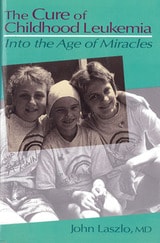
The Cure of Childhood Leukemia
Into the Age of MiraclesLaszlo, John
Rutgers University Press, 1995

The Cure of Poetry in an Age of Prose
Moral Essays on the Poet's CallingMary Kinzie
University of Chicago Press, 1993
A distinguished poet and critic, Kinzie assesses poetry's situation during the past twenty-five years. Ours, she contends, is literally a prosaic age, not only in the popularity of prose genres but in the resultant compromises with truth and elegance in literature. In essays on "the rhapsodic fallacy," confessionalism, and the romance of perceptual response, Kinzie diagnoses some of the trends that diminish the poet's flexibility. Conversely, she also considers individual poets—Randall Jarrell, Elizabeth Bishop, Howard Nemerov, Seamus Heaney, and John Ashbery—who have found ingenious ways of averting the risks of prosaism and preserving the special character of poetry.
Focusing on poet Louise Bogan and novelist J. M. Coetzee, Kinzie identifies a crucial and curative overlap between the practices of great prose-writing and great poetry. In conclusion, she suggests a new approach for teaching writers of poetry and fiction. Forcefully argued, these essays will be widely read and debated among critics and poets alike.
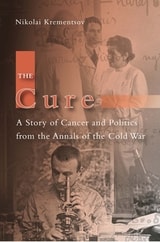
The Cure
A Story of Cancer and Politics from the Annals of the Cold WarNikolai Krementsov
University of Chicago Press, 2002
In 1946, Nina Kliueva and Grigorii Roskin announced the discovery of a preparation able to "dissolve" tumors in mice. Preliminary clinical trials suggested that KR, named after its developers, might work in humans as well. Media hype surrounding KR prompted the U.S. ambassador to the Soviet Union to seek U.S.-Soviet cooperation in perfecting the possible cure. But the escalating Cold War gave this American interest a double edge. Though it helped Kliueva and Roskin solicit impressive research support from the Soviet leadership, including Stalin, it also thrust the couple into the center of an ideological confrontation between the superpowers. Accused of divulging "state secrets" to America, the couple were put on a show trial, and their "antipatriotic sins" were condemned in Soviet stage and film productions.
Parlaying their notoriety into increased funding, Kliueva and Roskin continued their research, but envious colleagues discredited their work and took over their institute. For years, work on KR languished and ceased entirely with the deaths of Kliueva and Roskin. But recently, the Russian press reported that work on KR has begun again, reopening this illuminating story of the intersection among Cold War politics, personal ideals, and biomedical research.

The Limits of Medicine
How Science Shapes Our Hope for the CureEdward S. Golub
University of Chicago Press, 1997
major advances in medicine are caused by changes in the way scientists describe disease.
Bleeding, sweating, and other treatments we consider barbaric were standard treatments for
centuries because they conformed to a conception of disease shared by patients and doctors.
Scientific breakthroughs in the understanding of disease in the nineteenth century transformed
treatment and the goals of medicine. Golub argues that the ongoing revolution in molecular
genetics has opened the door to the "biology of complexity," again transforming our view of
disease. This thought-provoking, timely book reveals a crucial but overlooked role of science
in medicine, and offers a new vision for the goals of both science and medicine as we enter the
twenty-first century.