Results by title

4 books match the query 'Curtis, Scott'
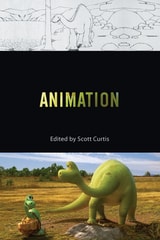
cover of Animation

Animation

Curtis, Scott

Rutgers University Press, 2019
From the earliest motion pictures and cartoons of the 1900s, to the latest 3D animated feature and CGI blockbuster, animation has always been a part of the cinematic experience. While the boundaries between animation and live-action have often been carefully tended, the ubiquity of contemporary computer imaging certainly blurs those lines, thereby confirming the importance of animation for the history of American cinema. The last installment of the acclaimed Behind the Silver Screen series, Animation explores the variety of technologies and modes of production throughout the history of American animation: the artisanal, solitary labors of early animators such as Winsor McCay, or of independent animators such as Mary Ellen Bute; the industrial assembly lines of Hollywood studio-unit animation; the parsimonious production houses of the post-studio, post-war era; the collaborative approach of boutique animation and special-effect houses. Drawing on archival sources, this volume provides not only an overview of American animation history, but also, by focusing on the relationship between production and style, a unique approach to understanding animation in general. 
[more]
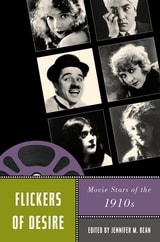
cover of Flickers of Desire: Movie Stars of the 1910s

Flickers of Desire

Movie Stars of the 1910s

Bean, Jennifer M

Rutgers University Press, 2011
Today, we are so accustomed to consuming the amplified lives of film stars that the origins of the phenomenon may seem inevitable in retrospect. But the conjunction of the terms "movie" and "star" was inconceivable prior to the 1910s. Flickers of Desire explores the emergence of this mass cultural phenomenon, asking how and why a cinema that did not even run screen credits developed so quickly into a venue in which performers became the American film industry's most lucrative mode of product individuation. Contributors chart the rise of American cinema's first galaxy of stars through a variety of archival sources--newspaper columns, popular journals, fan magazines, cartoons, dolls, postcards, scrapbooks, personal letters, limericks, and dances. The iconic status of Charlie Chaplin's little tramp, Mary Pickford's golden curls, Pearl White's daring stunts, or Sessue Hayakawa's expressionless mask reflect the wild diversity of a public's desired ideals, while Theda Bara's seductive turn as the embodiment of feminine evil, George Beban's performance as a sympathetic Italian immigrant, or G. M. Anderson's creation of the heroic cowboy/outlaw character transformed the fantasies that shaped American filmmaking and its vital role in society.
[more]
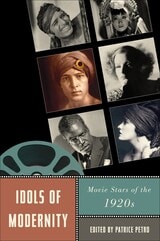
cover of Idols of Modernity: Movie Stars of the 1920s

Idols of Modernity

Movie Stars of the 1920s

Petro, Patrice

Rutgers University Press, 2010

With its sharp focus on stardom during the 1920s, Idols of Modernity reveals strong connections and dissonances in matters of storytelling and performance that can be traced both backward and forward, across Europe, Asia, and the United States, from the silent era into the emergence of sound.

Bringing together the best new work oncinemaand stardom in the 1920s, this illustrated collection showcases the range of complex social, institutional, and aesthetic issues at work in American cinema of this time. Attentive to stardom as an ensemble of texts, contexts, and social phenomena stretching beyond the cinema, major scholars provide careful analysis of the careers of both well-known and now forgotten stars of the silent and early sound era—Douglas Fairbanks, Buster Keaton, the Talmadge sisters, Rudolph Valentino, Gloria Swanson, Clara Bow, Colleen Moore, Greta Garbo, Anna May Wong, Emil Jannings, Al Jolson, Ernest Morrison, Noble Johnson, Evelyn Preer, Lincoln Perry, and Marie Dressler.
[more]
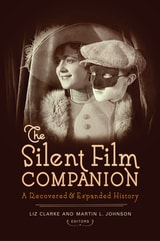
cover of The Silent Film Companion: A Recovered and Expanded History

The Silent Film Companion

A Recovered and Expanded History

Liz Clarke

Rutgers University Press, 2027

Silent film is more than just a cinema of firsts, greats, or classics. It is a cinema of experimentation, ambition, and connection. To watch a silent film is to be transported into another world. The Silent Film Companion seeks to broaden the silent film canon by focusing on compelling non-canonical films from around the globe, providing a fresh perspective and new view of silent cinema. With over fifty films discussed, this volume captures just a sliver of the many delights silent cinema has to offer. It encourages discovery, and rediscovery, of the world of silent cinema: one where the movies were still young, full of possibility, and eager to entice others to take part in a wonderful adventure. 

Films covered are from fourteen countries, including Brazil, Mexico, China, Cuba, India, Italy, and Russia, and represent a diversity of subjects. Each chapter provides historical and cultural context to the film, the filmmakers, and a concise analysis of each film. The Silent Film Companion is a must-read for students and fans of silent cinema interested in seeing a side of silent cinema that is rarely explored.

[more]