Results by title
17 books match the query 'Customs and practices'
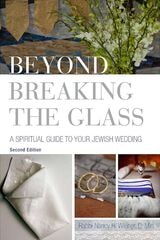
Beyond Breaking the Glass
A Spiritual Guide to Your Jewish Wedding, Revised EditionRabbi Nancy H. Wiener, Dmin
Central Conference of American Rabbis, 2012
This compendium explores the rich history of wedding rituals and customs practiced by Jews through the years. Included are multiple options of traditional, contemporary, and creative rituals as well as prayers for couples of all approaches, orientations, and identities.
Beyond Breaking the Glass is a rich source of practical information for planning a Jewish wedding, and includes a variety of ceremonies, checklists, references, and a planning timeline. This beautiful guidebook will help all couples create a wedding that will resonate with Jewish tradition while offering the very best of contemporary innovations.

Bêtes Noires
Sorcery as History in the Haitian-Dominican BorderlandsLauren Derby
Duke University Press, 2025
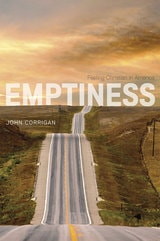
Emptiness
Feeling Christian in AmericaJohn Corrigan
University of Chicago Press, 2015
Corrigan examines different kinds of emptiness essential to American Christianity, such as the emptiness of deep longing, the emptying of the body through fasting or weeping, the emptiness of the wilderness, and the emptiness of historical time itself. He argues, furthermore, that emptiness is closely connected to the ways Christian groups differentiate themselves: many groups foster a sense of belonging not through affirmation, but rather avowal of what they and their doctrines are not. Through emptiness, American Christians are able to assert their identities as members of a religious community.
Drawing much-needed attention to a crucial aspect of American Christianity, Emptiness expands our understanding of historical and contemporary Christian practices.
Gates of Shabbat
Neil Waldman
Central Conference of American Rabbis, 1991
Gates of Shabbat - Shaarei Shabbat
A Guide for Observing Shabbat, Revised EditionRabbi Mark Dov Shapiro
Central Conference of American Rabbis, 2016
This book is about Shabbat--the Jewish treasure that comes around every seven days. In the midst of our freedom, Shabbat offers roots and inspiration along with joy and hope. In the midst of a world of endless choices and paths, Judaism provides the rich resources developed for living a life of meaning over centuries of practice. In particular, Judaism offers Shabbat as a way to deepen, renew, and refresh our lives.
Through additional essays, poetry, and personal insights, as well as many new inspiring and creative ideas, this updated edition of Gates of Shabbat offers a roadmap to discovering and exploring what Shabbat can mean to you.

Gates of the Seasons
Peter S. Knobel
Central Conference of American Rabbis, 1983
Gestating Judaism
The Corporeal Technologies of American Jewish ReligionCara Rock-Singer
University of Chicago Press, 2026
An ethnography of how people use reproductive practices to transmit and reinvent American Judaism.
In Gestating Judaism, Cara Rock-Singer develops a new analytic technique called ethnodrashy (a combination of rabbinical midrash and sociological ethnography) to explore the centrality of reproductive bodies to the intellectual, political, and spiritual life of American Judaism. She considers how, in reproduction, religious practices like the mikveh combine with secular practices like fertility treatments in ways that challenge the popular idea that religion occupies a separate sphere of life from politics or science. In fact, Rock-Singer shows how Jewish feminists have leveraged the work of reproduction to intervene in important conversations about both politics and theology. Drawing together religious studies, gender studies, and science and technology studies, Gestating Judaism shows how Jewish tradition is transmitted and reinvented through the ongoing labor of reproduction.
Global Dynamics of Shi'a Marriages
Religion, Gender, and BelongingYafa Shanneik
Rutgers University Press, 2022
Himalayan Dialogue
Tibetan Lamas & Gurung Shamans In NepalStan Royal Mumford
University of Wisconsin Press, 1989
Here for the first time is a thorough anthropological study of Tibetan lamaism combining textual analysis with richly contextualized ethnographic data. The rites studied are of the Nyingma Tibetan Buddhist tradition. In contrast to the textual analyses that have viewed the culture as a finished entity, here we see an unbounded ritual process with unfinished interpretations.
Mumford’s focus is on the “dialogue” taking place between the lamaist and the shamanic regimes, as a historic development occurring between different cultural layers. The study powerfully demonstrates that interrelationships between subsystems within a given cultural matrix over time are critical to an understanding of religion as a cultural process.
Knot of the Soul
Madness, Psychoanalysis, IslamStefania Pandolfo
University of Chicago Press, 2018
Knot of the Soul moves from the experience of psychosis in psychiatric hospitals, to the visionary torments of the soul in poor urban neighborhoods, to the melancholy and religious imaginary of undocumented migration, culminating in the liturgical stage of the Qur’anic cure. Demonstrating how contemporary Islamic cures for madness address some of the core preoccupations of the psychoanalytic approach, she reveals how a religious and ethical relation to the “ordeal” of madness might actually allow for spiritual transformation.
This sophisticated and evocative work illuminates new dimensions of psychoanalysis and the ethical imagination while also sensitively examining the collective psychic strife that so many communities endure today.
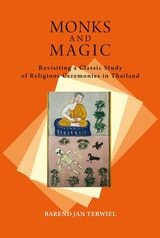
Monks and Magic
Revisiting a Classic Study of Religious Ceremonies in ThailandBarend Jan Terwiel
National University of Singapore Press, 2012

Music, ritual, and Falasha history
Kay Kaufman. Shelemay
Michigan State University Press, 1989
Omer
A CountingRabbi Karyn D. Kedar
Central Conference of American Rabbis, 2014
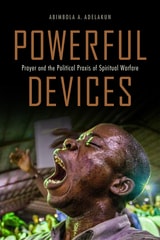
Powerful Devices
Prayer and the Political Praxis of Spiritual WarfareAbimbola Adunni Adelakun
Rutgers University Press, 2023
Spirit, Structure, and Flesh
Gender and Power in Yoruba African Instituted ChurchesDeidre Helen Crumbley
University of Wisconsin Press, 2008
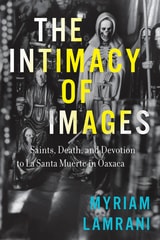
The Intimacy of Images
Saints, Death, and Devotion to La Santa Muerte in OaxacaMyriam Lamrani
University of Texas Press, 2024
2026 Edie Turner First Book Prize in Ethnographic Writing, Society for Humanistic Anthropology
La Santa Muerte becomes a lens for understanding how Oaxacans relate to saints, loved ones, and other “special dead.”
In Oaxaca, images of saints and loved ones, as well as of victims of political or criminal violence, are seemingly everywhere. While Oaxacans relate to all sorts of “special dead,” they are particularly devoted to La Santa Muerte (Saint Death), a female reaper-like figure whose popularity has risen in tandem with violence throughout Mexico.
The Intimacy of Images recontextualizes Oaxacans’ relationships with their “special dead” through the lens of La Santa Muerte, examining how devotees closely interact with what Lamrani terms “intimate images”: not only devotional effigies but also photographs, films, tattoos, and murals, and even dreams and visions. Though Mexicans have a well-known cultural familiarity with death, Lamrani argues that devotion to La Santa Muerte builds upon this intimacy even as it also participates in the production of terror and reflects political and criminal violence. Ultimately, Lamrani finds that these human-image interactions represent more than Catholic devotion; they reveal the secrets of Oaxacan political, religious, and social life, embody changing relationships to mortality and violence, and even offer insight into the practice of anthropology itself.
Writing on Water
The Sounds of Jewish PrayerJudit Niran Frigyesi
Central European University Press, 2018
Writing on Water grasps the phenomenon of sound in prayer, that is, a meaning in sounds and soundscapes, and a musical essence in the act of praying.
The impetus for the book arose from the author’s fieldwork among traditional Jews during the era of communism in Budapest and Prague. In that period the Jewish religion and Jewishness in general were supressed and rituals became semi-secret and turned inward. The book is a witness to these communities and their rituals, but it goes beyond documentation. The uniqueness of the sounds of the rituals compelled the author to try to comprehend how melodies and soundscapes became the sustaining/protective environment, as well as the vehicle, for the expression of a world-orientation—in a situation where open discourse was inconceivable.
The book is based on extensive interviews, musical recordings, photographs and scholarly analyses. It is unique in its choice of communities, its wealth of original documents, and its novel interpretation of sound.
Writing on Water is creative non-fiction. The presentation is evocative and poetic, but at the same time it transmits knowledge. The book can aid research and serve in courses in philosophy, religion, music, ethnomusicology, anthropology, aesthetics, Jewish studies, folklore, oral history, and performance studies. It is also a work of art and literature.