Results by title
2 books match the query 'Díaz Martín, Esther'
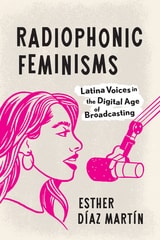
Radiophonic Feminisms
Latina Voices in the Digital Age of BroadcastingEsther Díaz Martín
University of Texas Press, 2025
2026 Gold Medal for the Best Women's Issues Book, International Latino Book Awards
How Latina voices in commercial radio and podcasting subvert cultural norms and bring feminism to the fore of their work.
What does Latina feminism sound like in popular culture? Drawing on case studies of commercial radio programs and podcasts hosted by Latinas and oriented toward Latinx listenership, Esther Díaz Martín explores how Latina voices create female-specific aural spaces that interrupt the misogynist status quo in US mainstream media.
Radiophonic Feminisms focuses on radio/podcasting as a medium in which women find methods for resisting oppressive gendered cultural imaginaries. Through their specific articulations—that is, the quality of their voices—their music choices, and the soundscapes they construct, Latina hosts since the early 1990s have offered feminist responses to a cultural moment marked by the demographic changes brought on by the political economy of migration and the social changes wrought by media in the digital age. Drawing attention to the invisible antisexist work of creating sound, and to its reception, Díaz Martín bridges the epistemic insights of Chicana feminist theory and sound studies, enriching and further decolonizing our thinking about auditory meaning making.
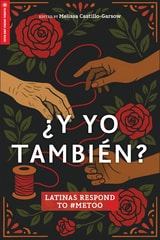
¿Y Yo También?
Latinas Respond to #MeTooMelissa Castillo-Garsow
Rutgers University Press, 2027
¿Y Yo También? brings together a diverse range of Latina voices to address the under-representation of Latinx voices in the #MeToo movement and discussions of sexual violence. Through scholarly analysis of literature, media, podcasting, film, art, and testimonio alongside memoir, poetry, a short play, and personal essays, the authors address varied Latina experiences of sexual assault and harassment. These authors grapple with these traumas alongside their intersectional contexts, including U.S. imperialism in Puerto Rico, race, sexuality, indigeneity, religion, the publication landscape, and more. Ultimately, each contribution sheds light on the lack of scholarly and media attention to the realities of Latinas and sexual assault but also chart pathways toward individual and community healing. This is a volume that is intellectually rigorous yet deeply accessible—suited for academics, college-level students, creatives, performers, practitioners, activists, and general readers alike.