Results by title
8 books match the query 'Dadaism'
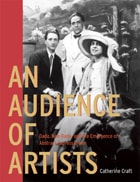
An Audience of Artists
Dada, Neo-Dada, and the Emergence of Abstract ExpressionismCatherine Craft
University of Chicago Press, 2012
The term Neo-Dada surfaced in New York in the late 1950s and was used to characterize young artists like Robert Rauschenberg and Jasper Johns whose art appeared at odds with the serious emotional and painterly interests of the then-dominant movement, Abstract Expressionism. Neo-Dada quickly became the word of choice in the early 1960s to designate experimental art, including assemblage, performance, Pop art, and nascent forms of minimal and conceptual art.

Max Ernst and Alchemy
A Magician in Search of MythBy M. E. Warlick
University of Texas Press, 2001
Surrealist artist Max Ernst defined collage as the "alchemy of the visual image." Students of his work have often dismissed this comment as simply a metaphor for the transformative power of using found images in a new context. Taking a wholly different perspective on Ernst and alchemy, however, M. E. Warlick persuasively demonstrates that the artist had a profound and abiding interest in alchemical philosophy and often used alchemical symbolism in works created throughout his career.
A revival of interest in alchemy swept the artistic, psychoanalytic, historical, and scientific circles of the late nineteenth and early twentieth centuries, and Warlick sets Ernst's work squarely within this movement. Looking at both his art (many of the works she discusses are reproduced in the book) and his writings, she reveals how thoroughly alchemical philosophy and symbolism pervade his early Dadaist experiments, his foundational work in surrealism, and his many collages and paintings of women and landscapes, whose images exemplify the alchemical fusing of opposites. This pioneering research adds an essential key to understanding the multilayered complexity of Ernst's works, as it affirms his standing as one of Germany's most significant artists of the twentieth century.
Modernism - Dada - Postmodernism
Richard Sheppard
Northwestern University Press, 1999
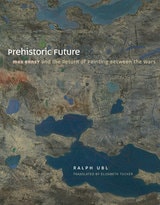
Prehistoric Future
Max Ernst and the Return of Painting between the WarsRalph Ubl
University of Chicago Press, 2013

The Art of Living in Avant-Garde Paris
Ethics and Self-Making in Dada, Simultanism, and SurrealismRachel Silveri
University of Chicago Press, 2026
With The Art of Living in Avant-Garde Paris, Rachel Silveri takes a fresh look at the desire to unify art and life, an ambition long regarded as foundational to the European historical avant-gardes. She reveals how many early twentieth-century artists saw their own everyday lives—their bodies, identities, and relationships—as a type of creative material and a central component to their avant-garde practice. These artists abandoned traditional forms of artmaking and venues of art viewing, instead aspiring to integrate art with everyday life, creating an “art of living.”
Considering Tristan Tzara’s performances of Dadaist identity, Sonia Delaunay’s simultaneous fashions and self-branding, and the collective endeavor to open and operate the Surrealist Research Bureau, Silveri offers a new narrative about how the artists of interwar Paris developed experiential life practices that resisted dominant forms of “lifestyle” and normative discourses surrounding gender, ethnicity, and office work. This book argues that ethical questions of “How should I live?” and “How should I relate to others?” were as important to the avant-garde as politics, and that aspirations to change the world played out in daily practices of self-making.

The Dada Cyborg
Visions of the New Human in Weimar BerlinMatthew Biro
University of Minnesota Press, 2009
Finding the cyborg in early twentieth-century German art
In an era when technology, biology, and culture are becoming ever more closely connected, The Dada Cyborg explains how the cyborg as we know it today actually developed between 1918 and 1933 when German artists gave visual form to their utopian hopes and fantasies in a fearful response to World War I.
In what could be termed a prehistory of the posthuman, Matthew Biro shows the ways in which new forms of human existence were imagined in Germany between the two world wars through depictions of cyborgs. Examining the work of Hannah Höch, Raoul Hausmann, George Grosz, John Heartfield, Otto Dix, and Rudolf Schlichter, he reveals an innovative interpretation of the cyborg as a representative of hybrid identity, as well as a locus of new modes of awareness created by the impact of technology on human perception. Tracing the prevalence of cyborgs in German avant-garde art, Biro demonstrates how vision, hearing, touch, and embodiment were beginning to be reconceived during the Weimar Republic. Biro’s unique and interdisciplinary analysis offers a substantially new account of the Berlin Dada movement, one that integrates the group’s poetic, theoretical, and performative practices with its famous visual strategies of photomontage, assemblage, and mixed-media painting to reveal radical images of a “new human.”
Virgin Microbe
Essays on DadaMichael White
Northwestern University Press, 2013
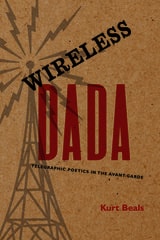
Wireless Dada
Telegraphic Poetics in the Avant-GardeKurt Beals
Northwestern University Press, 2020
Wireless Dada: Telegraphic Poetics in the Avant-Garde demonstrates that the poetics of the Dada movement was profoundly influenced by the telegraph and the technological and social transformations that it brought about in the nineteenth and early twentieth centuries. While telegraphy’s impact on Italian Futurism and German Expressionism is widely acknowledged, its formative role in Dada poetics has been largely neglected. Drawing on media history and theory, avant-garde studies, and German literary studies, Kurt Beals shows how the telegraph and the cultural discourses that surrounded it shaped the radical works of this seminal avant-garde movement. The “nonsense” strain in Dada is frequently seen as a response to the senseless violence of the First World War. Beals argues that it was not just the war that turned Dada poetry into a jumble of senseless signals—it was also the wireless.