Results by title

2 books match the query 'Dainotto, Roberto M.'
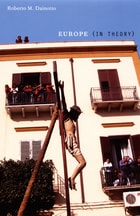
cover of Europe (in Theory)

Europe (in Theory)

Roberto M. Dainotto

Duke University Press, 2007

Europe (in Theory) is an innovative analysis of eighteenth- and nineteenth-century ideas about Europe that continue to inform thinking about culture, politics, and identity today. Drawing on insights from subaltern and postcolonial studies, Roberto M. Dainotto deconstructs imperialism not from the so-called periphery but from within Europe itself. He proposes a genealogy of Eurocentrism that accounts for the way modern theories of Europe have marginalized the continent’s own southern region, portraying countries including Greece, Italy, Spain, and Portugal as irrational, corrupt, and clan-based in comparison to the rational, civic-minded nations of northern Europe. Dainotto argues that beginning with Montesquieu’s The Spirit of Laws (1748), Europe not only defined itself against an “Oriental” other but also against elements within its own borders: its South. He locates the roots of Eurocentrism in this disavowal; internalizing the other made it possible to understand and explain Europe without reference to anything beyond its boundaries.

Dainotto synthesizes a vast array of literary, philosophical, and historical works by authors from different parts of Europe. He scrutinizes theories that came to dominate thinking about the continent, including Montesquieu’s invention of Europe’s north-south divide, Hegel’s “two Europes,” and Madame de Staël’s idea of opposing European literatures: a modern one from the North, and a pre-modern one from the South. At the same time, Dainotto brings to light counter-narratives written from Europe’s margins, such as the Spanish Jesuit Juan Andrés’s suggestion that the origins of modern European culture were eastern rather than northern and the Italian Orientalist Michele Amari’s assertion that the South was the cradle of a social democracy brought to Europe via Islam.
[more]
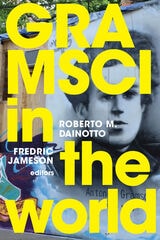
cover of Gramsci in the World

Gramsci in the World

Roberto M. Dainotto and Fredric Jameson, editors

Duke University Press, 2020

Antonio Gramsci's Prison Notebooks have offered concepts, categories, and political solutions that have been applied in a variety of social and political contexts, from postwar Italy to the insurgencies of the Arab Spring. The contributors to Gramsci in the World examine the diverse receptions and uses of Gramscian thought, highlighting its possibilities and limits for understanding and changing the world. Among other topics, they explore Gramsci's importance to Caribbean anticolonial thinkers like Stuart Hall, his presence in decolonial indigenous movements in the Andes, and his relevance to understanding the Chinese Left. The contributors consider why Gramsci has had relatively little impact in the United States while also showing how he was a major force in pushing Marxism beyond Europe—especially into the Arab world and other regions of the Global South. Rather than taking one interpretive position on Gramsci, the contributors demonstrate the ongoing relevance of his ideas to revolutionary theory and praxis.

Contributors. Alberto Burgio, Cesare Casarino, Maria Elisa Cevasco, Kate Crehan, Roberto M. Dainotto, Michael Denning, Harry Harootunian, Fredric Jameson, R. A. Judy, Patrizia Manduchi, Andrea Scapolo, Peter D. Thomas, Catherine Walsh, Pu Wang, Cosimo Zene
[more]