Results by title
3 books match the query 'Damascus'
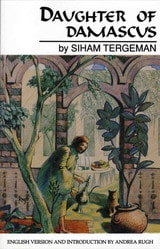
Daughter of Damascus
A MemoirBy Siham Tergeman
University of Texas Press, 1993
Daughter of Damascus presents a personal account of a Syrian woman's youth in the Suq Saruja ("old city") quarter of Damascus in the 1940s. Siham Tergeman wrote this book to preserve the details of a "genuine Arab past" for Syrian young people. In it, she relates the customs pertaining to marriage, birth, circumcision, and death. She writes of Ramadan festivities, family picnics to the orchards of the Ghuta, weekly trips to the public bath, her school experiences, Damascene cooking, peddlers' calls, and proverbs. She includes the well-known dramatic skits, songs, and tales of the Syrian Hakawati storytellers. And, through the words of her father, she describes the difficult period when Syrians were involved in the Balkans War and World War I. All this wealth of ethnographic detail is set in real-life vignettes that make the book lively and entertaining reading.
Little has been published about modern Syrian social life. In this English translation of an Arabic memoir originally published in Syria in 1978, Tergeman appeals to a wide audience. General readers will find a charming story, while scholars can find source material for university courses in anthropology, sociology, family and women's studies, and Middle Eastern area studies. The introduction by anthropologist Andrea Rugh portrays Syrian social life for Western readers and points out some of the nuances that might escape the attention of those unacquainted with Arab culture.
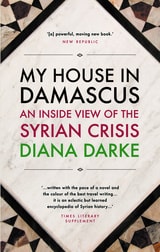
My House in Damascus
An Inside View of the Syrian CrisisDiana Darke
Haus Publishing, 2014
Diana Darke, a fluent Arabic speaker who moved to Damascus in 2004 after decades of regular visits, details how the Assad regime, and its relationship to the people, differs from the regimes in Egypt, Tunisia, and Libya—and why it was thus always less likely to collapse quickly, even in the face of widespread unrest and violence. Through the author’s firsthand experiences of buying and restoring a house in the old city of Damascus, which she later offered as a sanctuary to friends, Darke presents a clear picture of the realities of life on the ground and what hope there is for Syria’s future. Including additional material on topics like the advance of the Islamic State, as well as a new epilogue describing the current turmoil surrounding her house and the refugees she tried to help, this edition of My House in Damascus powerfully documents the human cost of the ongoing civil war.
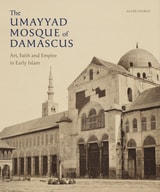
The Umayyad Mosque of Damascus
Art, Faith and Empire in Early IslamAlain George
Gingko, 2020
The Umayyad Mosque of Damascus is one of the oldest continuously used religious sites in the world. The mosque we see today was built in 705 CE by the Umayyad caliph al-Walid on top of a fourth-century Christian church that had been erected over a temple of Jupiter. Incredibly, despite the recent war, the mosque has remained almost unscathed, but over the centuries has been continuously rebuilt after damage from earthquakes and fires. In this comprehensive biography of the Umayyad Mosque, Alain George explores a wide range of sources to excavate the dense layers of the mosque’s history, also uncovering what the structure looked like when it was first built with its impressive marble and mosaic-clad walls. George incorporates a range of sources, including new information he found in three previously untranslated poems written at the time the mosque was built, as well as in descriptions left by medieval scholars. He also looks carefully at the many photographs and paintings made by nineteenth-century European travelers, particularly those who recorded the building before the catastrophic fire of 1893.