Results by title
10 books match the query 'Danger'
American Studies in a Moment of Danger
George Lipsitz
University of Minnesota Press, 2001
A forthright look at the future of the discipline in the wake of immense social changes.
What becomes of "national knowledge" in our age of globalization? If dramatic changes in technology, commerce, and social relations are undermining familiar connections between culture and place, what happens to legacies of learning that put the nation at the center of the study of history, culture, language, politics, and geography? In short, what remains of American Studies? At a critical moment, this book offers a richly textured historical perspective on where our notions of national knowledge-and our sense of American Studies-have come from and where they may lead in a future of new ideas about culture and community.
The America that seems to be disappearing before our very eyes is, George Lipsitz argues, actually the cumulative creation of yesterday’s struggles over identity, culture, and power. With examples from statistics and history, poster designs and music lyrics, Lipsitz shows how American Studies has been shaped by the social movements of the 1930s, 1960s, and 1980s. His analysis reveals the sedimented history of social movement contestation contained in contemporary popular music, visual art, and cinema.Finally, Lipsitz identifies the ways in which the globalization of commerce and culture are producing radically new understandings of politics, performance, consumption, knowledge, and nostalgia; the changing realities present not so much a danger as a clear challenge to a still-evolving American Studies-a challenge that this book helps us to confront wisely, flexibly, and effectively. Critical American Studies SeriesAnnouncing a new seriesCritical American Studies George Lipsitz, series editorThis series examines recent trends in American Studies that address fundamental questions about history, culture, social structure, race, gender, sexuality, and citizenship. It examines the forces-including mass migration, global economy, the seeming weaknesses of the nation-state, and ongoing ethnic antagonisms-that compel the field to reexamine the role of culture in producing individual and collective identities.
Cartographies of Danger
Mapping Hazards in AmericaMark Monmonier
University of Chicago Press, 1997
California, for example, takes earthquakes seriously, with a comprehensive program of seismic mapping, whereas Washington has been comparatively lax about earthquakes in Puget Sound. But as the Northridge earthquake in January 1994 demonstrated all too clearly to Californians, even reliable seismic-hazard maps can deceive anyone who misinterprets "known fault-lines" as the only places vulnerable to earthquakes.
Important as it is to predict and prepare for catastrophic natural hazards, more subtle and persistent phenomena such as pollution and crime also pose serious dangers that we have to cope with on a daily basis. Hazard-zone maps highlight these more insidious hazards and raise awareness about them among planners, local officials, and the public.
With the help of many maps illustrating examples from all corners of the United States, Monmonier demonstrates how hazard mapping reflects not just scientific understanding of hazards but also perceptions of risk and how risk can be reduced. Whether you live on a faultline or a coastline, near a toxic waste dump or an EMF-generating power line, you ignore this book's plain-language advice on geographic hazards and how to avoid them at your own peril.
Danger, Man Working
Writing from the Heart, the Gut, and the Poison Ivy PatchArenas
Wisconsin Historical Society Press, 2017
"Every writer has advice for aspiring writers. Mine is predicated on formative years spent cleaning my father’s calf pens: Just keep shoveling until you’ve got a pile so big, someone has to notice. The fact that I cast my life’s work as slung manure simply proves that I recognize an apt metaphor when I accidentally stick it with a pitchfork. . . . Poetry was my first love, my gateway drug—still the poets are my favorites—but I quickly realized I lacked the chops or insights to survive on verse alone. But I wanted to write. Every day. And so I read everything I could about freelancing, and started shoveling."
The pieces gathered within this book draw on fifteen years of what Michael Perry calls "shovel time"—a writer going to work as the work is offered. The range of subjects is wide, from musky fishing, puking, and mountain-climbing Iraq War veterans to the frozen head of Ted Williams. Some assignments lead to self-examination of an alarming magnitude (as Perry notes, "It quickly becomes obvious that I am a self-absorbed hypochondriac forever resolving to do better nutritionally and fitness-wise but my follow-through is laughable.") But his favorites are those that allow him to turn the lens outward: "My greatest privilege," he says, "lies not in telling my own story; it lies in being trusted to tell the story of another."
Managing Motherhood, Managing Risk
Fertility and Danger in West Central TanzaniaDenise Roth Allen
University of Michigan Press, 2004
In Managing Motherhood, Managing Risk, Denise Roth Allen persuasively argues that development interventions in the Third World often have unintended and unacknowledged consequences. Based on twenty-two months of fieldwork in the Shinyanga Region of west central Tanzania, this rich and engaging ethnography of women's fertility-related experiences highlights the processes by which a set of seemingly well-intentioned international maternal health policy recommendations go awry when implemented at the local level.
An exploration of how threats to maternal health have been defined and addressed at the global, national, and local levels, Managing Motherhood, Managing Risk presents two contrasting, and oftentimes competing, definitions of risk: those that form the basis of international recommendations and national maternal health policies and those that do not. The effect that these contrasting definitions of risk have on women's fertility-related experiences at the local level are explored throughout the book.
This study employs an innovative approach to the analysis of maternal health risk, one that situates rural Tanzanian women's fertility-related experiences within a broader historical and sociocultural context. Beginning with an examination of how maternal health risk was defined and addressed during the early years of British colonial rule in Tanganyika and moving to a discussion of an internationally conceived maternal health initiative that was launched on the world stage in the late 1980s, the author explores the similarities in the language used and solutions proposed by health development experts over time.
This set of "official" maternal health risks is then compared to an alternative set of risks that emerge when attention is focused on women's experiences of pregnancy and childbirth at the local level. Although some of these latter risks are often spoken about as deriving from spiritual or supernatural causes, the case studies presented throughout the second half of the book reveal that the concept of risk in the context of pregnancy and childbirth is much more complex, involving the interplay of spiritual, physical, and economic aspects of everyday life.
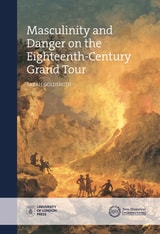
Masculinity and Danger on the Eighteenth-Century Grand Tour
Sarah Goldsmith
University of London Press, 2020
Goldsmith demonstrates that the Grand Tour was a means of constructing Britain’s next generation of leaders. Influenced by aristocratic concepts of honor and inspired by military-style leadership, elite society viewed experiences of danger and hardship as powerfully transformative and therefore as central to constructing masculinity. Scaling mountains, volcanoes, and glaciers, and even encountering war and disease, Grand Tourists willingly tackled a variety of perils. Through her study of these dangers, Goldsmith offers a bold revision of eighteenth-century elite masculine culture and the critical role the Grand Tour played within it.
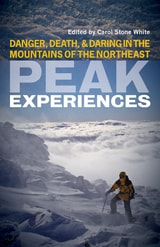
Peak Experiences
Danger, Death, and Daring in the Mountains of the NortheastEdited by Carol Stone White
University Press of New England, 2012
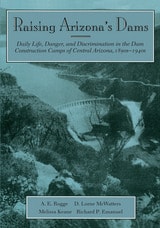
Raising Arizona's Dams
Daily Life, Danger, and Discrimination in the Dam Construction Camps of Central Arizona, 1890s-1940sA. E. Rogge, D. Lorne McWatters, Melissa Keane, and Richard P. Emanuel
University of Arizona Press, 1995
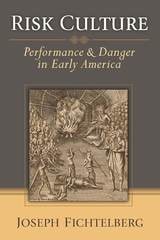
Risk Culture
Performance and Danger in Early AmericaJoseph Fichtelberg
University of Michigan Press, 2010
---David Shields, University of South Carolina

Signs Of Danger
Waste, Trauma, and Nuclear ThreatPeter C. Van Wyck
University of Minnesota Press, 2004
Questions the literal burying of the nuclear threat and how it relates to expectations for our future
A rising ocean. A falling building. A toxic river. Species extinguished. A nuclear landscape. In a world so configured, the state of contemporary ecological thought and practice is woefully—and perilously—inadequate. Focusing on the government’s nuclear waste burial program in Carlsbad, New Mexico, Signs of Danger begins the urgent work of finding a new way of thinking about ecological threat in our time.
The Waste Isolation Pilot Plant in Carlsbad began receiving shipments in 1999. With a proposed closing date of 2030, this repository for nuclear waste must be secured with a sign, the purpose of which will be to keep people away for three hundred generations. In the official documents uncovered by Peter van Wyck, we encounter a government bureaucracy approaching the issue of nuclear waste as a technical problem only to find itself confronting a host of intractable philosophical issues concerning language, culture, and history. Signs of Danger plumbs these depths as it shows us how the problem raised in the desert of New Mexico is actually the problem of a culture grappling with ecological threats and with questions of the limits of meaning and representation in the deep future. The reflections at the center of this book—on memory, trauma, disaster, representation, and the virtual—are aimed at defining the uniquely modern status of environmental and nuclear threats. They offer invaluable insights into the interface of where culture ends and nature begins, and how such a juncture is closely linked with questions of risk, concepts of history, and the cultural experience of time.Winner of the 2005 Gertrude J. Robinson Book Prize of the Canadian Communication Association
The Danger of Romance
Truth, Fantasy, and Arthurian FictionsKaren Sullivan
University of Chicago Press, 2018
Yet is it possible that romance is expressing a truth—and a truth unrecognized by realist genres? The Arthurian literature of the Middle Ages, Karen Sullivan argues, consistently ventriloquizes in its pages the criticisms that were being made of romance at the time, and implicitly defends itself against those criticisms. The Danger of Romance shows that the conviction that ordinary reality is the only reality is itself an assumption, and one that can blind those who hold it to the extraordinary phenomena that exist around them. It demonstrates that that which is rare, ephemeral, and inexplicable is no less real than that which is commonplace, long-lasting, and easily accounted for. If romance continues to appeal to audiences today, whether in its Arthurian prototype or in its more recent incarnations, it is because it confirms the perception—or even the hope—of a beauty and truth in the world that realist genres deny.