Results by title
30 books match the query 'Data'
Data as Infrastructure for Smart Cities
Larissa Suzuki
The Institution of Engineering and Technology, 2019
Data from the Decade of the Sixties
A NovelThanassis Valtinos
Northwestern University Press, 2000
Just as Greece today struggles to adapt to a shifting political landscape, so Greece in the 1960s was convulsed by the collision of tradition and cultural transformation. In Data from the Decade of the Sixties, Valtinos assembles voices, stories, and news clips that capture the transformation of Greece, the monarchy giving way to a republic via dictatorship, the industrialization of its agricultural society, and the replacement of arranged marriages with love matches.
The many voices in this tour de force coalesce in a bricolage of documents: personal letters between friends and family, news reports, advertisements, and other written ephemera. As governments fall, sexologists, fortune-tellers, garage owners, and lonely matrons advertise their specialties and fantasies in want ads, while the young and lonely find escape within the cheap novels, movies, and gossip columns that enliven their barren existence.
Together these testimonies illuminate the tumult of 1960s Greece, where generations and values clash and Greek society struggles to adapt. Valtinos captures the pulse of a decade, portraying the spirit of the century in Greece and throughout the world.
Data on the Abnormal Hemoglobins and Glucose-6-Phosphate Dehydrogenase Deficiency in Human Populations, 1967–1973
Frank B. Livingstone
University of Michigan Press, 1973
Data
Now Bigger and Better!Edited by Tom Boellstorff and Bill Maurer
Prickly Paradigm Press, 2015
EMC Pocket Guide
Key EMC facts, equations and dataKenneth Wyatt
The Institution of Engineering and Technology, 2013

Electromagnetic Compatibility (EMC) Pocket Guide
Key EMC facts, equations and dataKenneth Wyatt
The Institution of Engineering and Technology, 2025
Electromagnetic Compatibility (EMC) Pocket Guide
Key EMC facts, equations and dataKenneth Wyatt
The Institution of Engineering and Technology, 2025
Enumerations
Data and Literary StudyAndrew Piper
University of Chicago Press, 2018
In Enumerations, Andrew Piper answers that question across a variety of domains fundamental to the study of literature. He focuses on the elementary particles of literature, from the role of punctuation in poetry, the matter of plot in novels, the study of topoi, and the behavior of characters, to the nature of fictional language and the shape of a poet’s career. How does quantity affect our understanding of these categories? What happens when we look at 3,388,230 punctuation marks, 1.4 billion words, or 650,000 fictional characters? Does this change how we think about poetry, the novel, fictionality, character, the commonplace, or the writer’s career? In the course of answering such questions, Piper introduces readers to the analytical building blocks of computational text analysis and brings them to bear on fundamental concerns of literary scholarship. This book will be essential reading for anyone interested in Digital Humanities and the future of literary study.
From Data to Quanta
Niels Bohr’s Vision of PhysicsSlobodan Perovic
University of Chicago Press, 2021
Niels Bohr was a central figure in quantum physics, well known for his work on atomic structure and his contributions to the Copenhagen interpretation of quantum mechanics. In this book, philosopher of science Slobodan Perović explores the way Bohr practiced and understood physics, and analyzes its implications for our understanding of modern science. Perović develops a novel approach to Bohr’s understanding of physics and his method of inquiry, presenting an exploratory symbiosis of historical and philosophical analysis that uncovers the key aspects of Bohr’s philosophical vision of physics within a given historical context.
To better understand the methods that produced Bohr’s breakthrough results in quantum phenomena, Perović clarifies the nature of Bohr’s engagement with the experimental side of physics and lays out the basic distinctions and concepts that characterize his approach. Rich and insightful, Perović’s take on the early history of quantum mechanics and its methodological ramifications sheds vital new light on one of the key figures of modern physics.
Geographies of Digital Exclusion
Data and InequalityMark Graham
Pluto Press, 2021
Today's urban environments are layered with data and algorithms that fundamentally shape how we perceive and move through space. But are our digitally dense environments continuing to amplify inequalities rather than alleviate them? This book looks at the key contours of information inequality, and who, what and where gets left out.
Platforms like Google Maps and Wikipedia have become important gateways to understanding the world, and yet they are characterized by significant gaps and biases, often driven by processes of exclusion. As a result, their digital augmentations tend to be refractions rather than reflections: they highlight only some facets of the world at the expense of others.
This doesn't mean that more equitable futures aren't possible. By outlining the mechanisms through which our digital and material worlds intersect, the authors conclude with a roadmap for what alternative digital geographies might look like.
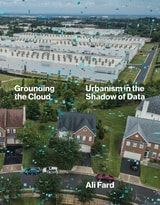
Grounding the Cloud
Urbanism in the Shadow of DataAli Fard
University of Minnesota Press, 2026
A detailed foray into the material and spatial realities of cloud computing
Since the 1990s, technologists have promoted a vision of the “cloud” as a shapeless and intangible entity. Grounding the Cloud peers through this hazy façade to reveal the earthly material foundations of global computing and data extraction. Tracing the historical and technological development of the cloud computing paradigm, Ali Fard exposes an ever-evolving project in which ideologies, economic models, and marketing images collude to shape our shared urban environments.
Demonstrating how technology’s spatial footprint now stretches to nearly every corner of the globe, Grounding the Cloud analyzes the often-hidden infrastructures that facilitate platform capitalism—from the mines extracting rare earth minerals in remote regions to the vast global network of fiber-optic cables at the bottom of the oceans to the nondescript data centers that sit on the peripheries of major urban areas. Meanwhile, with compelling examples of smart-city initiatives and corporate campuses, Fard shows how the future of urbanism is deeply intertwined with the growing economies of data extraction.
Breaking down the myth of a clean and efficient tech urbanism, this book makes visible the complex material geographies and geopolitics that undergird today’s most powerful and omnipresent corporations. A timely critique of the growing agency of tech platforms in determining the future of urban space, Grounding the Cloud offers an essential framework for understanding the shifting relationship between technology and urbanization.
Retail e-book files for this title are screen-reader friendly with images accompanied by short alt text and/or extended descriptions.
Interactive Journalism
Hackers, Data, and CodeNikki Usher
University of Illinois Press, 2016
Nikki Usher brings together a comprehensive portrait of nothing less than a new journalistic identity. Usher provides a history of the impact of digital technology on reporting, photojournalism, graphics, and other disciplines that define interactive journalism. Her eyewitness study of the field's evolution and accomplishments ranges from the interactive creation of Al Jazeera English to the celebrated data desk at the Guardian to the New York Times' Pulitzer-endowed efforts in the new field. What emerges is an illuminating, richly reported profile of the people coding a revolution that may reverse the decline and fall of traditional journalism.
Listening in the Afterlife of Data
Aesthetics, Pragmatics, and IncommunicationDavid Cecchetto
Duke University Press, 2022

Managing with Data
Using ACRLMetrics and PLAmetricsPeter Hernon
American Library Association, 2015
Natures of Data
A Discussion between Biologists, Artists and Science ScholarsPhilipp Fischer, Gabriele Gramelsberger, Christoph Hoffmann, Hans Hofmann, Hans-Jörg Rheinberger, and Hannes Rickli
Diaphanes, 2020
Nonhuman Witnessing
War, Data, and Ecology after the End of the WorldMichael Richardson
Duke University Press, 2024
Numbers and Nerves
Information, Emotion, and Meaning in a World of DataScott Slovic
Oregon State University Press, 2015
The essays and interviews in Numbers and Nerves explore the quandary of our cognitive responses to quantitative information, while also offering compelling strategies for overcoming insensitivity to the meaning of such information. With contributions by journalists, literary critics, psychologists, naturalists, activists, and others, this book represents a unique convergence of psychological research, discourse analysis, and visual and narrative communication.
At a time of unprecedented access to information, our society is frequently stymied in its efforts to react to the world’s massive problems. Many of these problems are systemic, deeply rooted in seemingly intransigent cultural patterns and lifestyles. In order to sense the significance of these issues and begin to confront them, we must first understand the psychological tendencies that enable and restrict our processing of numerical information.
Numbers and Nerves explores a wide range of psychological phenomena and communication strategies—fast and slow thinking, psychic numbing, pseudoinefficacy, the prominence effect, the asymmetry of trust, contextualized anecdotes, multifaceted mosaics of prose, and experimental digital compositions, among others—and places these in real-world contexts. In the past two decades, cognitive science has increasingly come to understand that we, as a species, think best when we allow numbers and nerves, abstract information and experiential discourse, to work together. This book provides a roadmap to guide that collaboration. It will be invaluable to scholars, educators, professional communicators, and anyone who struggles to grasp the meaning behind the numbers.
Pocket Radar Guide
Key radar facts, equations, and dataG. Richard Curry
The Institution of Engineering and Technology, 2010
Say It with Data
A Concise Guide to Making Your Case and Getting ResultsPriscille Dando
American Library Association, 2014
Sensing Health
Bodies, Data, and Digital Health TechnologiesMikki Kressbach
University of Michigan Press, 2024
To capture and analyze digital health experiences, Kressbach develops a method that combines descriptive practices from Film and Media Studies and Phenomenology. After examining the design and feedback structures of digital health platforms and devices, the author uses her own first-person accounts to analyze the impact of the technology on her body, behaviors, and perception of health. Across five chapters focused on different categories of digital health—menstrual trackers, sexual wellness technologies, fitness trackers, meditation and breathing technologies, and posture and running wearables—Sensing Health demonstrates a method of analysis that acknowledges and critiques the biomedical structures of digital health technology while remaining attentive to the lived experiences of users. Through a focus on the intersection of technological design and experience, this method can be used by researchers, scholars, designers, and developers alike.
Sociolinguistic Variation
Data, Theory, and AnalysisEdited by Jennifer Arnold, Renee Blake, and Brad Davidson
CSLI, 1996
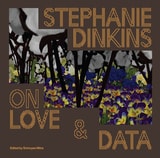
Stephanie Dinkins
On Love & DataSrimoyee Mitra
University of Michigan Press, 2024
Stephanie Dinkins: On Love & Data brings together nationally renowned curators and theorists who draw from methodologies of art criticism, social practice, new media theory, and critical studies to offer an in-depth analysis of key installations in Dinkins’s survey exhibition. The book also includes an important essay by Stephanie Dinkins on her concept of Afro-now-ism in which she expands on her theoretical framework and positionality as a Black new media artist in the 21st century. Dinkins’s artistic research transcends the boundaries of visual art to challenge and expose the bias and inequities of caste, race, and gender, which are encoded within digital systems on which governance, healthcare, and security infrastructures in the United States are based.
Technical Territories
Data, Subjects, and Spaces in Infrastructural AsiaLuke Munn
University of Michigan Press, 2023
Territory is shifting. No longer defined by the dotted line of the border or the national footprint of soil, today’s territories are enacted through data infrastructures. From subsea cables to server halls, these infrastructures underpin new forms of governance, shaping subjects and their everyday lives. Technical Territories moves from masked protestors in Hong Kong to asylum-seekers in Christmas Island and sand miners in Singapore, exploring how these territories are both political and visceral, altering the experience of their inhabitants.
Infrastructures have now become geopolitical, strategic investments that advance national visions, extend influence, and trigger trade wars. Yet at the same time, these technologies also challenge sovereignty as a bounded container, enacting a more distributed and decoupled form of governance. Such “technical territories” construct new zones where subjects are assembled, rights are undermined, labor is coordinated, and capital is extracted. The stable line of the border is replaced by more fluid configurations of power. Luke Munn stages an interdisciplinary intervention over six chapters, drawing upon a wide range of literature from technical documents and activist accounts, and bringing insights from media studies, migration studies, political theory, and cultural and social studies to bear on these new sociotechnical conditions.
The Afterlife of Data
What Happens to Your Information When You Die and Why You Should CareCarl Öhman
University of Chicago Press, 2024
A short, thought-provoking book about what happens to our online identities after we die.
These days, so much of our lives takes place online—but what about our afterlives? Thanks to the digital trails that we leave behind, our identities can now be reconstructed after our death. In fact, AI technology is already enabling us to “interact” with the departed. Sooner than we think, the dead will outnumber the living on Facebook. In this thought-provoking book, Carl Öhman explores the increasingly urgent question of what we should do with all this data and whether our digital afterlives are really our own—and if not, who should have the right to decide what happens to our data.
The stakes could hardly be higher. In the next thirty years alone, about two billion people will die. Those of us who remain will inherit the digital remains of an entire generation of humanity—the first digital citizens. Whoever ends up controlling these archives will also effectively control future access to our collective digital past, and this power will have vast political consequences. The fate of our digital remains should be of concern to everyone—past, present, and future. Rising to these challenges, Öhman explains, will require a collective reshaping of our economic and technical systems to reflect more than just the monetary value of digital remains.
As we stand before a period of deep civilizational change, The Afterlife of Data will be an essential guide to understanding why and how we as a human race must gain control of our collective digital past—before it is too late.

The Invention of the Colonial Americas
Data, Architecture, and the Archive of the Indies, 1781–1844Byron Ellsworth Hamann
J. Paul Getty Trust, The, 2022
The Invention of the Colonial Americas is an architectural history and media-archaeological study of changing theories and practices of government archives in Enlightenment Spain. It centers on an archive created in Seville for storing Spain’s pre-1760 documents about the New World. To fill this new archive, older archives elsewhere in Spain—spaces in which records about American history were stored together with records about European history—were dismembered. The Archive of the Indies thus constructed a scholarly apparatus that made it easier to imagine the history of the Americas as independent from the history of Europe, and vice versa.
In this meticulously researched book, Byron Ellsworth Hamann explores how building layouts, systems of storage, and the arrangement of documents were designed to foster the creation of new knowledge. He draws on a rich collection of eighteenth-century architectural plans, descriptions, models, document catalogs, and surviving buildings to present a literal, materially precise account of archives as assemblages of spaces, humans, and data—assemblages that were understood circa 1800 as capable of actively generating scholarly innovation.

The Physico-Chemical Properties of Plant Saps in Relation to Phytogeography
Data on Native Vegetation in its Natural EnvironmentJ. Harris
University of Minnesota Press, 1934
The Power of Data
An Introduction to Using Local, State, and National Data to Support School Library ProgramsSandra D. Andrews
American Library Association, 2012

Theater as Data
Computational Journeys into Theater ResearchMiguel Escobar Varela
University of Michigan Press, 2021
Total Market American
Race, Data, and AdvertisingMarcel Rosa-Salas
Duke University Press, 2025

Using Qualitative Methods in Action Research
How Librarians Can Get to the Why of DataDouglas Cook
Assoc of College & Research Libraries, 2011