Results by title
7 books match the query 'Databases'
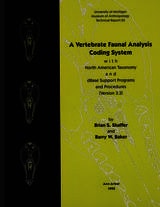
A Vertebrate Faunal Analysis Coding System, with North American Taxonomy and dBase Support Programs and Procedures (Version 3.3)
Brian S. Shaffer and Barry W. Baker
University of Michigan Press, 1992
The authors present the constructs for a logical and hierarchal vertebrate coding system for use in the analysis of faunal remains from archaeological sites. FACS consists of a series of numeric codes for recording information on 24 attributes for each faunal specimen.
[more]
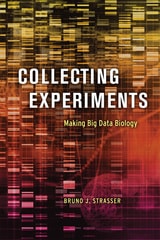
Collecting Experiments
Making Big Data BiologyBruno J. Strasser
University of Chicago Press, 2019
Databases have revolutionized nearly every aspect of our lives. Information of all sorts is being collected on a massive scale, from Google to Facebook and well beyond. But as the amount of information in databases explodes, we are forced to reassess our ideas about what knowledge is, how it is produced, to whom it belongs, and who can be credited for producing it.
Every scientist working today draws on databases to produce scientific knowledge. Databases have become more common than microscopes, voltmeters, and test tubes, and the increasing amount of data has led to major changes in research practices and profound reflections on the proper professional roles of data producers, collectors, curators, and analysts.
Collecting Experiments traces the development and use of data collections, especially in the experimental life sciences, from the early twentieth century to the present. It shows that the current revolution is best understood as the coming together of two older ways of knowing—collecting and experimenting, the museum and the laboratory. Ultimately, Bruno J. Strasser argues that by serving as knowledge repositories, as well as indispensable tools for producing new knowledge, these databases function as digital museums for the twenty-first century.
[more]
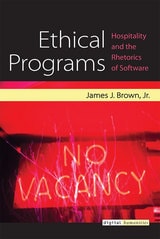
Ethical Programs
Hospitality and the Rhetorics of SoftwareJames J. Brown, Jr.
University of Michigan Press, 2015
Living in a networked world means never really getting to decide in any thoroughgoing way who or what enters your “space” (your laptop, your iPhone, your thermostat . . . your home). With this as a basic frame-of-reference, James J. Brown’s Ethical Programs examines and explores the rhetorical potential and problems of a hospitality ethos suited to a new era of hosts and guests. Brown reads a range of computational strategies and actors including the general principles underwriting the Transmission Control Protocol (TCP), which determines how packets of information can travel through the internet, to the Obama election campaign’s use of the power of protocols to reach voters, harvest their data, incentivize and, ultimately, shape their participation in the campaign. In demonstrating the kind of rhetorical spaces networked software establishes and the access it permits, prevents, and molds, Brown makes a major contribution to the emergent discourse of software studies as a major component of efforts in broad fields including media studies, rhetorical studies, and cultural studies.
[more]
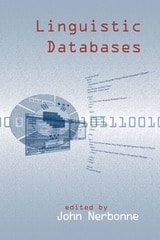
Linguistic Databases
Edited by John Nerbonne
CSLI, 1998
Linguistics Databases explains the increasing use of databases in linguistics. Specifically, the works presented in this collection report on database activities in phonetics, phonology, lexicography and syntax, comparative grammar, second-language acquisition, linguistic fieldwork, and language pathology. The volume presents the specialized problems of multi-media (especially audio) and multilingual texts, including those in exotic writing systems. Various implemented solutions are discussed, and the opportunities to use existing, minimally structured text repositories are presented.
[more]

Neotropical Birds
Ecology and ConservationDouglas F. Stotz, John W. Fitzpatrick, Theodore A. Parker III, and Debra K. Moskovits
University of Chicago Press, 1996
Four of the world's leading ornithologists and ardent conservationists have produced this unique synthesis of the ecological information on all 4,037 species of birds found from Mexico south to Tierra del Fuego. In tables that cover more than 300 pages and include much of their own unpublished data, the authors summarize details on 40 key ecological parameters for each bird species. Additional data and further analyses are provided for migratory species.
Because bird communities are good indicators of habitat type and condition, and because extensive bird surveys can be done quickly, bird communities are critical to rapid evaluations of an ecosystem's biological value and integrity. The authors analyze the bird species of major habitats from a conservation perspective, and develop specific guidelines to illustrate how governments, conservation organizations, and wildlife managers can use this ecological information to anchor conservation strategies on sound biological reality.
"Students of ecology and wildlife management, as well as conservationists, will benefit from this book . . . . Governmental and conservation agencies should use this book when making critical decisions about where to focus their efforts as they work to preserve the environment in fragile regions of the world." —Edward I. Saiff, Science Books & Films
[more]
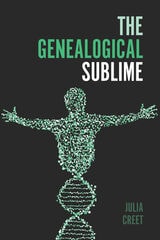
The Genealogical Sublime
Julia Creet
University of Massachusetts Press, 2020
Since the early 2000s, genealogy has become a lucrative business, an accelerating online industry, a massive data mining project, and fodder for reality television. But the fact remains that our contemporary fascination with family history cannot be understood independently of the powerful technological tools that aid and abet in the search for traces of blood, belonging, and difference.
In The Genealogical Sublime, Julia Creet traces the histories of the largest, longest-running, most lucrative, and most rapidly growing genealogical databases to delineate a broader history of the industry. As each unique case study reveals, new database and DNA technologies enable an obsessive completeness—the desire to gather all of the world's genealogical records in the interests of life beyond death. Archival research and firsthand interviews with Church of Jesus Christ of Latter-day Saints officials, key industry players (including Ancestry.com founders and Family Search executives), and professional and amateur family historians round out this timely and essential study.
In The Genealogical Sublime, Julia Creet traces the histories of the largest, longest-running, most lucrative, and most rapidly growing genealogical databases to delineate a broader history of the industry. As each unique case study reveals, new database and DNA technologies enable an obsessive completeness—the desire to gather all of the world's genealogical records in the interests of life beyond death. Archival research and firsthand interviews with Church of Jesus Christ of Latter-day Saints officials, key industry players (including Ancestry.com founders and Family Search executives), and professional and amateur family historians round out this timely and essential study.
[more]
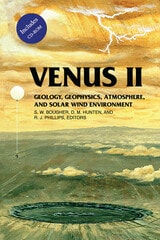
Venus II
Geology, Geophysics, Atmosphere, and Solar Wind EnvironmentEdited by S. W. Bougher, D. M. Hunten, and R. J. Phillips
University of Arizona Press, 1997
The final orbit of Venus by the Magellan spacecraft in October 1994 brought to a close an exciting period of Venus reconnaissance and exploration. The scientific studies resulting from data collected by the Magellan, Galileo, and Pioneer missions are unprecedented in their detail for any planet except Earth. Venus II re-evaluates initial assessments of Venus in light of these and other spacecraft missions and ground-based observations conducted over the past 30 years. More than a hundred contributors summarize our current knowledge of the planet, consider points of disagreement in interpretation, and identify priorities for future research.
Topics addressed include geology, surface processes, volcanism, tectonism, impact cratering, geodynamics, upper and lower atmospheres, and solar wind environment. The diversity of the coverage reflects the interdisciplinary nature of Venus science and the breadth of knowledge that has contributed to it. A CD-ROM developed by the Jet Propulsion Laboratory accompanies the book and incorporates text, graphics, video, software, and various digital products from selected contributors to the text. A multimedia interface allows users to navigate the text and the extensive databases included on the disk. Venus II is the most authoritative single volume available on the second planet. Its contents will not only help shape the goals of future Venus missions but will also enhance our understanding of current Mars explorations.
Topics addressed include geology, surface processes, volcanism, tectonism, impact cratering, geodynamics, upper and lower atmospheres, and solar wind environment. The diversity of the coverage reflects the interdisciplinary nature of Venus science and the breadth of knowledge that has contributed to it. A CD-ROM developed by the Jet Propulsion Laboratory accompanies the book and incorporates text, graphics, video, software, and various digital products from selected contributors to the text. A multimedia interface allows users to navigate the text and the extensive databases included on the disk. Venus II is the most authoritative single volume available on the second planet. Its contents will not only help shape the goals of future Venus missions but will also enhance our understanding of current Mars explorations.
[more]