Results by title
4 books match the query 'Davis, Natalie Zemon'
Culture and Identity in Early Modern Europe (1500-1800)
Essays in Honor of Natalie Zemon DavisBarbara B. Diefendorf and Carla Hesse, Editors
University of Michigan Press, 1993
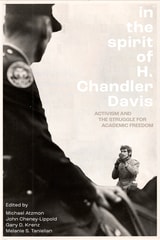
In the Spirit of H. Chandler Davis
Activism and the Struggle for Academic FreedomEdited by Michael Atzmon, John Cheney-Lippold , Gary D. Krenz, and Melanie S. Tanielian
Disobedience Press, 2026
The essays collected in this book honor H. Chandler Davis (1926-2022), a University of Michigan faculty member who became a symbol of principled dissent when suspended and fired in 1954 for refusing to testify about his political affiliations to the House Un-American Activities Committee. Invoking academic freedom and First Amendment protection, Davis was convicted of contempt of Congress. He served six months in prison before moving to Canada, where he established himself as a brilliant mathematician, prolific writer, and ardent and much beloved advocate for justice.
At a time when a new McCarthyism has come roaring back to threaten free inquiry everywhere, the 12 contributors to this book argue against censorship, the suppression of protest, the policed and surveilled campus, the self-silencing of "institutional neutrality," and other enemies of academic freedom. Also included in this volume is posthumously published work by Davis and by his late wife, the historian Natalie Zemon Davis, which reflects on the importance of facing, and not accepting, authoritarian threats.
Inspired by Chandler Davis’ courage, integrity, and devotion to the struggle against oppression, injustice, and the persecution of speech, these essays offer crucial insights into the importance of defending intellectual independence, institutional autonomy, and the right to free expression.
Contributors: Michael Bérubé, Juan Cole, H. Chandler Davis, Stefan Hanß, Marjorie Heins, Dima Khalidi, Gene Nichol, Henry Reichman, Ellen Schrecker, Joan Scott, Catharine R. Stimpson, Alan Wald, Silke-Maria Weineck, and Natalie Zemon Davis.

Operation Mind
A Brief Documentary Account of the House Committee on Un-American Activities. And Why It Matters Now.Natalie Zemon Davis and Elizabeth Douvan
Disobedience Press, 2025
The 2025 reprint of Operation Mind offers a foreword by comparatist Silke-Maria Weineck, an essay by historian Alan Wald connecting Operation Mind’s history of McCarthyism with present-day attacks on academic freedom, and a new (2023) introduction to the text by Natalie Zemon Davis.
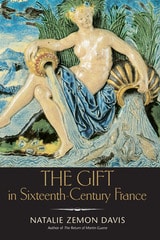
The Gift in Sixteenth-Century France
Natalie Zemon Davis
University of Wisconsin Press, 2000
Must a gift be given freely? How can we tell a gift from a bribe? Are gifts always a part of human relations—or do they lose their power and importance once the market takes hold and puts a price on every exchange? These questions are central to our sense of social relations past and present, and they are at the heart of this book by one of our most interesting and renowned historians.
In a wide-ranging look at gift giving in early modern France, Natalie Zemon Davis reveals the ways that gift exchange is crucial to understanding alliance and conflict in family life, economic relations, politics, and religion. Moving from the king’s bounty to the beggar’s alms, her book explores the modes and meanings of gift giving in every corner of sixteenth-century French society. In doing so, it arrives at a new way of considering gifts—what Davis calls "the gift register"—as a permanent feature of social relations over time. Gift giving, with its own justifications and forms in different periods, can create amity or lead to quarrels and trouble. It mixes the voluntary and the obligatory, with interested bribery at one extreme and inspired gratuitousness at the other.
Examining gifts both ethnographically (through archives, letters, and other texts) and culturally (through literary, ethical, and religious sources), Davis shows how coercive features in family life and politics, rather than competition from the market, disrupted the gift system. This intriguing book suggests that examining the significance of gifts can not only help us to understand social relations in the past, but teach us to deal graciously with each other in the present.