Results by title
4 books match the query 'Dawes, Trevor A.'

21St Century Access Services
On The Frontline Of AcademicMichael Krasulski
Assoc of College & Research Libraries, 2013
[more]
21st Century Access Services
On the Frontline of Academic LibrarianshipMichael J. Krasulski
Assoc of College & Research Libraries, 2013
[more]
Toxic Dynamics
Disrupting, Dismantling, and Transforming Academic Library CultureRussell Michalak
Assoc of College & Research Libraries, 2024
Academic libraries are full of inspiring collections, resources, and services, but libraries are special because of the people who run them. And what people believe about and face in their culture impacts ideas, plans, and outcomes. Academic library workers face many contemporary challenges that contribute to toxic work cultures—the rapid change of higher education, diminishing resources, lack of diversity, power hierarchies—and addressing these problems requires innovative solutions, ongoing professional development, and effective leadership.
Toxic Dynamics: Disrupting, Dismantling, and Transforming Academic Library Culture provides practical solutions for confronting these complex issues and innovative ways to promote a healthy and sustainable work culture. It addresses critical and timely challenges such as faculty versus staff or us versus them mentality, unionization, gendered labor, organizational change, self-care, tenure, and promotion. Authors from all sizes and types of academic libraries provide evidence-based solutions to mitigate the negative effects of toxicity, change management strategies, and ways to confront and challenge values that harm library workers and their well-being.
By understanding the root causes of toxic cultures, recognizing their impact, and implementing solutions, leaders can create a more supportive and positive work environment and improve morale, retention, and productivity. Toxic Dynamics is an important resource for anyone interested in improving workplace culture and addressing issues related to toxicity and inequity, and for library leaders at all levels.
[more]
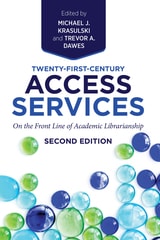
Twenty-First-Century Access Services
On the Front Line of Academic Librarianship, Second EditionTrevor A. Dawes
Assoc of College & Research Libraries, 2023
Access services is the administrative umbrella typically found in academic libraries where the circulation, reserves, interlibrary loan, stacks maintenance, and related functions reside. These functions are central to daily operations and the staff are often seen as “the face” of the library. But while access services impact every user of the academic library, these functions can be unseen and often go unnoticed and uncelebrated.
This thoroughly revised edition of 2013’s seminal Twenty-First-Century Access Services highlights the expanded duties of these departments; the roles these services continue to play in the success of the library, students, and faculty; and the knowledge, skills, and abilities these library workers need. In four parts it explores:
Twenty-First-Century Access Services demonstrates access services’ value, defines their responsibilities and necessary skills, and explores how access services departments are evolving new and traditional services to support the academic mission of their institutions. It is geared toward both access services practitioners and library and information science graduate students and faculty.
This thoroughly revised edition of 2013’s seminal Twenty-First-Century Access Services highlights the expanded duties of these departments; the roles these services continue to play in the success of the library, students, and faculty; and the knowledge, skills, and abilities these library workers need. In four parts it explores:
- Facilitating Access
- Leading Access Services
- Assessing Access Services
- Developing Access Services Professionals
Twenty-First-Century Access Services demonstrates access services’ value, defines their responsibilities and necessary skills, and explores how access services departments are evolving new and traditional services to support the academic mission of their institutions. It is geared toward both access services practitioners and library and information science graduate students and faculty.
[more]