Results by title

7 books match the query 'De Genova, Nicholas'
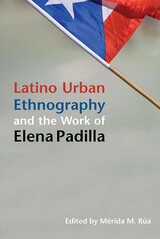
cover of Latino Urban Ethnography and the Work of Elena Padilla

Latino Urban Ethnography and the Work of Elena Padilla

Merida M. Rua

University of Illinois Press, 2010
This study reclaims and builds upon the classic work of anthropologist Elena Padilla in an effort to examine constructions of space and identity among Latinos. The volume includes an annotated edition of Padilla's 1947 University of Chicago master's thesis, "Puerto Rican Immigrants in New York and Chicago: A Study in Comparative Assimilation," which broke with traditional urban ethnographies and examined racial identities and interethnic relations. Weighing the importance of gender and the interplay of labor, residence, and social networks, Padilla examined the integration of Puerto Rican migrants into the social and cultural life of the larger community where they settled. Also included are four comparative and interdisciplinary original essays that foreground the significance of Padilla's early study about Latinos in Chicago. Contributors discuss the implications of her groundbreaking contributions to urban ethnographic traditions and to the development of Puerto Rican studies and Latina/o studies.
 
Contributors are Nicholas De Genova, Zaire Z. Dinzey-Flores, Elena Padilla, Ana Y. Ramos-Zayas, Mérida M. Rúa, and Arlene Torres.
[more]
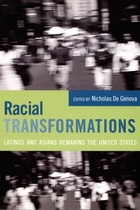
cover of Racial Transformations: Latinos and Asians Remaking the United States

Racial Transformations

Latinos and Asians Remaking the United States

Nicholas De Genova, ed.

Duke University Press, 2006

Moving beyond the black-white binary that has long framed racial discourse in the United States, the contributors to this collection examine how the experiences of Latinos and Asians intersect in the formation of the U.S. nation-state. They analyze the political and social processes that have racialized Latinos and Asians while highlighting the productive ways that these communities challenge and transform the identities imposed on them. Each essay addresses the sociopolitical predicaments of both Latinos and Asians, bringing their experiences to light in relation to one another.

Several contributors illuminate ways that Latinos and Asians were historically racialized: by U.S. occupiers of Puerto Rico and the Philippines at the end of the nineteenth century, by public health discourses and practices in early-twentieth-century Los Angeles, by anthropologists collecting physical data—height, weight, head measurements—from Chinese Americans to show how the American environment affected “foreign” body types in the 1930s, and by Los Angeles public officials seeking to explain the alleged criminal propensities of Mexican American youth during the 1940s. Other contributors focus on the coalitions and tensions between Latinos and Asians in the context of the fight to integrate public schools and debates over political redistricting. One addresses masculinity, race, and U.S. imperialism in the literary works of Junot Díaz and Chang-rae Lee. Another looks at the passions, identifications, and charges of betrayal aroused by the sensationalized cases of Elián González, the young Cuban boy rescued off the shore of Florida, and Wen Ho Lee, the Los Alamos physicist accused of spying on the United States. Throughout this volume contributors interrogate many of the assumptions that underlie American and ethnic studies even as they signal the need for a research agenda that expands the purview of both fields.

Contributors. Nicholas De Genova, Victor Jew, Andrea Levine, Natalia Molina, Gary Y. Okihiro, Crystal Parikh, Greg Robinson, Toni Robinson, Leland T. Saito

[more]
cover of The Borders of "Europe": Autonomy of Migration, Tactics of Bordering

The Borders of "Europe"

Autonomy of Migration, Tactics of Bordering

Nicholas De Genova, editor

Duke University Press, 2017

In recent years the borders of Europe have been perceived as being besieged by a staggering refugee and migration crisis. The contributors to The Borders of "Europe" see this crisis less as an incursion into Europe by external conflicts than as the result of migrants exercising their freedom of movement. Addressing the new technologies and technical forms European states use to curb, control, and constrain what contributors to the volume call the autonomy of migration, this book shows how the continent's amorphous borders present a premier site for the enactment and disputation of the very idea of Europe. They also outline how from Istanbul to London, Sweden to Mali, and Tunisia to Latvia, migrants are finding ways to subvert visa policies and asylum procedures while negotiating increasingly militarized and surveilled borders. Situating the migration crisis within a global frame and attending to migrant and refugee supporters as well as those who stoke nativist fears, this timely volume demonstrates how the enforcement of Europe’s borders is an important element of the worldwide regulation of human mobility.

Contributors. Ruben Andersson, Nicholas De Genova, Dace Dzenovska, Evelina Gambino, Glenda Garelli, Charles Heller, Clara Lecadet, Souad Osseiran, Lorenzo Pezzani, Fiorenza Picozza, Stephan Scheel, Maurice Stierl, Laia Soto Bermant, Martina Tazzioli
[more]
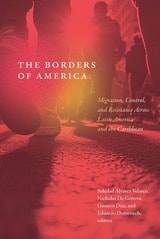
cover of The Borders of America: Migration, Control, and Resistance Across Latin America and the Caribbean

The Borders of America

Migration, Control, and Resistance Across Latin America and the Caribbean

Soledad Álvarez Velasco, Nicholas De Genova, Gustavo Dias, and Eduardo Domenech, editors

Duke University Press, 2026

The Borders of America examines the tension between human migration and the diverse formations of border control and immigration and asylum policy that have arisen across the Americas since the start of the twenty-first century. The collection develops a single analytical framework that is hemispheric in scope, encompassing the United States, Canada, the Caribbean, and the full extent of Latin America. The contributors offer the concept of a “border regime” as an epistemological and methodological approach that comprehends borders not merely as physical demarcations between state territories and jurisdictions but rather as expansive, uneven, and heterogeneous spaces of constant encounter, exchange, dispute, tension, conflict, and contestation. Presenting detailed empirical research into contemporary intra-regional and transcontinental mobilities across the hemisphere, The Borders of America scrutinizes an array of critical nodes in the larger configuration of the trans-American border regime.

Contributors. Soledad Álvarez Velasco, Tanya Basok, Janneth Clavijo, Nicholas De Genova, Gustavo Dias, Eduardo Domenech, Roberto Dufraix-Tapia, Jonathan Echeverri Zuluaga, Valentina Glockner Fagetti, Luin Goldring, Patricia Landolt, Carolina Moulin, Margarita Luz Núñez Chaim, Juan Ordóñez, Daniel Quinteros, Romina Ramos, Martha Rojas-Wiesner, Fabio Santos, Amarela Varela-Huerta, and Laura Velasco Ortiz
[more]
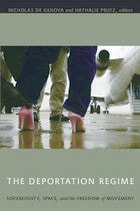
cover of The Deportation Regime: Sovereignty, Space, and the Freedom of Movement

The Deportation Regime

Sovereignty, Space, and the Freedom of Movement

Nicholas De Genova and Nathalie Peutz, eds.

Duke University Press, 2010

This important collection examines deportation as an increasingly global mechanism of state control. Anthropologists, historians, legal scholars, and sociologists consider not only the physical expulsion of noncitizens but also the social discipline and labor subordination resulting from deportability, the threat of forced removal. They explore practices and experiences of deportation in regional and national settings from the U.S.-Mexico border to Israel, and from Somalia to Switzerland. They also address broader questions, including the ontological significance of freedom of movement; the historical antecedents of deportation, such as banishment and exile; and the development, entrenchment, and consequences of organizing sovereign power and framing individual rights by territory.

Whether investigating the power that individual and corporate sponsors have over the fate of foreign laborers in Bahrain, the implications of Germany’s temporary suspension of deportation orders for pregnant and ill migrants, or the significance of the detention camp, the contributors reveal how deportation reflects and reproduces notions about public health, racial purity, and class privilege. They also provide insight into how deportation and deportability are experienced by individuals, including Arabs, South Asians, and Muslims in the United States. One contributor looks at asylum claims in light of an unusual anti-deportation campaign mounted by Algerian refugees in Montreal; others analyze the European Union as an entity specifically dedicated to governing mobility inside and across its official borders. The Deportation Regime addresses urgent issues related to human rights, international migration, and the extensive security measures implemented by nation-states since September 11, 2001.

Contributors: Rutvica Andrijasevic, Aashti Bhartia, Heide Castañeda , Galina Cornelisse , Susan Bibler Coutin, Nicholas De Genova, Andrew M. Gardner, Josiah Heyman, Serhat Karakayali, Sunaina Marr Maira, Guillermina Gina Nuñez, Peter Nyers, Nathalie Peutz, Enrica Rigo, Victor Talavera, William Walters, Hans-Rudolf Wicker, Sarah S. Willen
[more]
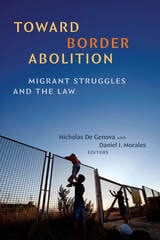
cover of Toward Border Abolition: Migrant Struggles and the Law

Toward Border Abolition

Migrant Struggles and the Law

Nicholas De Genova and Daniel I. Morales, editors

Duke University Press, 2026
Toward Border Abolition is an interdisciplinary exploration of border abolition that brings together scholars of international migration, border studies, and law who historicize the current border regime, critique the violence of border policing, and consider alternatives. The contributors explore the ways that migrants practice objective border abolitionism by circumventing the sociopolitical order imposed by nation-states. They illustrate how various methods of migrating, from seeking asylum to “unauthorized” border crossing, all enact a fundamentally human freedom of movement that precedes state border control as it exists today. Ultimately, Toward Border Abolition questions the assumed legitimacy of borders, nation-states, and immigration law while simultaneously showing how migrants’ transgression of borders opens new vistas for remaking the world.
[more]
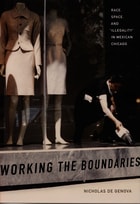
cover of Working the Boundaries: Race, Space, and "Illegality" in Mexican Chicago

Working the Boundaries

Race, Space, and "Illegality" in Mexican Chicago

Nicholas De Genova

Duke University Press, 2005

While Chicago has the second-largest Mexican population among U.S. cities, relatively little ethnographic attention has focused on its Mexican community. This much-needed ethnography of Mexicans living and working in Chicago examines processes of racialization, labor subordination, and class formation; the politics of nativism; and the structures of citizenship and immigration law. Nicholas De Genova develops a theory of “Mexican Chicago” as a transnational social and geographic space that joins Chicago to innumerable communities throughout Mexico. “Mexican Chicago” is a powerful analytical tool, a challenge to the way that social scientists have thought about immigration and pluralism in the United States, and the basis for a wide-ranging critique of U.S. notions of race, national identity, and citizenship.

De Genova worked for two and a half years as a teacher of English in ten industrial workplaces (primarily metal-fabricating factories) throughout Chicago and its suburbs. In Working the Boundaries he draws on fieldwork conducted in these factories, in community centers, and in the homes and neighborhoods of Mexican migrants. He describes how the meaning of “Mexican” is refigured and racialized in relation to a U.S. social order dominated by a black-white binary. Delving into immigration law, he contends that immigration policies have worked over time to produce Mexicans as the U.S. nation-state’s iconic “illegal aliens.” He explains how the constant threat of deportation is used to keep Mexican workers in line. Working the Boundaries is a major contribution to theories of race and transnationalism and a scathing indictment of U.S. labor and citizenship policies.

[more]