Results by title
2 books match the query 'Dearth'
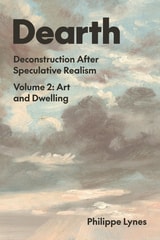
Dearth
Deconstruction After Speculative Realism. Art and DwellingPhilippe Lynes
Northwestern University Press, 2026
Proposing new insight into the legacies of Derridean thought for contemporary philosophy
In Art and Dwelling, the second volume of his Dearth sequence, Philippe Lynes sheds new light on the most enduring offshoot of the speculative realist movement, object-oriented ontology. Through careful readings of Graham Harman and Timothy Morton, Lynes shows how Jacques Derrida’s seminars offer critical insights into the spacing and distancing that precede and exceed all human practices of art and dwelling, with a deep sensitivity to the ecological and ethico-political consequences that follow.
Dearth: Deconstruction After Speculative Realism argues that Derrida’s seminars on Martin Heidegger and Maurice Blanchot, La Chose (The Thing), anticipated many of the philosophical, literary, and aesthetic questions animating speculative realism today: an anti-anthropocentric critique of Kantian correlationism; an overcoming of the apocalyptic nihilism of extinction through a deeper, affirmative habituation to nothingness; and poignant reflections on the literary and poetic aspects of living and dying in impossible worlds. His is an anti-correlationist plea that resounds now more urgently than ever.
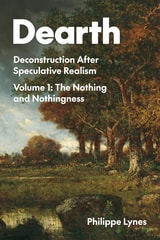
Dearth
Deconstruction After Speculative Realism. The Nothing and NothingnessPhilippe Lynes
Northwestern University Press, 2026
Proposing a radical reconceptualization of deconstruction and nothingness
The first of two volumes exploring Jacques Derrida’s prefiguration of speculative realism, The Nothing and Nothingness examines the transcendental naturalism of Ray Brassier and Iain Hamilton Grant and the speculative materialism of Quentin Meillassoux. Philippe Lynes proposes nothing less than a radical reconceptualization of deconstruction as a call to bear witness to nothingness: let the earth be the earth, let nature be nature, and leave them to their reality, secrecy, and withdrawal without us.
Dearth: Deconstruction After Speculative Realism argues that Derrida’s seminars on Martin Heidegger and Maurice Blanchot, La Chose (The Thing), anticipated many of the philosophical, literary, and aesthetic questions animating speculative realism today: an anti-anthropocentric critique of Kantian correlationism; an overcoming of the apocalyptic nihilism of extinction through a deeper, affirmative habituation to nothingness; and poignant reflections on the literary and poetic aspects of living and dying in impossible worlds. His is an anti-correlationist plea that resounds now more urgently than ever.