Results by title
34 books match the query 'Death, Grief, Bereavement'
A View from Life's Edge
Discovering What Really Matters with Older Women Across the GlobeCorinne G. Dempsey
Rutgers University Press, 2026
Speaking with nearly one hundred women over the age of eighty in four locations—northern Iceland, south India, a retirement community in California, and a convent in upstate New York—Corinne G. Dempsey finds that, as we near life’s end, we gain clarity about what really matters in life. Women’s stories and reflections, in which sorrow and loss are central to a life well lived, help to expand our sense of what it means to be human.
Drawing on the paradoxical wisdom of world religions and mystical traditions to frame late-life tendencies across cultures, Dempsey portrays these accounts as a corrective to mainstream values that defeat and diminish us. Dempsey encourages us to turn away from ageist fears rather than denying life’s inevitable end. Learning from older women’s perspectives, we might move their edge-of-life views closer to the center.
After Effects
A Memoir of Complicated GriefAndrea Gilats
University of Minnesota Press, 2021
An intensely moving and revelatory memoir of enduring and emerging from exceptional grief
To grieve after a profound loss is perfectly natural and healthy. To be debilitated by grief for more than a decade, as Andrea Gilats was, is something else. In her candid, deeply moving, and ultimately helpful memoir of breaking free of death’s relentless grip on her life, Gilats tells her story of living with prolonged, or “complicated,” grief and offers insight, hope, and guidance to others who suffer as she did.
Thomas Dayton, Andrea Gilats’s husband of twenty years, died at 52 after a five-month battle with cancer. In After Effects Gilats describes the desolation that followed and the slow and torturous twenty-year journey that brought her back to life. In the two years immediately following his death, Gilats wrote Tom daily letters, desperately trying to maintain the twenty-year conversation of their marriage. Excerpts from these letters reveal the depth of her despair but also the glimmer of an awakening as they also trace a different, more typical course of the grief experienced by one of Gilats's colleagues, also widowed. Gilats’s struggle to rescue herself takes her through the temptation of suicide, the threat of deadly illness, the overwhelming challenges of work, and the rigor of learning and eventually teaching yoga, to a moment of reckoning and, finally, reconciliation to a life without her beloved partner. Her story is informed by the lessons she learned about complicated grief as a disorder that, while intensely personal, can be defined, grappled with, and overcome.
Though complicated grief affects as many as one in seven of those stricken by the loss of a close loved one, it is little known outside professional circles. After Effects points toward a path of recuperation and provides solace along the way—a service and a comfort that is all the more timely and necessary in our pandemic-ravaged world of loss and isolation.
After the Bloodbath
Is Healing Possible in the Wake of Rampage Shootings?James D. Diamond
Michigan State University Press, 2019
Bless Me, Papi
A NovelAyendy Bonifacio
Northwestern University Press, 2026
A coming-of-age tale of a young Dominican American boy facing a grave loss and a feathered phantom
Between the looming buildings of Brooklyn, a young Dominican American boy only ever called mijo by his family has just lost his father to brain cancer. In the wake of his grief, he begins to see his deceased father take the form of a pigeon and ghost, acting as protector and advisor in moments of duress and confusion. Determined to find out the truth behind his father’s appearances, he sets out on the streets of Brooklyn with his outspoken friend Naño, and in the hills of the Dominican Republic with his cousin Matias, in search of answers, only to discover more ghostly apparitions and inexplicable occurrences. In a world of lost things and in-betweens, the grief-stricken son must choose whether he can bear to let go of his father or accept the consequences of what we let haunt us.
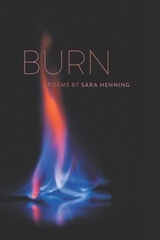
Burn
Sara Henning
Southern Illinois University Press, 2024
A lyrical meditation on time, survival, and merciful moments of joy
Sara Henning’s Burn draws readers deep into the moments that make us, focusing on instances of crisis and renewal to explore our relation to time and lived experience. In these poems, we follow a speaker as she works through the loss of young love, the death of her parents, marriage’s hardness and beauty, sexual assault, and the devastation of a pandemic—evolutions of trauma that fracture time and alter perception. Twinned with these extremes are shimmering manifestations of joy only an imperfect world can make possible.
Burn magnifies the way time leaves us both the victim and the victor of our realities. The blaze of her late-mother’s Tiffany lamps sends the speaker back to childhood, where she unearths mica from the schoolyard dirt. The devastation of an ecological crisis, the annihilating act of rape, and the unsolved disappearance of a caretaker all level the speaker’s world and upend her place in it, forcing her to reconstitute reality from what remains. In poems which summon the spirit of Stephen Hawking’s A Brief History of Time, this collection walks through the physics of temporality as refracted through love, loss, and grief, so we better understand its effect on our lives. Through this insight, Henning introduces a new way of being in the world.
A work of advocacy and uplift, Burn shines with the vibrant possibilities of narrative lyric poetry as it forges a path from grief to hope.
Companions for the Passage
Stories of the Intimate Privilege of Accompanying the DyingMarjorie Ryerson
University of Michigan Press, 2005
Some of the interviewees are religious, some not; some encouraged their loved ones to accept death, others to fight it to the end. There are stories of heroic nurses and of indifferent hospital bureaucracies, of deaths that came too soon, and those that came at the end of a long, rich life. Possessing an affirmative quality that is anything but sentimental, ultimately these stories celebrate the experience of being present at the death of a loved one.
Companionship in Grief
Love and Loss in the Memoirs of C. S. Lewis, John Bayley, Donald Hall, Joan Didion, and Calvin TrillinJeffrey Berman
University of Massachusetts Press, 2010
In Companionship in Grief, Jeffrey Berman focuses on the most life-changing event for many people—the death of a spouse. Some of the most acclaimed memoirs of the past fifty years offer insights into this profound loss: C. S. Lewis's A Grief Observed; John Bayley's three memoirs about Iris Murdoch, including Elegy for Iris; Donald Hall's The Best Day the Worst Day; Joan Didion's best-selling The Year of Magical Thinking; and Calvin Trillin's About Alice. These books explore the nature of spousal bereavement, the importance of caregiving, the role of writing in recovery, and the possibility of falling in love again after a devastating loss.
Throughout his study, Berman traces the theme of love and loss in all five memoirists' fictional and nonfictional writings as well as in those of their spouses, who were also accomplished writers. Combining literary studies, grief and bereavement theory, attachment theory, composition studies, and trauma theory, Companionship in Grief will appeal to anyone who has experienced love and loss. Berman's research casts light on five remarkable marriages, showing how autobiographical stories of love and loss can memorialize deceased spouses and offer wisdom and comfort to readers.
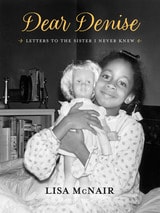
Dear Denise
Letters to the Sister I Never KnewLisa McNair
University of Alabama Press, 2022
Poignant, honest, and heartfelt letters to a sister who perished in the 16th Street Baptist Church bombing.
Lisa McNair was born in 1964, one year after her older sister, Denise, was murdered in the bombing of the 16th Street Baptist Church in Birmingham, Alabama. Dear Denise is a collection of forty letters from Lisa addressed to the sister she never knew, but in whose shadow of sacrifice and lost youth she was raised. These letters offer an intimate look into the life of a family touched by one of the most heinous tragedies of the Civil Rights Movement.
Written in a genuine, accessible, familiar, and easy-to-read voice, Lisa’s letters apprise her late sister of all that has come to pass in the years since her death. Lisa considers her own challenges and accomplishments as a student in remarkably different—and very racially complex—schools; the birth of their baby sister, Kim; their father’s election to the Alabama legislature; her evolving sense of faith and place, and sometimes lack thereof, within the Black church; her college experiences; and her own sense of self as she’s matured into adulthood. She reveals some of the family’s difficulties and health challenges, and shares some of their joys and celebrations.
The letters are accompanied by 29 black-and-white photographs, most of them from the McNair family collection, many of them taken by her father, a professional photographer who documented the Civil Rights Movement in Alabama both before and after Denise’s murder. An unswervingly candid, gentle, and nuanced book, Dear Denise is a testament to one singular life lived bravely and truthfully (if sometimes confusedly or awkwardly), during decades of bewildering social change and in the shadow of one life never fully lived.
Dying Green
A Journey through End-of-Life Medicine in Search of Sustainable Health CareChristine Vatovec
Rutgers University Press, 2023
In Dying Green, award-winning educator Christine Vatovec offers an engaging study that asks us to consider the broader environmental sustainability of health care. Through a comparative analysis of the care provided to terminally ill patients in a conventional cancer ward, a palliative care unit, and an acute-care hospice facility, she shows how decisions made at a patient’s bedside govern the environmental footprint of the healthcare industry. Likewise, Dying Green offers insights on the many opportunities that exist for reducing the ecological impacts of medical practices in general, while also enhancing care for the dying in particular. By envisioning a more sustainable approach to care, this book offers a way forward that is better for both patients and the planet.

Forevering
Carol Mavor
Duke University Press, 2027
Full Moon at Noontide
A Daughter's Last GoodbyeAnn Putnam
University of Iowa Press, 2015
Ghosts of Fourth Street
My Family, a Death, and the Hills of DuluthLaurie Hertzel
University of Minnesota Press, 2026
An open, frank rumination on a brother’s death and its reverberations throughout a family
Every family has its stories and secrets. Laurie Hertzel’s family had more than its share. At an early age, Laurie, the seventh of the ten Hertzel children, took on the challenge of sorting them out. Not old enough to be one of the Big Kids, yet too old to be with the Three Little Kids, she spent most of her time alone, reading, wandering, and observing her family as they moved around her in their house in Duluth. Though her parents were not warm, there were moments of closeness in those years—gifts of Laura Ingalls Wilder’s Little House books and special trips to the dairy for a sundae—but everything shattered after the sudden death of Laurie’s oldest sibling, eighteen-year-old Bobby, when she was just nine years old.
Moving back and forth in time, Laurie reflects on Bobby’s death and what happens to a family’s story when no one can talk about a tragedy and its toll. In Ghosts of Fourth Street, readers witness how the apparition of memories, the shadow of needs unmet, and the spirit of a family once whole all linger long after the death of a child and brother. As Laurie shares her experiences, we see the emergence of her fascination with story and truth as she teaches herself to read and finds solace and inspiration in books amid the tensions and competing agendas within her big, complicated family.
With keen attention, candor, and grace, Laurie paints a vivid portrait of 1960s Duluth as she poignantly examines a family contending with grief and the fact that life steadily goes on—snow and school buses, Christmases and Thanksgivings, ice skating and tobogganing and climbing trees, with ghosts always lingering at the edges.
Retail e-book files for this title are screen-reader friendly.
God of Beer
Garret Keizer
University Press of New England, 2016
Grief is a Sneaky Bitch
An Uncensored Guide to Navigating LossLisa Keefauver
University of Texas Press, 2024
A comprehensive and compassionate guide to navigating loss.
When social worker Lisa Keefauver became a widow in 2011, she was alarmed to discover that even though 100 percent of us experience loss, we’re living in a grief illiterate world. In her work as a therapist, and in her search for help in the wake of her own loss, Keefauver began to see how the misguided stories we consume about grief lead to unnecessary suffering. Responding to the problematic narratives that grief is something to move on from after completing the five stages like some sort of to-do list, Keefauver became a grief activist. Through this book and her hit podcast of the same title, she creates a safe place to be inside the messiness of it all, to discover the full spectrum of grief, and to find the tools that help grievers move forward, not on. Grief is a Sneaky Bitch is a comprehensive guide—both a manual full of insights and skills and, even more importantly, a thoughtful companion that helps readers feel seen and held.
Keefauver shares her personal and professional wisdom alongside the lessons she’s learned from clinicians, authors, poets, and friends. In place of rigid instructions and must-do checklists, Grief is a Sneaky Bitch invites reflection, encourages self-compassion, and explores the therapeutic power of humor with, yes, a bit of profanity.
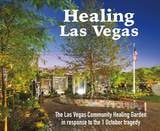
Healing Las Vegas
The Las Vegas Community Healing Garden in response to the 1 October tragedyMcAleer
University of Nevada Press, 2019
The story of the garden unfolds through photographs and the words of survivors, first responders, family members, medical professionals, counselors, and members of the community. In only a matter of days, volunteers and local businesses transformed a vacant downtown lot into a serene urban oasis. Families and friends of those lost in the tragedy soon adopted each of the fifty-eight trees planted in honor of their loved ones, and visitors left behind colorful mementos, including painted rocks, photographs, and ornaments, as well as words of encouragement, love, loss, and strength.
In the aftermath of 1 October, an often misunderstood city revealed its soul under the most heartbreaking of circumstances. The inspirational voices and stories from a community touched by tragedy provide comfort and encouragement. And the organic response to the unthinkable is a testament to how one community came together at its darkest hour, chose hope over despair, unity over hate.
Helping Children Live With Death and Loss
Dinah Seibert, Judy C. Drolet, and Joyce V. Fetro. Illustrations by Christine I. Stetter
Southern Illinois University Press, 2003
Helping Children Live with Death and Loss is a practical guide for parents, caregivers, teachers, clergy, funeral directors, and other adults who may interact with young children between the ages of two and ten. Utilizing a developmental approach that is critical for understanding the unique characteristics and needs among children under ten, the volume is enhanced by an accessible style and format, numerous illustrations, and the positive attitude that make it possible for any reader to comprehend and apply the concepts when discussing death and loss with young children.
The scope of concepts ranges from adult self-assessment to knowledge of children’s developmental stages in learning. Building on that foundation, the book provides four basic content areas for teaching, supplies sample questions and answers, and suggests strategies for teaching general death education as well as strategies for responding to a current death or loss. The resource concludes with print and internet sources for adults and children. Helping Children Live with Death and Loss also aids adults and children in improving their communication and coping skills, which are critical for managing loss and preparing for a healthier future.
Here, Now
EssaysMichelle Suzanne Mirsky
Northwestern University Press, 2025
A deeply felt and humorous collection examining a year in the wake of extraordinary loss
In November 2010, on the morning after election day, Mirsky lost her three-year-old son, Lev. In the year that followed, she produced a profound and provocatively humorous body of work—tackling extreme loss as well as divorce, friendship, dating, sex, comedy, and art making, all while continuing her day job as a family liaison at the same children’s hospital where Lev died. Every November, the anniversary of Lev’s loss aligns with the churn of the election cycle.
A decade later, we find Mirsky in the heart of a different crisis: supervising COVID vaccine distribution in the polarized political climate of Austin, Texas. In “An Addendum,” she turns again to themes of grief and healing, this time on a societal scale, as she reckons with the tenth anniversary of Lev’s passing. Through her un-extraordinary story of extraordinary loss, Mirsky offers proof that there is an afterward to grief.
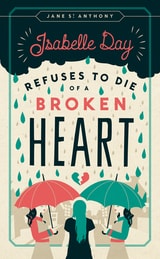
Isabelle Day Refuses to Die of a Broken Heart
Jane St. Anthony
University of Minnesota Press, 2018
In Milwaukee, Isabelle Day had a house. And she had a father. This year, on Halloween, she has half of a house in Minneapolis, a mother at least as sad as she is, and a loss that’s too hard to think—let alone talk—about. It’s the Midwest in the early 1960s, and dads just don’t die . . . like that.
Hovering over Isabelle’s new world are the duplex’s too-attentive landladies, Miss Flora (“a lovely dried flower”) and her sister Miss Dora (“grim as roadkill”), who dwell in a sea of memories and doilies; the gleefully demonic Sister Mary Mercy, who rules a school awash in cigarette smoke; and classmates steady Margaret and edgy Grace, who hold out some hope of friendship. As Isabelle’s first tentative steps carry her through unfamiliar territory—classroom debacles and misadventures at home and beyond, time trapped in a storm-tossed cemetery and investigating an inhospitable hospital—she begins to discover that, when it comes to pain and loss, she might actually be in good company.
In light of the elderly sisters’ lives, Grace and Margaret’s friendship, and her father’s memory, she just might find the heart and humor to save herself. With characteristic sensitivity and wit, Jane St. Anthony reveals how a girl’s life clouded with grief can also hold a world of promise.
Justice For Marlys
A Family’s Twenty Year Search for a KillerJohn S. Munday Munday
University of Minnesota Press, 2006
At once a gripping story and an in-depth look at the grief of losing a child, Justice for Marlys relates the true account of a serial killer, Joseph Ture Jr., who slipped past the law again and again during a three-year-long crime spree. It was Ture who brutally murdered Marlys Wohlenhaus in her own home. John S. Munday, the husband of Marlys’s mother, reconstructs the murder and the seventeen-year investigation that led to the capture and conviction of Ture, allowing the reader to explore the horror, obsession, dedication, and finally the peace that he and his wife experienced in the search for and eventual conviction of her daughter’s killer. Justice for Marlys generates suspense and sympathy as Munday recounts how Marlys’s case was solved through the efforts of the victim’s tenacious family, supportive news media, and persistent investigators.
Munday gives readers a terrifying sense of the unimaginable grief and despair in the hearts of those who lose a child, yet he also shares his intensely personal exploration of the resilience and power within the human spirit.
John S. Munday is an intellectual property attorney who lives with his wife Fran in Isanti County, Minnesota. He is also the author of Surviving the Death of a Child, a contributing editor for Grief Digest, and a member of the board of directors of the Other Side Magazine.
Letters to Kate
Life after LifeCarl H. Klaus
University of Iowa Press, 2006
Lights in Cold Rooms
A Psychologist Reflects on Family, Aging, Love & LossJoan Cusack Handler
CavanKerry Press, 2025
Lights in Cold Rooms shares Joan Cusack Handler’s personal experiences with depression as a licensed psychologist with forty years of experience treating patients. For many, including Handler, quarantine precluded the preferred treatment of psychotherapy. Handler turned to her own pathology to teach herself and others how to navigate both isolation and depression. Feelings of anxiousness and impending mortality intensified as she faced the death of her older sister and grappled with the guilt that erupted when she learned that an in-person memorial service was impossible. Opening both her personal history and pathology to public view, Handler chronicles her confrontation with eighty years of family dynamics and explores the path she took to return to a place of hope.
Mary Lincoln's Insanity Case
A Documentary HistoryJason Emerson
University of Illinois Press, 2012
In 1875 Mary Lincoln, the widow of a revered president, was committed to an insane asylum by her son, Robert. The trial that preceded her internment was a subject of keen national interest. The focus of public attention since Abraham Lincoln's election in 1860, Mary Lincoln had attracted plentiful criticism and visible scorn from much of the public, who perceived her as spoiled, a spendthrift, and even too much of a Southern sympathizer. Widespread scrutiny only increased following her husband's assassination in 1865 and her son Tad's death six years later, after which her overwhelming grief led to the increasingly erratic behavior that led to her being committed to a sanitarium. A second trial a year later resulted in her release, but the stigma of insanity stuck. In the years since, questions emerged with new force, as the populace and historians debated whether she had been truly insane and subsequently cured, or if she was the victim of family maneuvering.
In this volume, noted Lincoln scholar Jason Emerson provides a documentary history of Mary Lincoln's mental illness and insanity case, evenhandedly presenting every possible primary source on the subject to enable a clearer view of the facts. Beginning with documents from the immediate aftermath of her husband's assassination and ending with reminiscences by friends and family in the mid-twentieth century, Mary Lincoln's Insanity Case: A Documentary History compiles more than one hundred letters, dozens of newspaper articles, editorials, and legal documents, and the daily patient progress reports from Bellevue Place Sanitarium during Mary Lincoln's incarceration. Including many materials that have never been previously published, Emerson also collects multiple reminiscences, interviews, and diaries of people who knew Mary Lincoln or were involved in the case, including the first-hand recollection of one of the jurors in the 1875 insanity trial.
Suggesting neither accusation nor exoneration of the embattled First Lady, Mary Lincoln's Insanity Case: A Documentary History gives scholars and history enthusiasts incomparable access to the documents and information crucial to understanding this vexing chapter in American history.
Prayers and Rituals at a Time of Illness and Dying
The Practices of Five World ReligionsPatricia Fosarelli
Templeton Press, 2008
In the course of caring for the ill or dying, health care professionals are sometimes the only ones available to provide spiritual comfort to their patients. In our modern pluralistic society, where patients could come from any number of religious traditions, it can often be difficult to find exactly the right words in these situations.
Prayers and Rituals at a Time of Illness and Dying: The Practices of Five World Religions by experienced physician and theologian Pat Fosarelli offers clear instructions for health care professionals on how to better understand the needs of their Buddhist, Hindu, Muslim, Christian, and Jewish patients during these difficult times. Devoting separate chapters to each tradition, Fosarelli briefly outlines the basic beliefs and then looks at the main tenets of each religion, exploring the varied approaches that they take to illness and end-of-life issues. For each tradition, she also describes practices and offers suitable prayers. Each chapter suggests modifications that may be necessary for Western hospitals, modifications for children, and specific suggestions about what not to do or say in respect to different faith traditions.
This easy-to-use, pocket-sized resource will be referenced again and again by physicians, paramedics, hospital and military chaplains, pastoral counselors, hospice providers, and other medical professionals.
Returning to My Father's Kitchen
EssaysMonica Macansantos
Northwestern University Press, 2025
Feeling untethered after her beloved poet father passes away while she is living abroad, Monica Macansantos decides to return to the Philippines to regain her bearings. But with her father gone and her adult life rooted in the United States and New Zealand, can the land of her birth still serve as a place of healing?
In fifteen richly felt essays, Macansantos considers her family’s history in the Philippines, her own experiences as an exile, and the parent who was the heart of her family’s kitchen, whether standing at the stove to prepare dinner or sitting at the table to scribble in his notebook. Macansantos finds herself remaking her father’s chicken adobo, but also closely rereading his poems. As she reckons with his identity as an artist, she also comes into her own as a writer, and she invites us to consider whether it is possible to carry our homes with us wherever we go.
Starting with Goodbye
A Daughter's Memoir of Love after LossLisa Romeo
University of Nevada Press, 2018
Lisa reconsiders the affluent upbringing he financed (filled with horses, lavish vacations, bulging closets), and the emotional distance that grew when he retired to Las Vegas and she remained in New Jersey where she and her husband earn moderate incomes. She also confronts death rituals, navigates new family dynamics, while living both in memory and the unfolding moment.
In this brutally honest yet compelling portrayal and tribute, Lisa searches for meaning, reconciling the Italian-American father—self-made textile manufacturer who liked newspapers, smoking, Las Vegas craps tables, and solitude—with the complex man she discovers influenced everything, from career choice to spouse.
By forging a new father-daughter “relationship,” grief is transformed to hopeful life-affirming redemption. In poignant, often lyrical prose, this powerful, honest book proves that when we dare to love the parent who challenged us most, it’s never too late.
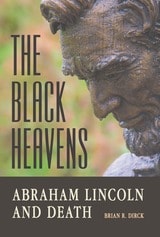
The Black Heavens
Abraham Lincoln and DeathBrian R. Dirck
Southern Illinois University Press, 2019
From multiple personal tragedies to the terrible carnage of the Civil War, death might be alongside emancipation of the slaves and restoration of the Union as one of the great central truths of Abraham Lincoln’s life. Yet what little has been written specifically about Lincoln and death is insufficient, sentimentalized, or devoid of the rich historical literature about death and mourning during the nineteenth century. The Black Heavens: Abraham Lincoln and Death is the first in-depth account of how the sixteenth president responded to the riddles of mortality, undertook personal mourning, and coped with the extraordinary burden of sending hundreds of thousands of soldiers to be killed on battlefields.
Going beyond the characterization of Lincoln as a melancholy, tragic figure, Brian R. Dirck investigates Lincoln’s frequent encounters with bereavement and sets his response to death and mourning within the social, cultural, and political context of his times. At a young age Lincoln saw the grim reality of lives cut short when he lost his mother and sister. Later, he was deeply affected by the deaths of two of his sons, three-year-old Eddy in 1850 and eleven-year-old Willie in 1862, as well as the combat deaths of close friends early in the war. Despite his own losses, Lincoln learned how to approach death in an emotionally detached manner, a survival skill he needed to cope with the reality of his presidency.
Dirck shows how Lincoln gradually turned to his particular understanding of God’s will in his attempts to articulate the meaning of the atrocities of war to the American public, as showcased in his allusions to religious ideas in the Gettysburg Address and the Second Inaugural. Lincoln formed a unique approach to death: both intellectual and emotional, typical and yet atypical of his times. In showing how Lincoln understood and responded to death, both privately and publicly, Dirck paints a compelling portrait of a commander in chief who buried two sons and gave the orders that sent an unprecedented number of Americans to their deaths.
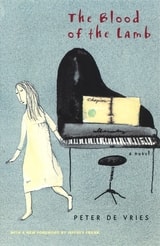
The Blood of the Lamb
A NovelPeter De Vries
University of Chicago Press, 2005
One of John Green's "favorite books ever," a powerful, moving novel of family, parenthood, and loss
The most poignant of all Peter De Vries's novels, The Blood of the Lamb is also the most autobiographical. It follows the life of Don Wanderhop from his childhood in an immigrant Calvinist family living in Chicago in the 1950s through the loss of a brother, his faith, his wife, and finally his daughter-a tragedy drawn directly from De Vries's own life. Despite its foundation in misfortune, The Blood of the Lamb offers glimpses of the comic sensibility for which De Vries was famous. Engaging directly with the reader in a manner that buttresses the personal intimacy of the story, De Vries writes with a remarkableblend of grief, love, wit, and fury.
The Dark Eclipse
Reflections on Suicide and AbsenceA.W. Barnes
Bucknell University Press, 2019
Published by Bucknell University Press. Distributed worldwide by Rutgers University Press.
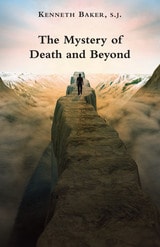
The Mystery of Death and Beyond
Kenneth Baker, S.J.
St. Augustine's Press, 2016
Man is unlike all other animals, because he has a soul endowed with intelligence and free will. Because man’s soul is spiritual, it is immortal. Death is the separation of that soul from the body; the body decays and returns to the dust from which it was taken, but the soul continues to live and is in the hands of God. But what happens to the soul after death? There are two possibilities—heaven or hell. We know from divine revelation and from the infallible teaching of the Church that the soul after death goes immediately to heaven (perhaps first for a time to purgatory to be totally cleansed and sanctified), or immediately to hell, a state or place of eternal misery.
The next life is a life without time—it is a perpetual now, with no before and after. It has a beginning but not end. It is also unchangeable, that is, souls in heaven are there forever and they cannot lose it; souls in hell are there forever and they can never be freed from it.
This is a very serious and certain reality for each one of us. The most important thing we will ever do is to die, and to die in the state of God’s grace so that we are his friends and will be admitted to his presence, which is what is meant by heaven. Therefore we must prepare ourselves to die in the grace of God, which is our ticket to heaven. We do that by doing God’s will for us, which means to keep his commandments, especially to love God above all things and practice love of neighbor.
This short book will help people think about their death and how important it is for their permanent happiness. It will help them to arrange their life in such a way that they will live it as God wants them to live it and so ultimately obtain eternal life with God because: “no eye has seen, nor ear heard, nor the heart of man conceived, what God has prepared for those who love him” (1 Cor. 2:9).
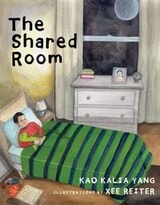
The Shared Room
Kao Kalia Yang
University of Minnesota Press, 2020
A family gradually moves forward after the loss of a child—a story for readers of all ages
When someone you love dies, you know what doesn’t die? Love. On the hot beach, among colorful umbrellas blooming beneath a bright sun, no one saw a little girl walk into the water. Now, many months later, her bedroom remains empty, her drawers hold her clothes, her pillows and sheets still have her scent, and her mother and father, brothers and sister carry her in their hearts, along with their grief, which takes up so much space. Then one snowy day, the mother and father ask the girl’s older brother, “Would you like a room of your own?” He wants to know, “Whose?” They say, “Your sister’s.”
Tenderly, and with refreshing authenticity, beloved Minnesota writer Kao Kalia Yang tells the story of a Hmong American family living with loss and tremendous love. Her direct and poignant words are accompanied by the evocative and expressive drawings of Hmong American artist Xee Reiter. The Shared Room brings a message of comfort and hope to readers young and old.
Walking Distance
Pilgrimage, Parenthood, Grief, and Home RepairsDavid Hlavsa
Michigan State University Press, 2015
Though walking more than 400 miles across the north of Spain turned out to be more difficult than they had anticipated, after a series of misadventures, including a brief stay in a Spanish hospital, they arrived in Santiago. Shortly after their return to Seattle, Lisa became pregnant, and the hardships of the Camino were no comparison to what followed: the stillbirth of their first son and Lisa’s harrowing second pregnancy.
Walking Distance is a moving and disarmingly funny book, a good story with a happy ending—the safe arrival of David and Lisa’s second son, Benjamin. David and Lisa get more than they bargained for, but they also get exactly what they wanted: a child, a solid marriage, and a richer life.
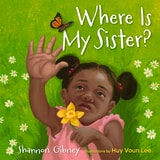
Where Is My Sister?
Shannon Gibney
University of Minnesota Press, 2026
A poignant resource for helping children and families through the loss of a sibling
Salome was going to be a big sister. Her brother, Gerald, told her so. They watched Mama’s tummy grow rounder and rounder, and their excitement grew, too. But then Mama went to the hospital, and she came home without a baby. The smiles stopped, and the house grew quiet except for Mama’s tears.
“Where is my sister?” Salome asks. Mama gathers her and Gerald onto her lap and tells them that baby Toni is in the cemetery, but she’ll always be their sister. Gerald says that she’s in the spirit world. Salome looks for her all over. Is Toni’s spirit in Mama’s tears? Is she in the family’s stories about her? Is she between Salome and her brother at the dinner table, or beside Salome’s favorite tree in the backyard? As her family begins to find peace, Salome understands something important: “My sister is everywhere.”
In Where Is My Sister? Shannon Gibney’s poetic voice captures the heartbreak of losing an infant and the love that joins family members together. Huy Voun Lee’s tender illustrations guide readers with quiet grace, honoring all those who passed from this world too soon. A resource for children and the parents, teachers, and community members who care for them, this book offers a powerful reflection for those who often feel alone during the painful and transformative experience of infant and sibling loss.
Widows' Words
Women Write on the Experience of Grief, the First Year, the Long Haul, and Everything in BetweenRutgers University Press, 2019
Some were widowed young, while others were married for decades. Some cared for their late partners through long terminal illnesses, while others lost their partners suddenly. Some had male partners, while others had female partners. Yet each of these women faced the same basic dilemma: how to go on living when a part of you is gone.
Widows’ Words is arranged chronologically, starting with stories of women preparing for their partners’ deaths, followed by the experiences of recent widows still reeling from their fresh loss, and culminating in the accounts of women who lost their partners many years ago but still experience waves of grief. Their accounts deal honestly with feelings of pain, sorrow, and despair, and yet there are also powerful expressions of strength, hope, and even joy. Whether you are a widow yourself or have simply experienced loss, you will be sure to find something moving and profound in these diverse tales of mourning, remembrance, and resilience.
Year of Plenty
A Family's Season of GriefB.J. Hollars
University of Wisconsin Press, 2024
So began the Hollars family’s year of plenty—a cancer diagnosis on top of the ongoing COVID pandemic, then feelings of falling short as parents, partners, and people. While Hollars traces his family’s daily devastations alongside his father-in-law’s decline, he recounts the small mercies along the way: birthdays, campfires, fishing trips, kayaking, and fireflies. As he, his wife, Meredith, and their three young children grapple with how best to say goodbye to the person they love, they are forced to reassess their own lives. How can we make the most of our time, they wonder, when time feels so short?
Written in vignettes and accompanied by photographs and family interviews, Year of Plenty provides a poignant and unflinching account of how death separates us not only from the people we love but from places and memories too. Hollars explores how death’s all-consuming weight has the potential to fracture—rather than strengthen—even those relationships we think we know the best. Ultimately, he cracks wide personal moments from his own life and allows the world to peer in.