Results by title
2 books match the query 'Death in popular culture'
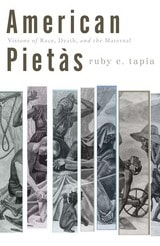
American Pietàs
Visions of Race, Death, and the MaternalRuby C. Tapia
University of Minnesota Press, 2010
In American Pietàs, Ruby C. Tapia reveals how visual representations of racialized motherhood shape and reflect national citizenship. By means of a sustained engagement with Roland Barthes’s suturing of race, death, and the maternal in Camera Lucida, Tapia contends that the contradictory essence of the photograph is both as a signifier of death and a guarantor of resurrection.
Tapia explores the implications of this argument for racialized productions of death and the maternal in the context of specific cultural moments: the commemoration of Princess Diana in U.S. magazines; the intertext of Toni Morrison’s and Hollywood’s Beloved; the social and cultural death in teen pregnancy, imaged and regulated in California’s Partnership for Responsible Parenting campaigns; and popular constructions of the “Widows of 9/11” in print and televisual journalism.
Taken together, these various visual media texts function in American Pietàs as cultural artifacts and as visual nodes in a larger network of racialized productions of maternal bodies in contexts of national death and remembering. To engage this network is to ask how and toward what end the racial project of the nation imbues some maternal bodies with resurrecting power and leaves others for dead. In the spaces between these different maternities, says Tapia, U.S. citizen-subjects are born—and reborn.
[more]
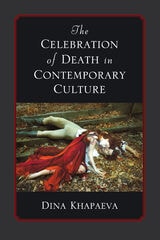
The Celebration of Death in Contemporary Culture
Dina Khapaeva
University of Michigan Press, 2017
The Celebration of Death in Contemporary Culture investigates the emergence and meaning of the cult of death. Over the last three decades, Halloween has grown to rival Christmas in its popularity. Dark tourism has emerged as a rapidly expanding industry. “Corpse chic” and “skull style” have entered mainstream fashion, while elements of gothic, horror, torture porn, and slasher movies have streamed into more conventional genres. Monsters have become pop culture heroes: vampires, zombies, and serial killers now appeal broadly to audiences of all ages. This book breaks new ground by viewing these phenomena as aspects of a single movement and documenting its development in contemporary Western culture.
This book links the mounting demand for images of violent death with dramatic changes in death-related social rituals. It offers a conceptual framework that connects observations of fictional worlds—including The Twilight Saga, The Vampire Diaries, and the Harry Potter series—with real-world sociocultural practices, analyzing the aesthetic, intellectual, and historical underpinnings of the cult of death. It also places the celebration of death in the context of a longstanding critique of humanism and investigates the role played by 20th-century French theory, posthumanism, transhumanism, and the animal rights movement in shaping the current antihumanist atmosphere.
This timely, thought-provoking book will appeal to scholars of culture, film, literature, anthropology, and American and Russian studies, as well as general readers seeking to understand a defining phenomenon of our age.
[more]