Results by title
6 books match the query 'Deaths'
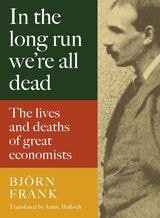
In the Long Run We're All Dead
The Lives and Deaths of Great EconomistsBjörn Frank
Haus Publishing, 2023
A fascinating and entertaining account of the lives of the most important economists of the past.
Until the late nineteenth century, economics couldn’t be studied at the university level; the field was the domain of well-educated figures whose radical curiosity drew them to a discipline that was little understood and often ridiculed. In the Long Run We’re All Dead tells the story of one of those figures in each of its thirteen chapters. Each of these extraordinary lives is worthy of fiction, and the manner of their deaths, oddly, often illuminates their work. Björn Frank shows us how these economists developed the theories for which they became famous and explains those ideas—utilitarianism, social costs, the endowment effect, and others—with reference to the lives of their creators in an engaging, irreverent, even comic style. Frank also takes daring leaps into speculation, considering how the principles of these long-gone economists might be applied to problems of today and of the future.
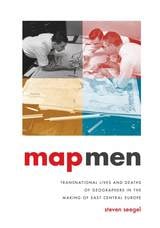
Map Men
Transnational Lives and Deaths of Geographers in the Making of East Central EuropeSteven Seegel
University of Chicago Press, 2018
Taking us deep into cartographical archives, Seegel re-creates the public and private worlds of these five mapmakers, who interacted with and influenced one another even as they played key roles in defining and redefining borders, territories, nations—and, ultimately, the interconnection of the world through two world wars. Throughout, he examines the transnational nature of these processes and addresses weighty questions about the causes and consequences of the world wars, the rise of Nazism and Stalinism, and the reasons East Central Europe became the fault line of these world-changing developments.
At a time when East Central Europe has surged back into geopolitical consciousness, Map Men offers a timely and important look at the historical origins of how the region was defined—and the key people who helped define it.

Paralyzing Summer
The True Story of the Ann Arbor V.A. Hospital Poisonings and DeathsZibby Oneal and S. Martin Lindenauer
University of Michigan Press, 2016
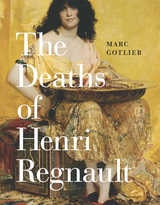
The Deaths of Henri Regnault
Marc Gotlieb
University of Chicago Press, 2016
Gotlieb traces Regnault’s trajectory after he won the prestigious Grand Prix de Rome, a fellowship that provided four years of study in Italy. Arriving in Rome, however, Regnault suffered a profound crisis of originality that led him to flee the city in favor of Spain and Morocco. But the crisis also proved productive: from Rome, Madrid, Tangier, and Paris, Regnault enthralled audiences with a bold suite of strange, seductive, and violent Orientalist paintings inspired by his exotic journey—images that, Gotlieb argues, arose precisely from the crisis that had overtaken Regnault and that in key respects was shared by his more avant-garde counterparts.
Both an in-depth look at Regnault’s violent art and a vibrant essay on historical memory, The Deaths of Henri Regnault lays bare a creative legend who helped shape the collective experience of a generation.
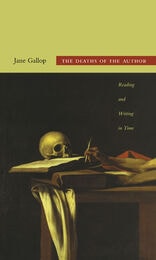
The Deaths of the Author
Reading and Writing in TimeJane Gallop
Duke University Press, 2011
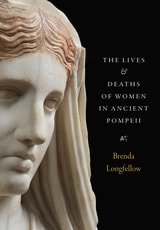
The Lives and Deaths of Women in Ancient Pompeii
Brenda Longfellow
University of Texas Press, 2025
A study of women’s lives in the public sphere of the ancient city of Pompeii.
Pompeii’s well-preserved remains provide a unique opportunity for the close study of ancient lives. Drawing on statues, inscriptions, graffiti, wall paintings, and the architecture of tombs, sanctuaries, houses, and public spaces, The Lives and Deaths of Women in Ancient Pompeii examines the public lives of women in Pompeii. Art historian Brenda Longfellow explores how historical women of all social backgrounds acted in public and exerted agency on behalf of themselves and others, ultimately finding that female initiatives in Pompeii were not only accepted but desired by the community to a greater extent than has previously been recognized.
Longfellow centers her study on a few key women—including the city’s most notable female patron, Eumachia—and uses them to examine female roles in postmortem commemorations, civic patronage and benefactions, commerce, the priesthood, and the home. By following these individuals, Longfellow examines women’s lives in Pompeii in both abstract and concrete ways, allowing readers to better understand their importance to the city and society. The result is a groundbreaking book that foregrounds the agency of women in everyday Pompeii.