Results by title
20 books match the query 'Decision-Making & Problem Solving'
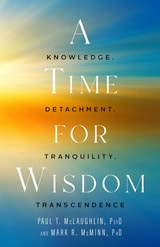
A Time for Wisdom
Knowledge, Detachment, Tranquility, TranscendencePaul T. McLaughlin
Templeton Press, 2022
These are volatile times. Fear, suspicion, and cynicism are chronic. A mere tweet inflames the passions of millions while click-bait “hot takes” stoke the amygdalas of everyone with an Internet connection. We treat those not in our tribe as a threat and deem anyone with a different opinion as evil. Mistaking myopia for measure, we lack all sense of proportion in our judgments. We are shortsighted, mired in the present, ignorant of history, and blind to the future. We thought that technology would save us by connecting us to each other and the world’s information. Instead, it enticed our vices, encouraged our biases, and eroded the one virtue we need now more than ever: wisdom.
A Time for Wisdom is for readers who feel beleaguered by the incivility of the modern world, dispirited by its coarse rhetoric and toxic partisanship. It is an invitation to escape the shallow cacophony and restore peace and perspective to our daily lives. Written by two psychologists, the book takes the best scientific research on wisdom and integrates it with timeless concepts that have, for ages, guided troubled souls through life’s hardships. From this foundation, the authors present four steps we can follow to practice wisdom in the 21st Century:
- Receiving knowledge.
- Practicing detachment.
- Experiencing tranquility.
- Cultivating transcendence.
These are profound and spiritual principles that can bring us immense satisfaction when we aspire to live by them.
In A Time for Wisdom, the authors show us how. They commend a course of action towards the Good, the True, and the Beautiful, towards calm and clear moral reasoning. They lead us out of the circus of contemporary life and show us a path beyond our petty self-centeredness. By journeying along that path, we can, like the great sages and scientists before us, rise above the immediacy of the moment and partake of the numinous and the infinite.
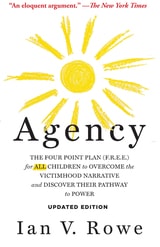
Agency, Updated Edition
The Four Point Plan (F.R.E.E.) for ALL Children to Overcome the Victimhood Narrative and Discover Their Pathway to PowerIan V. Rowe
Templeton Press, 0
Some children thrive where others do not. Why? Are there personal behaviors and institutional supports that make a difference in helping young people chart a course for their futures? Agency answers with a loud and clear “yes!”
This book describes the FREE framework, four pillars that can uplift every young person as they make the passage into adulthood: Family, Religion, Education, and Entrepreneurship.
With this framework in place, children are empowered to develop agency, which Ian V. Rowe defines as the force of one’s free will, guided by moral discernment.
Rowe champions a game plan for creating new agents of agency and shows them the path that will set them FREE. Revised and expanded, this updated edition includes a new introduction and supplementary material, including a study guide for educators, sample lesson plans, and a student self-assessment.
Agency
The Four Point Plan (F.R.E.E.) for ALL Children to Overcome the Victimhood Narrative and Discover Their Pathway to PowerRowe, Ian V.
Templeton Press, 2021
Every child in America deserves to know that a path to a successful life exists and that they have the power to follow it. But many never set foot on that path because they grow up hearing the message that systemic forces control their destinies, or that they are at fault for everything that has gone wrong in their lives.
These children often come from difficult circumstances. Many are raised by young, single parents, live in disadvantaged neighborhoods, attend substandard schools, and lack the moral safeguards of religious and civic institutions. As a result, they can be dispirited into cycles of learned helplessness rather than inspired to pursue their own possibilities.
Yet this phenomenon is not universal. Some children thrive where others do not. Why? Are there personal behaviors and institutional supports that have proven to make a difference in helping young people chart a course for their futures? Agency answers with a loud and clear “yes!”
This book describes four pillars that can uplift every young person as they make the passage into adulthood: Family, Religion, Education, and Entrepreneurship. Together, these pillars embody the true meaning of freedom, wherein people are motivated to embrace the ennobling responsibilities of building healthy social structures and shaping the outcomes of their own lives.
For that reason, Ian Rowe calls the four pillars the FREE framework. With this framework in place, children are empowered to develop agency, which Rowe defines as the force of one’s free will, guided by moral discernment. Developing agency is the alternative to the debilitating ‘blame-the-system’ and ‘blame-the-victim’ narratives. It transcends our political differences and beckons all who dare to envision lives unshackled by present realities.
In addition to making the case for agency, Rowe shares his personal story of success coming from an immigrant family. He defends America as an ever-improving country worthy of our esteem. He corrects misguided calls for “anti-racism” and “equity,” and champions a game plan for creating new agents of agency, dedicated to promoting the aspirational spirit of America’s children, and showing them the path that will set them FREE.
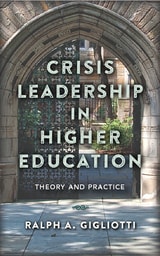
Crisis Leadership in Higher Education
Theory and PracticeRalph A. Gigliotti
Rutgers University Press, 2020
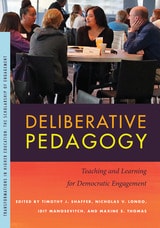
Deliberative Pedagogy
Teaching and Learning for Democratic EngagementTimothy J. Shaffer
Michigan State University Press, 2017
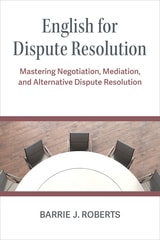
English for Dispute Resolution
Mastering Negotiation, Mediation, and Alternative Dispute ResolutionBarrie J. Roberts
University of Michigan Press, 2025
Whether they are using English for Dispute Resolution as a self-study resource or a course textbook, readers can use the book to develop their own unique negotiation and mediation styles in English and improve their professional-level English skills and soft skills for any purpose. Chapters introduce Alternative Dispute Resolution, negotiation ethics, competitive and collaborative negotiation, negotiation game theory, apologies, drafting written agreements, and mediation. After an engaging hypothetical case that introduces the chapter’s key points, each chapter provides warm-up questions, readings about dispute resolution theory and strategies, language tips, and activities and sample phrases to practice applying chapter lessons to real-world disputes. Chapters also invite readers to explore topics of interest, such as dispute resolution in their home countries, personal and professional lives, and current events, and the growing use of Artificial Intelligence (AI) in ADR. Readers will simultaneously build confidence in their English and cross-cultural dispute resolution skills.
English for Dispute Resolution offers readers:
- Lessons that explain the theories behind Alternative Dispute Resolution, negotiation ethics, competitive and collaborative negotiation, and mediation
- Activities that help them develop their own unique negotiation strategies and styles along with critical thinking, problem-solving, reading, writing, listening, and speaking.
- Step-by-step guidance, sample sentences, and practice activities for applying chapter lessons to real-world disputes.
- Opportunities to explore topics of interest, such as dispute resolution in their home countries, personal and professional lives and current events, and the growing use of Artificial Intelligence (AI) in ADR.
- Key ADR terms and idioms in plain, accessible English.
- Specific tips to improve cross-cultural communication for negotiating and mediating in English.
- A companion website with downloadable checklists, forms, and sample language that can be used for classroom role-plays and real-world negotiations and mediations.
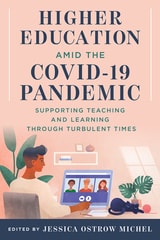
Higher Education amid the COVID-19 Pandemic
Supporting Teaching and Learning through Turbulent TimesJessica Ostrow Michel
Rutgers University Press, 2024
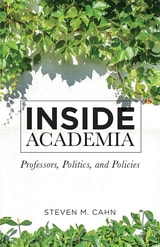
Inside Academia
Professors, Politics, and PoliciesCahn, Steven M
Rutgers University Press, 2019
Inside Academia uses real cases to illustrate how faculty members, deans, and provosts often do not serve the best interests of schools or students. Yet the book also highlights efforts of those who have committed themselves and their institutions to the pursuit of academic excellence.

Junctures in Women's Leadership
BusinessHetfield, Lisa
Rutgers University Press, 2016
Leading for Tomorrow
A Primer for Succeeding in Higher Education LeadershipPamela L. Eddy
Rutgers University Press, 2020
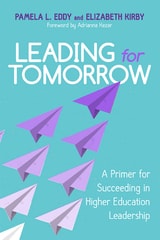
Using an engaging case study approach, Leading for Tomorrow provides readers with real-world examples that will help them reflect on their own management and communication styles. It also shows newly minted administrators how they can follow best practices while still developing a style of leadership that is authentic and uniquely their own.
The book’s case studies offer practical solutions for how to deal with emerging trends and persistent problems in the field of higher education, from decreasing state funding to political controversies on campus. Leading for Tomorrow gives readers the tools they need to get the best out of their team, manage conflicts, support student success, and instill a campus culture of innovation that will meet tomorrow’s challenges.
Making Administrative Work Visible
Data-Driven Advocacy for Understanding the Labor of Writing Program AdministrationLeigh Graziano
Utah State University Press, 2023
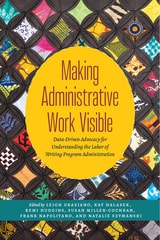
The collection has three parts, each of which focuses on the most confounding challenges facing WPAs as well as the most compelling sites of their contributions to administration, labor in higher education, and the discipline’s collective obligation to forwarding the goals of social justice and advocacy: Advocating through Representations of WPA Labor, Advocating by Accounting for Time and Labor, and Advocating in and through Complex Institutional Contexts. The chapters use data to share and track the work functions, job titles, grand narratives, program assessments, tenure and promotion, email practices, and more undertaken by WPAs in their administrative capacities. Chapters also surface narratives for future data and studies to be done by other scholars.
By taking up and answering questions about the range of WPA work—and the invisibility of much of that work—Making Administrative Work Visible creates avenues toward accounting for and acknowledging the complex activity systems in which WPAs lead the work of the university and advocate for data-driven strategies needed to sustain this foundational area of higher education.
Contributors: Kamila Albert, Brooke Anderson, Sheila Carter-Tod, Amy Cicchino, Ana Cortés Lagos, Kristi Murray Costello, Jennifer Cunningham, Ryan Dippre, Kimberly Emmons, Genevieve García de Müeller, Jill Gladstein, Caleb González, Michael Healy, Lyra Hilliard, Kristine Johnson, Seth Kahn, Rita Malenczyk, Troy Mikanovich, Lilian Mina, Angela Mitchell, Greer Murphy, Kate Navickas, Michael Neal, Patti Poblete, Jan Rieman, Heather Robinson, Katelyn Stark, Mary Stewart, Natalie Stillman-Webb, Lizbett Tinoco, Lisa Tremain, Martha Wilson Schaffer
New Strategies for Wicked Problems
Science and Solutions in the 21st CenturyEdward P. Weber
Oregon State University Press, 2017
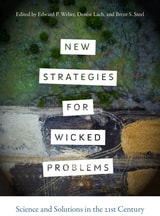
We now live in a world full of wicked problems, most of them urgent challenges calling out for creative, democratic, and effective solutions. Ed Weber, Denise Lach, and Brent Steele, of the Oregon State University School of Public Policy, solicited papers from a wide variety of accomplished scholars in the fields of science, politics, and policy with significant research experience to address this challenge. The resultant collection focuses on major contemporary environmental and natural resource policy issues, and proposes an assortment of alternative problem-solving methodologies to tackle such problems.
New Strategies for Wicked Problems will appeal to scholars, students, and decision-makers wrestling with wicked problems and “post-normal” science settings beyond simply environmental and natural resource-based issues. It will provide much needed guidance to policymakers, citizens, public managers, and various stakeholders who are struggling with wicked problems in their professional lives.
Other Contributors:
Tanya Heikkila
Helen Ingram
Ann C. Keller
Bob Lackey
Anna Pakenham Stevenson
Christopher M. Weible
Daniel R. Williams
Pathways to Sustainability
Collaborative Solutions for a Resilient FutureEdited by Timothy L. Killeen, Donald J. Wuebbles, and Jason E. Lane
University of Illinois Press, 2025
Post-Crisis Leadership
Resilience, Renewal, and Reinvention in the Aftermath of DisruptionRalph A. Gigliotti
Rutgers University Press, 2025
Regional Perspectives on Learning by Doing
Stories from Engaged Universities around the WorldLorlene Hoyt
Michigan State University Press, 2017
Technical Theatre Education
A Vehicle for Critical LearningEdward S. Kraus
Southern Illinois University Press, 2027
Technical Theatre Education: A Vehicle for Critical Learning explores how the environment and process of producing theatrical or live entertainment events foster critical thinking and problem-solving skills. As a learning setting, the problem-based and experiential nature of designing and creating the sets, lighting, and costumes that support a production gives students ample opportunities to test theories, evaluate their growth, and experience the real-world consequences of success or failure.
The Talk and Texts of Teacher Development
Values, the Practicum, and Programmatic Change in Writing StudiesAdrienne Jankens
Utah State University Press, 2026
Through her multi-site analysis, Jankens examines the ways values are reflected in syllabi, committee meetings, and classroom practices. She demonstrates how values that are often unstated or assumed can be made explicit and linked to programmatic action, thus supporting development and aligning instructional goals with broader institutional objectives. Offering a nuanced framework on practicum courses, Jankens also highlights the importance of local contexts and distinguishes among tacit, implicit, explicit, emergent, and articulated values. This layered understanding helps reveal the often hidden mechanisms by which writing program values are enacted in day-to-day teaching practices.
Teacher development is a crucial site for enacting and understanding programmatic values, and making these values explicit can guide meaningful programmatic change. Providing an institutional ethnography of Jankens’s own writing program and situating those findings within broader conversations in writing studies, The Talk and Texts of Teacher Development adds to scholarship exploring the focus of the practicum course, the positionality and experience of graduate teaching assistants in writing programs, and the perennial work of the field to identify its core values and disciplinary identity.
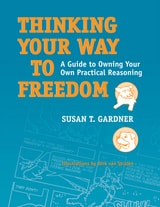
Thinking Your Way to Freedom
A Guide to Owning Your Own Practical ReasoningSusan T. Gardner
Temple University Press, 2009
Thinking Your Way to Freedom is a critical-thinking textbook with a difference. Rather than focusing exclusively on improving college students’ academic achievement, Susan Gardner seeks to dramatically change how students think through issues that are important in their lives beyond school. Gardner created 66 original and entertaining comic strips—featuring her dogs, Diva and Ben—that add a light touch as they encourage intellectual and personal autonomy. Through a clear step-by-step method of practical reasoning, students are taught how to think impartially and how to neutralize invisible biases that limit their freedom of thought and action. With the help of Diva and Ben, readers learn to evaluate the strengths of arguments and to recognize fallacies, all the while avoiding the paralyzing effects of relativism.
Thinking Your Way to Freedom includes the writing of short essays so that students can improve their critical thinking and writing at the same time. A Teacher’s Manual for this book will be available online.
What Poetry Brings to Business
Morgan Clare, Kristen Lange, Ted Buswick
University of Michigan Press, 2010
"Creativity is a means of controlling chaos, finding order. Business and poetry draw their waters out of the same well."
---John Barr, President, Poetry Foundation
"At last there is a book that explores the deep but unexpected connections between business and poetry. Clare Morgan and her colleagues demonstrate how the creative energy, emotional power, and communicative complexity of poetry relate directly to the practical needs for innovation and problem solving that face business managers. There has never been a book on developing managerial potential quite like this one."
---Dana Gioia, former chairman of the National Endowment for the Arts and a former corporate executive at General Foods
What does poetry bring to business? According to Clare Morgan and her coauthors, it brings complexity and flexibility of thinking, along with the ability to empathize with and better understand the thoughts and feelings of others. Through her own experiences and many examples, Morgan demonstrates that the skills necessary to talk and think about poetry can be of significant benefit to leaders and strategists, to executives who are facing infinite complexity and who are armed with finite resources in a changing world.
What Poetry Brings to Business presents ways in which reading and thinking about poetry offer businesspeople new strategies for reflection on their companies, their daily tasks, and their work environments. The goal is both to increase and broaden readers' understanding of poems and how they convey meaning, and also to help readers develop analytical and cognitive skills that will be beneficial in a business context. The unique combinations and connections made in this book will open new avenues of thinking about poetry and business alike.
Clare Morgan is Director of the graduate creative writing programme at the University of Oxford. She has run workshops and given presentations on this topic in the United States, the United Kingdom, continental Europe, and Japan. Dr. Morgan is a fiction writer and critic, and a Fellow of the Royal Society of Arts.
Kirsten Lange and Ted Buswick are employed by The Boston Consulting Group, an international management consulting firm, she as Managing Director of the Munich office, he as head of Oral History and Archiving.
Working Together for Change
Collaborative Change Research, Evaluation, and Design, Volume 5Edited by Lisa M. Vaughn, Sara Neyer, and Kathie Maynard
University of Minnesota Press, 2023
Strategies for engaging key stakeholders—evaluators, researchers, and designers—to discuss frameworks for promoting collaborative change.
Collaborative Change Research, Evaluation, and Design (CCRED) is a framework and collection of participatory practices that engage people and the systems around them to drive community outcomes. This framework emerged out of the recognition that deep participation (or engagement) is frequently missing in collaborative impact approaches. When collaborative change is implemented effectively, community members are viewed as valuable owners and experts instead of being seen as disinterested or unqualified partners.
CCRED is a social action process with dual goals of collective empowerment and the deepening of social knowledge. Executed successfully, CCRED has the potential to increase the rigor, reach, and relevance of research, evaluation, and design translated to meaningful action. Written in an easily accessible, narrative style, Working Together for Change, the fourth volume in the Interdisciplinary Community Engaged Research for Health series edited by Farrah Jacquez and Lela Svedin brings together evaluators, researchers, and designers to describe collaborative change by describing their own work in the space.